
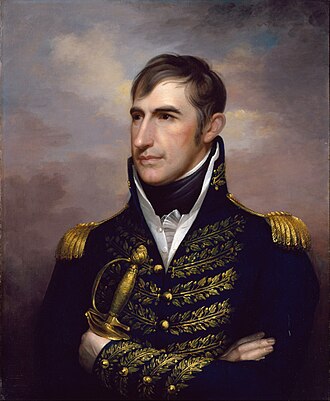
THE PRESIDENT WHO SERVED ONLY 31 DAYS: THE SURPRISING STORY BEHIND THE CORRECT ANSWER

The correct answer is A) William Henry Harrison.
He became the ninth president of the United States on March 4, 1841, and died on April 4, 1841, just 31 days later.
That makes his presidency the shortest in American history.
He did not lose a reelection campaign.
He did not resign after a political scandal.
He did not finish a shortened term that someone else had started.
He won the presidency, took the oath, began his administration, and died before he could complete even five weeks in office.
Those dates are the clearest reason that option A is correct.
But the answer becomes much more interesting when you look beyond the number.
Behind those 31 days is a story about a huge election victory, a memorable campaign slogan, an exceptionally long inaugural speech, a serious illness, and a constitutional question the country had never faced in practice.
There is also a famous explanation for his death that sounds simple enough to repeat in one sentence.
You may have heard that Harrison delivered a long speech in cold weather, caught pneumonia, and died because he refused to wear a coat.
That version is memorable.
It is also more certain than the historical and medical evidence allows.
So why is Harrison the answer?
Why are the other three presidents incorrect?
What actually happened during that short month?
And how could a presidency lasting only 31 days leave an important mark on the way American government works?
The full explanation shows why this question is much more than a test of whether you remember a name.
- THE MOST IMPORTANT CLUE IS THE NUMBER 31
When a multiple-choice question gives you a very specific number, pay attention.
In this question, the words “shortest term” are important, but the phrase “31 days after his inauguration” is even more useful.
Several American presidents died in office.
Several also served much less than a full four-year term.
That means a person who remembers only that a particular president died unexpectedly could easily choose the wrong answer.
The number 31 removes that uncertainty.
William Henry Harrison’s time in office began on March 4 and ended on April 4 of the same year.
The interval between those dates is 31 days.
You do not need to know every event of his administration to solve the question correctly.
You need to connect his name with that unusually short period.
This is a useful way to approach history quizzes generally.
Start with the most precise clue, then check whether the broader description fits.
A description such as “a president who died in office” applies to several people.
A description such as “the president who died 31 days after taking office in 1841” points directly to Harrison.
The strongest answer is the one that satisfies every part of the question.
Harrison fits the office, the inauguration, the death, and the length of service.
The other candidates fit only some of those details.
That is what separates a convincing answer from a familiar-looking guess.
If you selected Harrison because you recognized the 31-day clue, your reasoning was exactly on target.
- WHY MARCH 4 TO APRIL 4 EQUALS 31 DAYS
At first glance, this can look almost too obvious to explain.
However, date-counting is one reason you may occasionally see slightly different descriptions online.
March contains 31 days.
Moving from March 4 to April 4 therefore represents 31 elapsed days.
For a simple comparison, moving from Monday to Tuesday is one elapsed day.
You do not count both Monday and Tuesday as two full days of time that have passed.
The same principle applies here.
Someone who counts every calendar date that Harrison’s presidency touched, including both March 4 and April 4, can arrive at 32 named dates.
That is inclusive counting.
It does not change the standard historical description of his presidency as lasting 31 days.
Another phrase you may see is “one month.”
That is also understandable because the dates fall on the fourth day of consecutive months.
But “one month” is less precise than “31 days,” since different months have different lengths.
For answering this quiz, the safest and clearest explanation is straightforward:
Harrison took office on March 4, 1841.
He died on April 4, 1841.
His presidency lasted 31 days.
It is also worth separating his presidency from the four-year presidential term for which he had been elected.
The scheduled term continued under his successor.
Harrison personally occupied the office for only its first month.
The question uses “shortest term” in the familiar quiz sense of the shortest presidential tenure.
Understanding that distinction helps explain why his death did not require the country to begin a completely new election cycle.
- WHY THE OTHER ANSWERS LOOK BELIEVABLE
The choices in this question are more carefully connected than they may first appear.
William Henry Harrison, Zachary Taylor, Warren G. Harding, and James A. Garfield all died while serving as president.
That shared feature makes every option look possible to someone who remembers only part of the story.
The dates reveal the difference.
Zachary Taylor served from March 4, 1849, until July 9, 1850.
Warren G. Harding served from March 4, 1921, until August 2, 1923.
James A. Garfield served from March 4, 1881, until September 19, 1881.
Harrison’s presidency ran from March 4 to April 4, 1841.
Each of the other three therefore remained president substantially longer than Harrison.
This is a classic example of plausible distractors.
A weak quiz might place Harrison beside three presidents who each served eight years.
That would make the correct answer easier to identify through elimination.
Here, the alternatives belong to the same broad category.
They are presidents whose administrations ended with death.
The challenge is to distinguish among related historical facts rather than merely recognize something familiar.
Think about what happens when you read Garfield’s name.
You may remember an assassination.
When you read Taylor’s name, you may remember a sudden illness.
When you read Harding’s name, you may remember an unexpected death during his presidency.
Those associations are relevant.
They simply do not match the decisive clue.
The question is not asking which president had a tragic ending.
It is asking whose presidency ended after only 31 days.
- WHY ZACHARY TAYLOR IS NOT CORRECT
Zachary Taylor can be a tempting answer because his presidency also ended early and because illness played a central role in that ending.
However, his dates immediately rule him out.
Taylor entered office in March 1849 and died in July 1850.
That is roughly 16 months of service, rather than approximately one month.
A person may hear “short presidency” and treat those two descriptions as almost interchangeable.
Historically, they are very different.
Sixteen months provides time for an administration to face multiple political debates, develop working relationships, and make decisions across more than one season of government.
Thirty-one days barely provides time to get established.
This comparison is not about deciding whose presidency mattered more.
It is about answering the question being asked.
Taylor’s tenure was cut short, but it was not the shortest.
One useful memory technique is to connect each candidate with an approximate length.
Harrison belongs with one month.
Taylor belongs with more than a year.
Once those mental categories are separate, the confusion becomes much less likely.
You also do not need to memorize the exact number of days Taylor served to reject option B.
Knowing that his presidency extended from 1849 into 1850 is already enough.
A presidency spanning those dates cannot match a death just 31 days after inauguration.
This illustrates a practical quiz strategy:
Precise knowledge is helpful, but a clear timeline can sometimes eliminate an answer before you know every detail about it.
- WHY WARREN G. HARDING IS NOT CORRECT
Warren G. Harding is another president whose death interrupted an administration.
However, his presidency lasted more than two years.
He took office in March 1921 and died in August 1923.
That places him far beyond the 31-day period described in the question.
If someone chooses Harding here, the likely mistake is confusing “died before completing a term” with “served the shortest presidency.”
Those statements are not equivalent.
A president can die before the end of a four-year term after serving weeks, months, or years.
The length has to be checked separately.
This distinction appears in many forms of historical knowledge.
An event can belong to the right general category while still being the wrong answer to a specific question.
For example, knowing that a ruler was assassinated would not tell you which ruler died in a particular year.
Knowing that a country participated in a war would not tell you when it entered.
Likewise, knowing that Harding died in office does not establish that he served less time than every other president.
His name belongs in the broader discussion.
It does not satisfy the numerical clue.
There is another useful observation here.
Harding’s presidency took place in the twentieth century, while Harrison’s occurred much earlier.
If you remember that the 31-day presidency happened in 1841, you have a second independent reason to eliminate Harding.
The date and duration reinforce one another.
Good quiz reasoning becomes stronger when more than one clue leads to the same conclusion.
- WHY JAMES A. GARFIELD IS NOT CORRECT
James A. Garfield may be the most convincing incorrect option for many readers.
His presidency was short, and the story of his assassination is widely remembered.
But Garfield served from March 4 to September 19, 1881.
That is more than six months.
He was shot on July 2 and survived until September 19.
The National Park Service records the long interval between the attack and his death, which is an important detail when comparing the length of his presidency with Harrison’s.
Being gravely wounded did not automatically end Garfield’s presidency.
He remained the president during the period in which he struggled to survive.
That is why it would be incorrect to count only the time before the shooting.
This is a particularly useful distinction because people often remember the dramatic event more clearly than the full timeline.
They remember the attack.
They remember that his administration ended tragically.
They may forget that he lived for weeks afterward.
Harrison’s case is different.
His entire presidency, from inauguration to death, fit into the space of a single month.
Garfield’s assassination story is therefore relevant to presidential history, but it does not match this question.
If you were torn between Harrison and Garfield, focus on the two durations.
Harrison: approximately one month.
Garfield: more than six months.
Once that comparison is clear, option D can be eliminated with confidence.
A famous tragedy and the shortest tenure are two different historical distinctions.
- THE MAN BEHIND THE ONE-MONTH PRESIDENCY
A strange thing happens when someone becomes famous for a very short period in a major office.
The ending can overshadow almost everything that came before it.
William Henry Harrison is often introduced through his death rather than through the career that brought him to the presidency.
But he did not suddenly appear in national politics in March 1841.
He had a substantial public career before becoming president, including military service and political responsibilities.
His reputation existed long before the 1840 election.
The White House’s historical biography identifies him as both a military officer and politician, and as the ninth president of the United States.
That matters because it changes how we understand the story.
The presidency was the culmination of a long journey.
The briefness of his administration does not mean he had lived a brief public life.
Imagine spending decades becoming recognizable, building support, and pursuing important positions.
Then imagine reaching the most powerful office in the country only to have your opportunity end almost immediately.
That is the central human contrast in Harrison’s story.
A long preparation led to a very short presidency.
This does not tell us what kind of president he would have become.
It tells us why reducing his whole life to a joke about a speech misses something important.
The number 31 is the answer to the quiz.
It is not a complete account of the person.
History becomes more meaningful when we keep both ideas in view.
We can remember the record without pretending that the record explains everything about the man who holds it.
- THE ELECTION THAT MADE THE ENDING SO UNEXPECTED
Harrison’s presidency did not begin as a quiet or reluctant transition.
His victory followed an energetic campaign.
In the 1840 election, he defeated the incumbent president, Martin Van Buren, as the candidate of the Whig Party.
His campaign became associated with memorable symbols, popular enthusiasm, and the well-known pairing of Harrison with his running mate, John Tyler.
The Miller Center’s account describes the campaign’s emphasis on public image and its use of log-cabin and hard-cider imagery.
Those campaign details help explain why his death was politically disruptive.
An election creates expectations.
Supporters do not celebrate only the person taking an oath.
They celebrate what they believe that person will do afterward.
They imagine policy changes, appointments, new priorities, and a different national direction.
A victory therefore carries a promise of future action.
Harrison’s supporters had barely reached that future when the administration ended.
That is what gives the story its dramatic reversal.
There was a successful campaign.
There was a transfer of power.
There was a public inauguration.
Then, before the new president could establish a substantial record, there was a funeral and a succession dispute.
The campaign also reminds us that popularity and permanence are separate things.
Winning an election can establish legal authority.
It cannot guarantee enough time to use that authority.
Political preparation, organization, and enthusiasm could bring Harrison to the White House.
None of them could ensure that he would remain alive to carry out the plans attached to his victory.
- “TIPPECANOE AND TYLER TOO”
Few campaign slogans from the nineteenth century remain as recognizable as “Tippecanoe and Tyler Too.”
The phrase linked Harrison’s military reputation with the surname of his vice-presidential running mate.
Its rhythm made it easy to repeat and remember.
The Senate’s account of John Tyler’s career connects him directly with the famous 1840 campaign and records that Harrison’s death brought Tyler to the presidency.
The slogan has an additional significance when viewed from the other side of April 1841.
Before the election, Tyler was the second name on the ticket.
After Harrison’s death, he became the person responsible for leading the administration.
That transformation gives the word “too” an unexpected historical weight.
A running mate can look like an addition to a campaign’s main attraction.
Constitutionally, however, the vice president may become central to the nation’s leadership.
The Harrison-Tyler ticket demonstrates that possibility with unusual force.
For readers trying to remember the answer, the slogan can also serve as a useful chain of associations.
Tippecanoe connects to Harrison.
Tyler connects to the vice presidency.
Harrison’s short presidency connects to Tyler’s succession.
Instead of memorizing isolated names, you begin to see a sequence.
That sequence is easier to retain because each part explains the next.
The campaign slogan did not predict Harrison’s death.
It did, however, name the two men whose relationship would become important in a completely different way once the election was over.
A phrase created to help win power became attached to a story about how power passed unexpectedly from one officeholder to another.
- AN INAUGURATION THAT CREATED A FAMOUS CONTRAST
Harrison’s inauguration is remembered for a striking combination.
The president with the shortest presidency delivered the longest inaugural address.
The congressional committee responsible for inaugural history lists his address at 8,445 words.
It also records his inauguration at the Capitol on March 4, 1841.
That contrast is one reason the story has remained popular.
The longest beginning was followed by the shortest administration.
It feels almost designed for a trivia question.
However, the appeal of the contrast can encourage people to rush past the actual historical evidence.
A long speech is a fact.
A short presidency is a fact.
The claim that the first directly caused the second requires additional proof.
Two memorable events can occur in the same story without forming a simple cause-and-effect relationship.
This distinction is especially important when a narrative has been repeated for generations.
People tend to remember an ironic explanation because it is easy to tell.
They may not remember where that explanation came from or how certain it is.
Harrison’s speech deserves attention because it tells us something about his public introduction to the office.
It should not automatically become a complete medical diagnosis.
For the quiz itself, there is an easy way to keep the facts organized.
Remember the contrast as a memory aid:
Longest inaugural address.
Shortest presidential tenure.
Then keep the question of his illness separate.
That allows the interesting detail to help your memory without allowing it to replace careful reasoning about how he died.
- WHY THE FAMOUS WEATHER STORY NEEDS CARE
The popular version of Harrison’s death often sounds like a lesson about dressing properly.
He gave a long speech in cold weather, did not wear enough protection, became ill, and died.
It is a neat story with a clear mistake and a tragic consequence.
The difficulty is that a neat story is not automatically a proven explanation.
Historical descriptions of the inauguration and later accounts of his illness do not justify certainty that exposure during the speech caused his fatal condition.
Even the weather is sometimes dramatized beyond the details recorded by the inaugural committee, which describes an overcast day with a cold wind and an estimated noon temperature of 48 degrees Fahrenheit.
The much more important issue is causation.
The 2014 medical reassessment of his illness specifically challenged the traditional explanation centered on pneumonia and an inaugural chill.
For a responsible explanation, it is better to say that Harrison died after a serious illness traditionally described as pneumonia.
It is also fair to explain that later researchers have proposed another diagnosis.
What we should avoid is turning uncertainty into a confident accusation that one clothing choice killed him.
That kind of simplification can make history easier to share while making it less accurate.
A good story can still be engaging when it includes uncertainty.
In fact, the uncertainty adds an interesting question:
What happens when the explanation everyone remembers is not the only explanation the evidence can support?
That question makes Harrison’s story more thought-provoking, not less.
- WHAT THE DOCTORS REPORTED AT THE TIME
One of the most valuable ways to investigate a historical event is to examine a record produced close to it.
In Harrison’s case, a report from his physicians survives.
The report describes a significant worsening of his condition on March 27, after several days of feeling unwell.
It identifies pneumonia along with other problems involving his digestive system and records his death early on April 4.
This is important because it gives us more than a later anecdote about an inauguration.
It provides a contemporary description of the illness itself.
However, a contemporary report must also be understood in context.
It tells us what the physicians observed and how they interpreted those observations.
It does not give modern researchers a complete set of laboratory results or a way to examine the patient again.
The document is evidence.
It is not a time machine.
That distinction helps explain why historians and medical researchers can study the same record while asking different questions.
A historian might focus on when the illness became severe.
A medical researcher might focus on whether the described symptoms fit the diagnosis.
A political historian might ask what the administration was doing as the president’s condition worsened.
Each approach can be useful without making the others unnecessary.
For readers, the main lesson is to avoid replacing an actual medical timeline with a convenient one-sentence legend.
The surviving report describes a complicated illness.
Our explanation should respect that complexity.
- THE LATER THEORY ABOUT ENTERIC FEVER
In 2014, Jane McHugh and Philip A. Mackowiak published a reassessment of Harrison’s death in the journal Clinical Infectious Diseases.
They argued that the surviving description of his illness was more consistent with enteric fever than with pneumonia alone.
Their analysis also considered unsanitary conditions in Washington as a possible factor.
This is a scholarly reinterpretation of historical evidence.
It should be presented as an argument made by researchers, rather than as a diagnosis confirmed by modern testing of Harrison himself.
That difference in wording matters.
Saying “researchers proposed” tells the reader how the conclusion was reached.
Saying “scientists proved exactly what killed him” would imply a level of certainty the surviving evidence does not provide.
The careful version is still interesting.
A president long associated with a fatal chill may instead have suffered from a different serious infection.
The environment around the presidential household may have mattered in ways that traditional retellings overlooked.
That possibility changes the focus of the story.
Instead of centering everything on personal stubbornness during a speech, it invites questions about living conditions and the limits of medical knowledge.
It also shows how historical interpretation can develop.
The dates of Harrison’s presidency remain the same.
His place as the shortest-serving president remains the same.
What can change is our understanding of the circumstances surrounding his death.
A fixed answer to a quiz can exist alongside an open question about the event behind that answer.
- WHY WE SHOULD NOT BLAME HIS DEATH ON A SINGLE DETAIL
A detail becomes especially powerful when it seems to explain everything.
The missing coat.
The long speech.
The cold wind.
Each is easy to picture.
A complicated illness is harder to picture, so the simpler explanation can become dominant.
But history is full of situations in which the most visual detail is not the most decisive one.
A useful question is whether we are remembering evidence or remembering a story built around evidence.
The difference is subtle but important.
Evidence can establish that something happened.
An explanation must also show why it happened.
For Harrison, we can confidently establish the beginning and ending dates of his presidency.
We can identify the long inaugural speech.
We can read the physicians’ report.
We can examine later arguments about the diagnosis.
We cannot responsibly transform every uncertainty into certainty simply because the resulting story is easier to remember.
This is not a reason to distrust history.
It is a reason to appreciate how historical knowledge works.
Some conclusions are firm because several reliable records support them directly.
Other conclusions remain provisional because the surviving evidence is incomplete.
Knowing which kind of conclusion you are dealing with is part of being well informed.
The strongest version of this explanation therefore has two different levels of confidence.
Harrison’s 31-day presidency is established.
The exact medical chain that led to his death is more complicated.
Keeping those levels separate makes the answer clearer and more credible.
- HIS ADMINISTRATION WAS SHORT, BUT IT WAS NOT IMAGINARY
People sometimes joke that Harrison did nothing because he served for such a short time.
That wording can be misleading.
A new administration begins operating immediately.
There are appointments, communications, decisions, and relationships to establish.
The available timeline of Harrison’s presidency records that he called a special session of Congress to begin on May 31, 1841.
The proclamation was issued on March 17.
He died before the date he had selected for Congress to return.
That one detail captures the difference between planning and having time to carry a plan forward.
A president can set an event in motion without living to see it occur.
It also shows why a one-month administration should not be described as literally empty.
Short does not mean nonexistent.
At the same time, recognizing that activity should not lead us to exaggerate his policy record.
There was very little time for major initiatives to develop under his leadership.
The fairest description occupies the middle ground.
Harrison began governing.
He did not have the opportunity to build a sustained administration.
That is an important distinction when discussing his legacy.
It respects the work that took place without inventing achievements that require a longer record.
It also leaves room for a larger observation.
The importance of a presidency can arise from the circumstances of its ending as well as from the policies pursued during it.
Harrison’s death created consequences that extended far beyond the amount of time he personally spent in office.
- THE COUNTRY FACED A SITUATION IT HAD NEVER EXPERIENCED
Harrison was the first American president to die in office.
That fact made his death more than a personal tragedy or a political disappointment.
It forced the country to put presidential succession into practice under circumstances it had never encountered before.
The Constitution provided a framework.
The practical meaning of that framework still had to be worked out.
The Senate’s historical discussion identifies Tyler’s succession after Harrison’s death as an important development in the history of both offices.
It is easy to overlook how different a rule feels before and after it is needed.
Before a crisis, a provision can seem clear enough.
During a crisis, every uncertainty can become important.
People need to know who has authority.
Officials need to know whose instructions to follow.
Foreign governments need to know who speaks for the country.
The public needs confidence that the death of an officeholder has not disabled the office itself.
Harrison’s death brought those questions out of theory.
The government could not wait for everyone to finish an abstract debate.
It needed a functioning executive.
That urgency is part of what makes this short presidency historically significant.
The event tested whether the American system could survive the sudden loss of its president without abandoning its constitutional structure.
The answer depended not only on written language, but also on how the people holding office interpreted and accepted that language in practice.
- DID TYLER BECOME PRESIDENT OR ONLY EXERCISE PRESIDENTIAL POWERS?
Today, the distinction may sound like wordplay.
In 1841, it was an important question.
Was John Tyler now the president?
Or was he still vice president, temporarily carrying out presidential responsibilities?
Those descriptions could imply different understandings of his status and authority.
A surviving congressional motion illustrates the dispute.
It proposed replacing the title “President” with wording describing Tyler as the vice president exercising the presidential office.
Tyler insisted that he possessed full presidential authority.
This is why titles can matter in government.
A title is not always a decorative label.
It can express whether someone holds an office, substitutes for an officeholder, or performs a limited set of duties.
For an everyday comparison, an acting manager and a permanent manager may carry similar responsibilities for a period while occupying different positions within an organization.
That comparison is only an illustration, but it helps explain why the argument was substantive.
The country needed to know whether the presidency itself had passed to Tyler.
If that question remained unsettled, future actions could become vulnerable to challenge.
Tyler’s insistence therefore helped establish a practical understanding of succession.
The result was larger than his personal preference about how to be addressed.
It helped define what would happen when a president died and a vice president stood next in line.
A presidency that lasted only a month thus became connected to a precedent with a much longer life.
- WHY THE VICE PRESIDENCY SUDDENLY LOOKED DIFFERENT
A vice-presidential candidate is often discussed in relation to the presidential candidate.
Does the running mate help the campaign?
Does the selection broaden support?
Does it reassure a particular group of voters?
Those questions matter during an election.
Harrison’s death demonstrated another question that matters after the election:
What happens if the running mate must actually become president?
John Tyler’s experience illustrates why that possibility cannot be treated as a minor technicality.
He was not merely a name attached to a successful campaign.
He became the leader of the executive branch after an event no one could undo.
The Smithsonian’s National Portrait Gallery describes Tyler’s determination to serve as president in his own right and his difficult relationship with the Whig Party that had helped elect him.
The broader lesson is about preparation for uncertainty.
Political systems must function under circumstances their participants do not prefer.
A ticket may be selected with an election campaign in mind.
The constitutional relationship between its members must still work if the campaign’s central figure disappears.
That is why Harrison’s story is also Tyler’s story.
The two presidencies cannot be fully understood as unrelated entries in a list.
One ended, and the other began because of that ending.
The connection reminds readers that American voters choose more than a single person when they vote for a presidential ticket.
They also choose the person positioned to assume the presidency if a vacancy occurs.
Harrison’s short tenure turned that possibility into an immediate national reality.
- THE TRANSFER OF POWER DID NOT PRESERVE EVERY POLITICAL EXPECTATION
A peaceful transfer of authority does not guarantee agreement over policy.
Tyler’s arrival in the presidency maintained continuity of government.
It did not mean he would satisfy every expectation held by Harrison’s supporters.
Tyler’s opposition to a national bank brought him into conflict with leading Whigs, and much of his cabinet eventually resigned.
The Senate’s account records the clash between his positions and those of his party’s leaders.
This reveals an important distinction between institutional continuity and political continuity.
Institutional continuity means that the government keeps operating through an accepted process.
Political continuity means that the same agenda continues.
The first can occur without the second.
Harrison’s death did not abolish the presidency or require a new constitutional system.
It did change the person who would make decisions from the office.
That person had his own views.
For the Whigs, winning an election had seemed to open a particular opportunity.
The death of their president altered the circumstances under which that opportunity would be pursued.
This does not tell us exactly how Harrison would have handled every dispute.
We should avoid assuming that all later conflicts would have disappeared if he had survived.
It does show why the identity of a successor matters.
A government can remain legally stable while its political direction becomes less predictable.
That is one of the most significant ideas hidden inside this quiz question.
The shortest presidency did not merely shorten one man’s opportunity.
It also redirected the environment in which other leaders pursued their plans.
- THE CONNECTION TO THE TWENTY-FIFTH AMENDMENT
The modern Constitution states the succession rule explicitly.
Section 1 of the Twenty-Fifth Amendment provides that the vice president becomes president if the president is removed, dies, or resigns.
The National Archives publishes that text as part of the constitutional amendments.
The amendment came long after Harrison’s death.
It would be inaccurate to describe it as an immediate response enacted in 1841.
Its relevance is that it makes explicit a distinction that had been contested when Tyler succeeded Harrison.
The presidency passes to the vice president in the circumstances identified by the amendment.
For readers learning the story, this creates a useful bridge between an old historical episode and a modern constitutional rule.
You do not need to memorize every later development to understand the connection.
Start with the problem.
A president dies.
Then identify the question.
What exactly happens to the vice president’s status?
Finally, identify the modern answer.
The vice president becomes president.
The historical importance of Harrison’s death lies partly in the fact that the country had to confront that question before the later amendment clarified the rule in express language.
This is how individual events and constitutional development can connect across time.
A crisis produces a practical interpretation.
Later generations continue to operate within the framework shaped by that interpretation.
Eventually, a constitutional change can state the rule more directly.
Harrison’s 31 days therefore belong to a story that extends well beyond 1841.
The short duration of his presidency contrasts with the long development of the rules surrounding the office.
- A PRESIDENT’S LIFE AND A PRESIDENT’S TENURE ARE DIFFERENT MEASURES
The phrase “shortest-serving president” can accidentally create confusion.
It refers to time in office.
It does not mean Harrison was the youngest president to die.
It does not mean he lived the shortest life.
It does not mean his entire public career lasted only a month.
At his inauguration, Harrison was 68 years old.
The Miller Center identifies him as the oldest man to become president at that point in American history.
The word “shortest” therefore has to be attached to the correct measurement.
We are measuring presidential service.
This is a small distinction with a broad lesson.
Many quiz mistakes come from answering a related question rather than the actual one.
“Who was the oldest?” is not the same as “Who served the longest?”
“Who died youngest?” is not the same as “Who served the shortest time?”
“Who gave the longest speech?” is not the same as “Who had the longest administration?”
Harrison’s story includes several memorable superlatives, which makes keeping them separate especially useful.
He was unusually old for a newly inaugurated president of his era.
His inaugural address was unusually long.
His presidency was uniquely short.
Those facts belong to different categories.
When you understand the categories, the apparent contradictions disappear.
A person can have a long life, a long career, and a long inaugural address, yet still hold the presidency for only 31 days.
That combination is part of what makes the story so distinctive.
- WHY HIS FAMILY STORY MAKES THE NUMBER FEEL DIFFERENT
A date in a history book can feel distant.
A family relationship can make it more immediate.
Harrison had a wife, Anna, and an extended family whose experience of his presidency was not simply political.
The Miller Center’s campaign history explains that Anna did not accompany him to Washington for the inauguration and remained behind because of concerns about her health.
His presidency ended before the anticipated move could become the beginning of a shared period in the White House.
We should not invent private conversations or claim to know exactly what she thought at every moment.
The documented circumstances are affecting enough.
A major life change was underway.
Then, almost immediately, it was interrupted by death.
That is a human experience many readers can understand even without knowing nineteenth-century politics.
Plans can feel secure because people have spent so much time preparing them.
But the amount of effort behind a plan does not determine whether it will happen.
Harrison’s family had to confront that reality in a very public setting.
For the nation, April 4 meant a constitutional transition.
For the people closest to him, it meant the loss of a husband, father, and relative.
Both perspectives belong in a full explanation.
Remembering the family does not change which quiz option is correct.
It changes the emotional scale of the answer.
The 31 days were not only a record.
They were the final month of someone’s life and the beginning of a family’s bereavement.
- DO NOT CONFUSE WILLIAM HENRY HARRISON WITH BENJAMIN HARRISON
American presidential history includes another Harrison.
Benjamin Harrison became president later in the nineteenth century.
He was William Henry Harrison’s grandson.
The Miller Center’s biography of Benjamin identifies that family connection directly.
This can create confusion when readers remember the surname but not the first name.
For this quiz, the full name matters.
William Henry Harrison is the president associated with 31 days in office.
A useful memory exercise is to say the complete name while connecting it to the date.
William Henry Harrison.
Thirty-one days.
That is more reliable than remembering only “President Harrison.”
The same principle applies to other repeated names in American politics.
A surname can connect members of a family while concealing important differences between their careers.
The family connection also gives Harrison’s story an unexpected continuation.
His own presidency ended almost immediately, but the family’s place in presidential history did not end with him.
That does not mean Benjamin’s later career should be treated as a completion of his grandfather’s unfinished administration.
They were different men operating in different political circumstances.
It simply means the presidential list contains a relationship that can help readers organize the names.
Good historical memory often depends on finding these connections without collapsing separate lives into one.
In this case, keep the family relationship.
Keep the careers distinct.
And attach the shortest-presidency record specifically to William Henry Harrison.
- WHY A SHORT PRESIDENCY IS DIFFICULT TO EVALUATE
People often ask whether Harrison would have been a good president if he had lived longer.
It is an understandable question.
It is also one that cannot be answered with confidence.
A long administration provides a record of decisions, responses, appointments, achievements, failures, and changes over time.
A 31-day administration provides much less evidence.
That makes evaluation difficult.
We can examine his background.
We can study his stated intentions.
We can identify the actions he began taking.
But intentions are not the same as results.
A president might enter office with one plan and change direction after facing Congress, a foreign crisis, economic problems, or unexpected events.
Harrison did not have time to produce that kind of extended record.
The responsible answer is therefore limited.
We know the presidency was extremely short.
We know its ending mattered.
We do not know the full administration that might have followed.
Counterfactual questions can be useful when they are clearly labeled as possibilities.
They become misleading when imagined outcomes are presented as if they happened.
For example, it is reasonable to ask how Whig politics might have developed under a surviving Harrison.
It is not reasonable to claim that his survival would certainly have solved every disagreement within the party.
The evidence cannot carry that conclusion.
This is another reason the quiz question is easier to answer than the larger question of his potential.
The dates settle the record.
They do not settle the unrealized future.
- WHY “HE DID NOTHING” IS AN UNFAIR SHORTCUT
When a historical figure is remembered through an unusual record, jokes often become part of the memory.
Harrison’s presidency is especially vulnerable because the number is so small.
But saying that he “did nothing” confuses limited opportunity with a complete absence of activity.
It also assumes that historical significance can be measured only through the number of policies an individual completed.
That is too narrow.
An officeholder can become important because of an unexpected event that changes how an institution operates.
In Harrison’s case, his death forced a major test of presidential succession.
He did not deliberately create that test.
It still became part of the consequences of his presidency.
This is a useful distinction between intention and impact.
People often affect history in ways they did not plan.
A leader can intend one legacy and leave another.
An administration can begin with an economic or political agenda and become remembered for a crisis.
Recognizing that does not require exaggerating Harrison’s achievements.
It requires describing his place in history accurately.
He had little time to establish a governing record.
The ending of his presidency nevertheless had lasting institutional importance.
Both statements can be true at once.
That balanced explanation is more informative than either extreme.
It avoids presenting him as a major policy architect on the basis of a month.
It also avoids dismissing an event that helped establish how the presidency would continue after the death of its occupant.
- WHAT THIS QUESTION TEACHES ABOUT HISTORICAL SOURCES
This quiz offers a surprisingly good introduction to reading sources carefully.
Different kinds of evidence answer different kinds of questions.
A list of presidential dates can establish the length of service.
An inaugural record can establish the date, location, and length of an address.
A physicians’ report can establish what symptoms and conclusions were recorded at the time.
A later medical article can propose a reinterpretation.
A congressional document can reveal a dispute about the successor’s title.
No single source necessarily answers every question equally well.
That is why a good explanation should not treat all historical claims as if they have the same evidentiary foundation.
The presidency’s dates are directly documented.
The exact cause of an illness may be harder to reconstruct.
A political argument can be visible in a surviving motion even if the private thoughts of everyone involved remain unknown.
When you learn to make those distinctions, you become harder to mislead.
You can appreciate a dramatic story without assuming every dramatic detail is proven.
You can accept a firm answer without pretending that every surrounding issue is settled.
That is especially useful on social media, where a short explanation may travel much farther than the evidence behind it.
An engaging post should invite curiosity.
A trustworthy post should also tell readers when an explanation is established, debated, or uncertain.
Harrison’s story gives us an opportunity to do both.
We can deliver the correct answer clearly while keeping the surrounding history honest.
- A SIMPLE WAY TO REMEMBER THE ANSWER NEXT TIME
You do not need a complicated memory system for this question.
Build one clear association:
William Henry Harrison equals 31 days.
Then add two supporting connections.
He was the ninth president.
His presidency began and ended in 1841.
If you want an additional memorable contrast, add the long inaugural address.
The longest inaugural speech belongs to the president with the shortest tenure.
That pairing is unusual enough to stick.
However, keep it as a memory aid rather than a proven explanation of his death.
You can also remember the sequence of names around him.
Martin Van Buren came before Harrison.
John Tyler came after him.
Harrison therefore sits between the president he defeated and the vice president who succeeded him.
This creates a small story instead of an isolated fact.
An election brought him in.
An illness ended his presidency.
A succession brought Tyler into the office.
When facts connect through a sequence, they become easier to retrieve.
Try the quiz again without looking at the options.
Which president died 31 days after taking office?
If William Henry Harrison now comes to mind immediately, you have learned more than a letter choice.
You have attached the name to its meaning.
That is the difference between remembering that the answer was “A” and understanding why A was correct.
The letter may change in another quiz.
The historical fact will not.
- THE DIFFERENCE BETWEEN RECOGNIZING A NAME AND UNDERSTANDING AN ANSWER
Multiple-choice quizzes can reward recognition.
You see a familiar name and feel that it belongs.
But recognition is only the beginning of understanding.
A stronger answer can explain why the other choices do not fit.
In this case, all four names belong to the history of presidents who died in office.
That means recognition alone may actually increase uncertainty.
The solution is comparison.
What do the candidates share?
They died while president.
What separates them?
The length of time they served.
What specific clue settles the question?
Thirty-one days.
That reasoning process is useful far beyond presidential trivia.
It works whenever several answers are related but only one matches the complete description.
The best approach is to identify the feature that discriminates among the options.
Here, that feature is duration.
You can apply the same method to questions about inventions, wars, scientific discoveries, literature, or geography.
A famous name may be connected to the topic without being connected to the exact fact being tested.
The question is asking for precision.
That does not mean you need to memorize every detail in an encyclopedia.
It means you should keep the wording of the question in view while considering each answer.
Harrison satisfies the full wording.
Taylor, Harding, and Garfield do not.
Once that is clear, the correct choice no longer depends on luck, vague familiarity, or whichever name seems most memorable.
- WHY THE STORY STILL HOLDS PEOPLE’S ATTENTION
Harrison’s presidency contains several elements that naturally attract attention.
There is an extraordinary record.
There is a sudden reversal.
There is a well-known story about a speech.
There is uncertainty about an illness.
There is a political successor whose authority had to be clarified.
Together, those elements create a narrative with more depth than a single quiz fact suggests.
But the story is engaging even without adding invented scenes, private conversations, or unsupported claims.
The contrast between preparation and opportunity is already powerful.
The contrast between a long address and a short administration is already memorable.
The difference between the traditional medical explanation and later reassessment is already intriguing.
The constitutional consequences are already important.
Good historical storytelling does not require making every detail more extreme.
Sometimes it requires slowing down enough to notice what the documented facts already contain.
A month can feel insignificant when compared with four years.
It feels different when that month includes an inauguration, the beginning of an administration, a fatal illness, and the first presidential death in office.
The amount of time was small.
The number of questions raised by its ending was not.
That is why this quiz has an answer worth explaining.
The number captures attention.
The story rewards that attention.
And the deeper lesson is that the length of an event and the importance of its consequences are not always proportional.
- THE FINAL ANSWER, WITH THE FULL EXPLANATION BEHIND IT
The correct answer is A) William Henry Harrison.
He became the ninth president of the United States on March 4, 1841.
He died on April 4, 1841.
His 31 days in office constitute the shortest presidency in American history.
Zachary Taylor served for roughly 16 months.
Warren G. Harding served for more than two years.
James A. Garfield served for more than six months.
All three died in office, but none served for as little time as Harrison.
That is the direct explanation of the quiz.
The larger explanation is that Harrison’s death interrupted a newly elected administration and brought John Tyler into the presidency.
It also forced the country to confront an important question about whether a vice president inherited the presidential office itself or merely exercised its responsibilities.
The familiar claim that Harrison’s long inaugural speech directly caused his death should be treated cautiously.
His fatal illness was traditionally described as pneumonia, while later researchers proposed enteric fever as a more convincing explanation of the surviving medical evidence.
The record of his service is clear even where aspects of the medical story remain debated.
That combination makes the subject especially interesting.
We can know the answer without pretending to know everything.
We can remember the shortest presidency while appreciating its larger consequences.
And we can turn a quick multiple-choice question into an opportunity to understand how history is measured, explained, and remembered.
Did you choose William Henry Harrison immediately, or did James A. Garfield almost convince you?
Which detail surprised you most: the 31-day presidency, the longest inaugural address, or the uncertainty surrounding the familiar story of his death?
Share your original answer and the fact you learned.
A good quiz does more than reveal who guessed correctly.
It gives everyone a reason to leave knowing something they did not know before.