THE MAN ON THE $100 BILL: WHY BENJAMIN FRANKLIN’S STORY IS WORTH MORE THAN A QUICK GUESS
The correct answer is A) Benjamin Franklin.
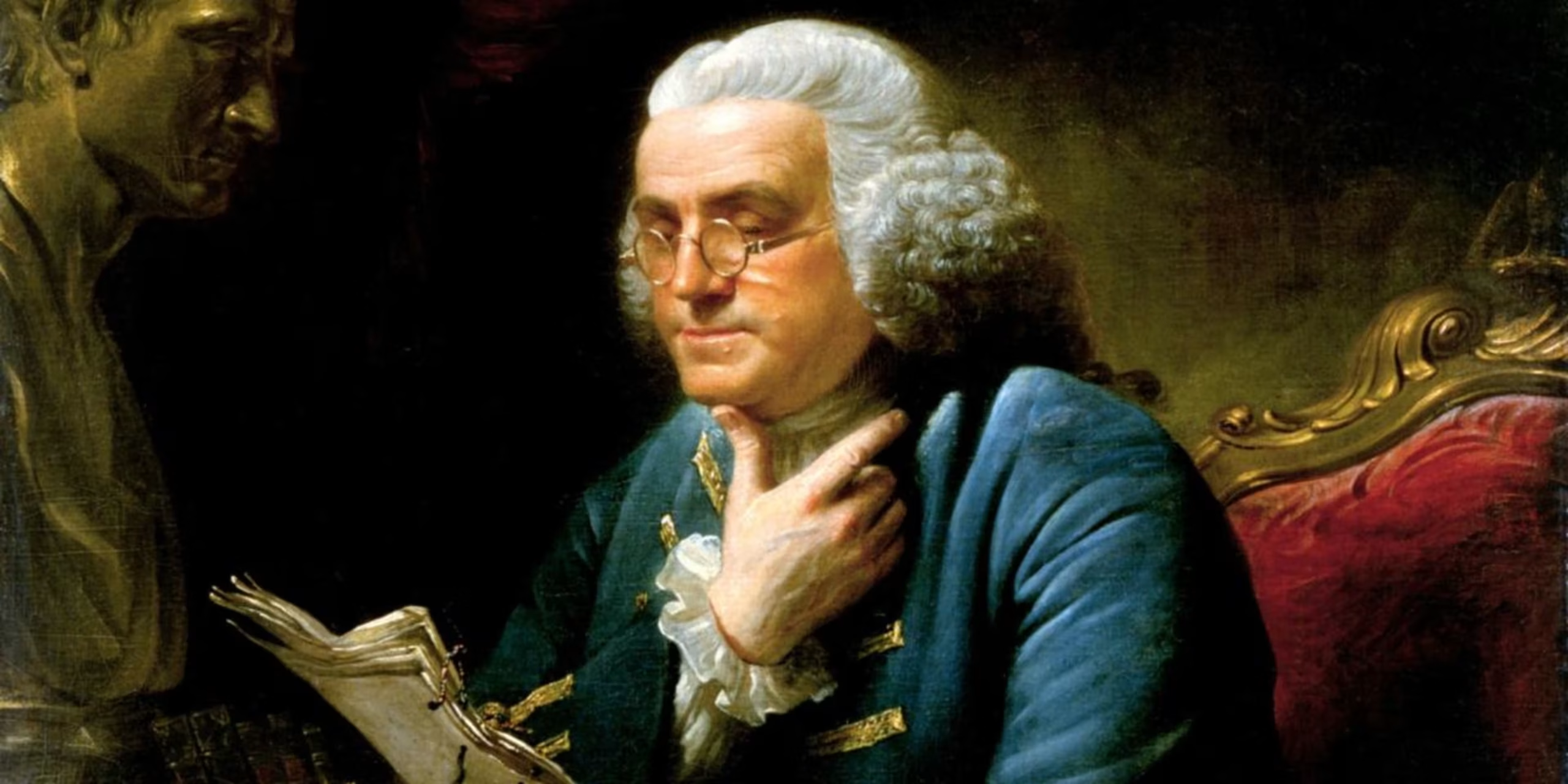
The founding father and polymath featured on the front of the United States $100 bill is Benjamin Franklin.
The back of the note features Independence Hall in Philadelphia.
The official U.S. Currency Education Program confirms both details, so there is no uncertainty about the answer to this quiz.
But here is the detail that makes the question more interesting.
Benjamin Franklin was never president of the United States.
Many people assume that every famous face on an American banknote must belong to a former president.
That assumption feels reasonable when you think of George Washington, Abraham Lincoln, or Andrew Jackson.
It does not work for Franklin.
His place on the $100 bill reflects a different kind of national importance.
He helped shape the country through science, printing, diplomacy, public service, and participation in its founding.
He was not famous for doing only one thing exceptionally well.
He became remarkable because his curiosity and practical abilities reached across so many different fields.
That is why the question calls him a “polymath.”
And that single word is almost as useful as the number printed on the bill.
So why is Franklin correct?
Why are Alexander Hamilton, John Adams, and Thomas Jefferson incorrect?
What did Franklin actually accomplish?
And how did a printer with limited formal schooling become one of the most recognizable Americans in the world?
The answer takes us beyond money and into a life filled with experiments, institutions, political decisions, surprising connections, and contradictions.
- THE SIMPLE ANSWER HIDES A MUCH BIGGER STORY
Start with the fact that settles the question.
Benjamin Franklin’s portrait appears on the $100 bill.
That is the identification being tested.
You do not need to decide which founding father was the smartest, most influential, or most deserving of recognition.
You do not need to compare their political philosophies.
You do not even need to know every detail of Franklin’s career.
The question asks which person is pictured on a specific denomination.
The answer is Franklin.
However, an explanation becomes more useful when it shows why the wording fits him so well.
He was a founding father because he participated in the creation and establishment of the United States.
He was a polymath because his work extended across several areas of knowledge and public life.
He was associated with practical invention as well as political thought.
He could write for a broad audience, investigate a scientific question, organize a community project, and represent American interests abroad.
Those are very different activities.
Their combination is what makes Franklin especially memorable.
The quiz therefore gives you two kinds of clues.
One is visual: the face on the $100 bill.
The other is biographical: a founding father known for a wide range of intellectual and practical achievements.
Both clues lead to the same person.
Once you see that connection, the answer becomes something you understand rather than something you merely memorize.
- WHAT DOES “POLYMATH” ACTUALLY MEAN?
A polymath is someone whose knowledge and accomplishments extend across multiple fields.
The word does not simply mean a person who gets good grades.
It does not mean someone who knows a large collection of disconnected trivia.
It describes a breadth of serious intellectual activity.
Franklin is a strong example because his interests were not limited to reading about different subjects.
He put knowledge to work.
His career included printing, publishing, scientific investigation, invention, civic organization, postal administration, and diplomacy.
The Smithsonian’s National Postal Museum describes him through this broad range of roles rather than reducing him to a single profession.
Think about the difference between curiosity and contribution.
A curious person may wonder how something works.
A contributor investigates the question, shares the result, or develops something useful from the answer.
Franklin repeatedly moved from the first stage to the second.
He noticed problems.
He explored possible explanations.
He communicated ideas.
He helped create practical responses.
That pattern makes “polymath” a meaningful clue rather than an impressive-sounding decoration.
It also makes the word useful beyond this quiz.
When you encounter a historical figure described as a polymath, look for evidence of work across distinct fields.
Ask whether the person merely had many interests or actually contributed in several areas.
In Franklin’s case, the evidence is unusually broad.
His reputation was built through a combination of intellectual range and practical action.
- WHY BEING ON A BILL DOES NOT MEAN SOMEONE WAS PRESIDENT
One of the easiest mistakes in American currency trivia is assuming that all portraits belong to presidents.
The mistake is understandable.
Several familiar denominations do feature former presidents.
But the pattern is not universal.
The $10 bill features Alexander Hamilton, who served as the first secretary of the Treasury.
The $100 bill features Benjamin Franklin, who never served as U.S. president.
The official currency education materials distinguish Hamilton’s Treasury role from the presidential titles attached to other portraits.
This matters because a mistaken assumption can eliminate the correct answer before you properly consider it.
Someone might look at Franklin’s name and think, “He was not president, so it cannot be him.”
That reasoning begins with a false rule.
Once the false rule is removed, the question becomes much easier.
Currency portraits recognize historical figures.
The presidency is one route to that kind of recognition, but it is not the only route.
A country’s founding involves more than the people who later occupy its highest executive office.
There are writers, negotiators, military leaders, administrators, institution builders, and political organizers.
Franklin’s significance developed across several of those categories.
That is part of what makes his portrait educational.
It reminds us that the story of a nation cannot be told only through a list of presidents.
Some of its most influential participants held different offices.
Others contributed through work that did not fit neatly inside any single office at all.
- WHY ALEXANDER HAMILTON IS THE MOST TEMPTING WRONG ANSWER
If you selected Alexander Hamilton, your answer was connected to a real fact.
Hamilton does appear on an American banknote.
He is on the $10 bill.
The problem is the denomination.
The question asks about the $100 bill.
That extra zero makes the difference between a correct association and the correct answer.
Hamilton is also an especially believable distractor because of his connection to the nation’s financial system.
A reader may reason that a famous financial founder should appear on the largest familiar banknote.
But that is an inference about what would seem appropriate, not a fact about the design.
The Bureau of Engraving and Printing identifies Hamilton with the $10 Federal Reserve note and Franklin with the $100 note.
This illustrates a useful quiz lesson.
Do not answer the question you think would make the most sense.
Answer the question the evidence actually resolves.
Historical design choices do not always follow the ranking system we imagine.
The face on a larger denomination is not automatically the person with the strongest connection to banking.
Nor does the number represent a historical importance score.
Hamilton’s financial role makes him relevant to the topic.
It does not place his portrait on the $100 bill.
The easiest memory pair is therefore simple:
Hamilton belongs with ten.
Franklin belongs with one hundred.
Keep those two associations separate, and option B becomes much less likely to confuse you.
- WHY JOHN ADAMS IS NOT THE ANSWER
John Adams was unquestionably important to the founding of the United States.
He also became the country’s second president.
Those facts make him a reasonable name to include in a founding-father quiz.
However, neither fact identifies him as the person on the $100 bill.
The National Park Service’s biography of Adams places him in the presidency after George Washington.
That presidential role is historically significant, but it does not match the portrait being asked about here.
This is a good example of the difference between belonging to a historical category and satisfying a particular description.
Adams belongs to the founding generation.
Adams belongs to the list of presidents.
Adams belongs to the history of American independence.
The question adds another requirement: appearing on the $100 bill.
That requirement points to Franklin.
A familiar name can create a feeling of confidence before the actual identification has been checked.
The safest response is to ask a specific follow-up question in your own mind:
“What exact fact connects this person to this denomination?”
If you cannot supply that connection, familiarity alone is not enough.
This does not diminish Adams’s importance.
It simply keeps the question precise.
A multiple-choice answer is not a vote about which historical figure deserves more respect.
It is a claim about a particular fact.
For this fact, the portrait is Franklin’s.
Adams’s importance explains why his name looks plausible.
It does not make option C correct.
- WHY THOMAS JEFFERSON IS NOT THE ANSWER
Thomas Jefferson is another believable choice because he was a founding father with interests extending beyond politics.
But his portrait appears on the $2 bill, not the $100 bill.
The U.S. Currency Education Program identifies Jefferson on the front of the $2 note.
It also describes the image of the Declaration of Independence on the back.
This is where the wording “polymath” needs to be used carefully.
Franklin is not the only founding-era figure who can be described as intellectually wide-ranging.
Jefferson also pursued several areas of knowledge.
Therefore, “polymath” by itself should not be treated as a unique identification.
The denomination is the decisive clue.
The question combines a biographical description with a specific portrait location.
Franklin fits both.
Jefferson fits part of the description but not the banknote.
That makes option D incorrect.
The distinction is useful because strong quizzes often use answers that are partly right.
A completely unrelated choice is easy to dismiss.
A choice that shares important characteristics with the correct answer requires closer reading.
Here, the correct strategy is to give greater weight to the clue that is most specific.
Many people can be called knowledgeable.
Several people can be called founding fathers.
Only one of these four is pictured on the $100 bill.
The number settles the identification.
Jefferson’s connection to the $2 bill provides a second reason to eliminate him confidently.
- A PORTRAIT IS NOT A COMPLETE BIOGRAPHY
When a face appears on money, it can become familiar without becoming understood.
People may recognize the hair, the expression, or the overall shape of the portrait.
They may even know the name.
But recognition can stop there.
Franklin’s image can become shorthand for one hundred dollars while the person behind the image fades into the background.
That is what makes this quiz a useful starting point.
It asks us to connect a familiar object with an unfamiliar depth of history.
The portrait gives us a name.
The biography explains why that name matters.
The official answer does not require a heroic myth.
It requires an accurate identification followed by an honest account of Franklin’s contributions.
Those contributions were extensive enough without claiming that he did everything himself.
He worked with collaborators.
He benefited from institutions and networks.
He participated in a society with deep inequalities.
He changed some of his views over time.
Keeping those details in mind makes the person more interesting, not less.
A banknote necessarily simplifies.
It presents one face and very little space for explanation.
An article can do more.
It can show how printing connected with public debate, how scientific reputation connected with diplomacy, and how civic projects connected with practical ideas about improvement.
The portrait is the beginning of the discussion.
It should not be mistaken for the whole discussion.
- FROM BOSTON TO PHILADELPHIA
Benjamin Franklin was born in Boston on January 17, 1706.
As a young man, he moved away from the place where he had grown up and eventually established himself in Philadelphia.
The Library of Congress describes his departure in 1723 and his work there as a journeyman printer.
Those details matter because they place the famous elder statesman inside a longer process of development.
The face on the bill can make Franklin look like someone who was always established.
But his reputation had to be built.
Before the international recognition came work.
Before the political influence came experience.
Before the celebrated public identity came years of learning how to operate in the world.
This is not a reason to turn his life into a simple motivational slogan.
Historical opportunity is shaped by circumstances as well as effort.
Still, the movement from young printer to influential public figure is central to understanding his career.
Philadelphia became the setting for many of the projects that made him important.
Printing, civic organization, scientific inquiry, and political activity developed there in overlapping ways.
His life did not unfold as a perfectly straight path from one planned achievement to another.
It expanded through work, relationships, opportunities, and persistent interest in different problems.
That makes the portrait on the $100 bill easier to understand.
It represents the result of a long and varied career.
It does not represent a single moment of sudden genius.
- LIMITED SCHOOLING DID NOT MEAN LIMITED LEARNING
Franklin had relatively little formal schooling.
That fact is often repeated as if it means education had little importance in his life.
The opposite conclusion is more useful.
His example shows a difference between formal schooling and continuing intellectual development.
The State Department’s National Museum of American Diplomacy describes his limited schooling alongside his strong commitment to learning and experimentation.
He did not become a polymath by avoiding knowledge.
He became one by pursuing it through other routes.
Reading, practical work, conversation, correspondence, observation, and experimentation all mattered.
The important point is not that everyone should copy the exact circumstances of his youth.
It is that learning can continue beyond the structure of a classroom.
At the same time, it would be misleading to use Franklin as proof that schooling never matters.
One exceptional life cannot settle that broad question.
What it can show is that intellectual growth depends on active engagement, not merely on possessing a credential.
Franklin repeatedly found ways to connect what he learned with what he did.
That connection gave his knowledge practical force.
A scientific idea became an investigation.
An observation about daily life became a possible improvement.
A concern about the community became an organizing project.
The breadth of his career therefore rested on more than curiosity alone.
It required sustained learning and the willingness to put learning into practice.
That is a stronger lesson than the simplistic claim that a famous man succeeded without much school.
- PRINTING WAS MUCH MORE THAN HIS FIRST JOB
Franklin’s work as a printer was not a minor detail he left behind when more important things happened.
It helped shape the way he participated in public life.
The National Park Service notes that he identified himself as a printer in his will and remained connected with the business even after retiring from direct daily involvement.
Printing placed him close to the movement of information.
A printer worked with words, production, customers, deadlines, and the practical challenge of getting material into people’s hands.
That environment connected technical skill with communication.
It also helped make writing a public activity rather than a purely private one.
This is important when we think about the relationship between Franklin’s different careers.
The printer, writer, organizer, and diplomat were not completely separate versions of the same person.
Skills developed in one area could support work in another.
Clear expression mattered in publishing.
It also mattered in persuasion.
Understanding audiences mattered in selling printed material.
It also mattered in public debate.
None of that means printing automatically produces a successful statesman.
It means Franklin’s later influence grew partly from abilities developed through practical work.
The famous portrait therefore represents someone whose hands-on trade and intellectual life were closely connected.
He did not have to choose between making things and thinking about things.
For much of his career, each activity strengthened the other.
- POOR RICHARD AND THE POWER OF ACCESSIBLE WRITING
One of Franklin’s best-known publications was Poor Richard’s Almanack.
He wrote under the name Richard Saunders.
The Library of Congress identifies the publication with the wit and practical wisdom that became a major part of his reputation.
The important feature here is not simply that Franklin wrote.
It is that he could write in ways people wanted to read.
A person can possess knowledge and still struggle to communicate it.
Franklin’s public influence depended partly on making ideas approachable.
He could connect with readers through humor, observation, and concise expression.
That kind of writing does not have to be shallow.
A memorable form can carry a serious idea.
However, familiarity also creates a problem.
Once a writer becomes famous for clever sayings, later generations may attach almost any suitable quotation to the person.
For that reason, it is wise to verify quotations attributed to Franklin rather than assuming that a sentence sounds like him and must therefore be his.
His actual writing is substantial enough.
It does not need to be supplemented with invented wisdom.
The connection to this quiz is simple.
The face on the bill belonged to a communicator as well as a political figure.
His influence was built partly through the ordinary act of reaching readers.
Before his portrait became something people recognized, his words were something people encountered.
That is another reason “polymath” fits him so well.
Writing was one part of a much wider intellectual life.
- FRANKLIN DID NOT DISCOVER ELECTRICITY
This is one of the most important corrections in any explanation of Franklin’s life.
Benjamin Franklin did not discover electricity.
People had observed electrical phenomena long before he was born.
His importance lies in his investigations and contributions to understanding electricity, including the relationship between lightning and electrical effects.
The Franklin Institute explicitly warns against the common claim that he discovered electricity.
Why does the mistake persist?
Probably because a dramatic story is easier to remember than the gradual development of scientific knowledge.
The image of Franklin, a kite, a key, and a storm is vivid.
The longer history of electrical investigation is less convenient to compress into one picture.
But scientific discovery usually involves accumulated work.
People observe.
They propose explanations.
They test.
They communicate.
Other people build on those results.
Franklin belongs inside that process.
He was an important participant, not the person who created the entire subject from nothing.
This distinction does not reduce his achievement.
It describes the achievement more accurately.
The difference between “studied electricity” and “discovered electricity” may seem small in casual conversation.
Historically, it is substantial.
One claim places him within a field of investigation.
The other incorrectly gives him sole credit for recognizing a phenomenon known for centuries.
A strong explanation should preserve the excitement of his scientific work while avoiding a myth that makes the work easier to summarize but harder to understand.
- THE KITE STORY IS MORE INTERESTING WHEN TOLD ACCURATELY
The famous kite experiment is often presented as though lightning struck the kite and Franklin safely captured the bolt.
That is not the account explained by the Franklin Institute.
Its discussion distinguishes the electrical charge collected in storm conditions from a direct lightning strike.
A direct strike would have made the episode extraordinarily dangerous in a very different way.
The historical interest is the question Franklin was investigating.
Were the phenomena observed in electrical experiments connected with the lightning seen in the sky?
That question linked something people could study in controlled settings with something powerful and frightening in nature.
The intellectual move was significant.
It suggested that a dramatic natural event might be understood through the same physical principles as smaller electrical effects.
For readers, that is the real fascination.
The story is about explanation.
Something that looked mysterious could be investigated.
The practical consequences of that understanding could then be considered.
There is no need to exaggerate the event into a man surviving a lightning bolt.
The accurate version already contains curiosity, risk, observation, and a connection between theory and the natural world.
It also provides a useful reminder for reading popular history.
If a familiar story depends on an especially sensational detail, check whether the detail belongs to the evidence or to the retelling.
With Franklin, careful explanation makes the science clearer.
It also prevents a memorable image from becoming a misleading lesson.
- THE LIGHTNING ROD SHOWS WHAT HE DID WITH KNOWLEDGE
Franklin’s association with the lightning rod helps explain why his science mattered beyond intellectual curiosity.
The device connected an understanding of electricity with an effort to protect buildings.
The Franklin Institute’s educational account identifies the lightning rod among his important practical contributions.
That connection between understanding and application appears repeatedly in his career.
He was interested in what a discovery could do.
Could it reduce damage?
Could it improve a familiar task?
Could it make daily life more manageable?
Could it help a community function better?
The lightning rod provides a particularly clear example because the problem was obvious.
Lightning could cause destruction.
A practical response could have value to people who had no interest in conducting scientific experiments themselves.
This is one reason Franklin’s reputation spread beyond a narrow circle.
Useful ideas can reach audiences far larger than the group that first understands the theory behind them.
However, we should keep invention inside its historical context.
A device develops through design, discussion, implementation, and sometimes later modification.
The phrase “Franklin invented the lightning rod” is a useful summary, but it does not mean that every later protection system emerged fully formed from one moment of inspiration.
The more general point is stronger.
Franklin helped connect scientific investigation with public usefulness.
That combination is central to the kind of intellectual life the word “polymath” describes.
- BIFOCALS, STOVES, AND THE VALUE OF ORDINARY PROBLEMS
Some inventions address spectacular dangers.
Others address ordinary frustrations.
Franklin is associated with both.
The Library of Congress documents his work on a heating device known as the Franklin stove and his design for bifocal glasses.
Its exhibition explains the stove’s effort to improve heat use and the glasses’ combination of different visual functions.
These examples are useful because they make invention feel less mysterious.
An inventor does not always begin with a completely unfamiliar problem.
Sometimes the starting point is something inconvenient that many people already experience.
A room loses heat.
A person has difficulty switching between near and distant vision.
A familiar arrangement could work better.
The intellectual challenge is to notice the inconvenience, examine its cause, and develop a practical response.
That is different from assuming that creativity requires an entirely new world.
Much useful creativity improves the world people already inhabit.
Franklin’s examples also remind us that historical inventions should not always be treated as identical to the versions used today.
Devices change.
Other people refine them.
Later technology alters materials, design, and performance.
Acknowledging that process does not erase the original contribution.
It places it in the longer history of improvement.
The $100 portrait therefore represents a person whose interests included both national independence and the practical details of daily living.
That range is unusual enough to be worth remembering.
- YES, HE ALSO WORKED ON A MUSICAL INSTRUMENT
If you thought electricity, politics, and printing were already enough, Franklin’s interests extended further.
He developed a glass armonica.
The instrument used rotating glass elements to produce musical tones.
The Library of Congress describes his changes to earlier musical-glass arrangements and explains the mechanism he developed.
This detail is valuable because it challenges a narrow image of intelligence.
Franklin’s curiosity did not stay inside the boundaries of subjects that might obviously help a political career.
He could investigate sound, mechanics, and musical expression.
The same person could be interested in practical protection from lightning and in creating an unusual musical experience.
That does not mean every interest had equal importance.
It means his intellectual life was broad enough to include both.
There is also a useful distinction between inventing from nothing and improving an existing idea.
Franklin’s work on the armonica involved development from earlier musical-glass practices.
Innovation often takes that form.
Someone sees a possibility inside something that already exists and changes the arrangement.
The result can become distinctive without having no predecessors.
This is another reason the label “polymath” fits.
It describes a person comfortable moving between different kinds of questions.
How does this physical effect work?
How could this device be improved?
How might people use it?
Those questions can apply to a scientific instrument, a household object, or a musical creation.
Franklin’s career shows how widely they can travel.
- HIS CURIOSITY EXTENDED TO THE OCEAN
Franklin’s scientific interests were not confined to electricity.
He also became involved in understanding and charting the Gulf Stream.
The National Park Service’s summary of his career includes his work on the current’s course and its relevance to ocean travel.
This adds another dimension to the idea of useful knowledge.
A pattern in nature can have practical consequences for transportation.
Understanding where water moves and how it affects a voyage can matter to people crossing an ocean.
The lesson is not that Franklin single-handedly discovered every feature he studied.
Knowledge of the sea depended on the experience of mariners as well as the work of people who organized and published information.
That collaborative dimension is important.
An intellectually versatile person often contributes by connecting different kinds of expertise.
Practical experience can inform a scientific question.
A map can make scattered observations easier to use.
A publication can move local knowledge into a wider conversation.
This is a more realistic picture of achievement than imagining a lone genius discovering everything independently.
Franklin’s range was remarkable.
His success still depended on contact with other people and their knowledge.
The connection to the quiz becomes clearer with each example.
The person on the $100 bill was not simply a politician who happened to enjoy a few hobbies.
His participation in several fields was substantial enough to become part of his public reputation.
That breadth is exactly what the question is pointing toward.
- A LIBRARY TURNED READING INTO A SHARED RESOURCE
Franklin’s interest in knowledge was not limited to improving his own access to books.
He helped organize institutions that allowed people to share resources.
In 1731, he proposed a subscription library to members of the Junto.
The Library of Congress identifies that proposal as part of the history of the Library Company of Philadelphia.
The word “subscription” matters.
It would be misleading to describe the arrangement as identical to a modern free public library.
Its structure belonged to its own time.
Nevertheless, the underlying idea was important: people could gain access to a larger collection by contributing together.
That is a practical response to a familiar limitation.
An individual may not be able to own every book they want.
A group can pool resources and create something larger than any one member’s private collection.
This is institution building rather than solitary invention.
It requires rules, cooperation, administration, and continued participation.
Those activities may sound less dramatic than flying a kite in a storm.
Their effects can be just as meaningful.
A library changes what people can read, what questions they can pursue, and what conversations they can enter.
It also demonstrates a recurring feature of Franklin’s civic work.
He often looked for ways to turn an individual concern into a shared arrangement.
That is part of why his legacy includes organizations as well as devices and documents.
- A FIRE COMPANY WAS A DIFFERENT KIND OF INVENTION
Not every useful innovation is an object.
Sometimes it is a way of organizing people.
Franklin helped establish Philadelphia’s Union Fire Company in 1736.
The Smithsonian’s National Museum of American History records that connection in its discussion of his firefighting legacy.
The significance is not that Franklin invented fire prevention or became the first person to help a neighbor during a fire.
The important point is organization.
A recurring danger can be addressed more effectively when people prepare together rather than improvise every response separately.
That principle is easy to overlook because it seems so ordinary today.
Yet institutions depend on people making practical choices about cooperation.
Who will participate?
What responsibilities will members accept?
What resources will they maintain?
How will they respond when needed?
Those are design questions, even when the result is an organization instead of a machine.
Franklin’s career makes more sense when we recognize this broader understanding of practical intelligence.
He could think about mechanisms.
He could also think about arrangements.
A heating device addresses how materials and airflow interact.
A fire company addresses how neighbors and equipment interact.
The subject changes, but the interest in making things function better remains recognizable.
This is another reason reducing him to a single famous experiment is inadequate.
The man on the bill helped build civic capacity.
Some of his most important contributions involved helping people act together before a problem became an emergency.
- A HOSPITAL REQUIRED MORE THAN A GOOD IDEA
Franklin also helped establish Pennsylvania Hospital with Dr. Thomas Bond in 1751.
Penn Medicine’s historical account identifies both men in the institution’s founding.
This detail adds another practical dimension to his public life.
It is one thing to notice that a community needs something.
It is another to help turn that need into an operating institution.
A hospital requires support, organization, resources, and people with relevant expertise.
Franklin’s role should therefore be understood alongside Bond’s and the work of others.
The phrase “Franklin founded a hospital” can become misleading if it causes the collaborators to disappear.
The more accurate account is also more interesting.
It shows how a person known for communication and organization could work with someone whose professional knowledge addressed a different part of the problem.
That is a recurring pattern in meaningful public projects.
No single participant has to possess every skill.
The achievement depends on connecting skills in a workable structure.
For readers thinking about the meaning of a polymath, this is useful.
Breadth does not mean never needing another person.
It can mean being able to recognize how different kinds of knowledge should work together.
Franklin’s civic projects were not simply displays of private brilliance.
They were attempts to create lasting public usefulness.
That is a major reason his historical importance cannot be understood only through political office.
His work reached into the daily infrastructure of community life.
- “USEFUL KNOWLEDGE” WAS AN ORGANIZING PRINCIPLE
Franklin’s association with the American Philosophical Society brings several parts of his career together.
The society traces its founding to 1743 and identifies the promotion of useful knowledge as its continuing purpose.
The phrase helps explain the relationship between his many interests.
At first, printing, electricity, libraries, music, postal routes, and diplomacy can look like a scattered list.
Useful knowledge provides a connection.
Information could improve understanding.
Shared understanding could support better action.
Communication could bring observations together.
Institutions could help keep that process going.
This is not a claim that Franklin followed one perfect philosophy in every decision.
Real lives are more complicated.
It is a way to recognize a recurring pattern in his work.
He did not always treat knowledge as something valuable only when kept private.
He helped create channels through which it could circulate.
That makes the society especially relevant to the word “polymath.”
An intellectually broad life becomes more consequential when it connects with other intellectually active people.
Questions can cross boundaries.
One person’s observation can become another person’s experiment.
A practical problem can lead to a theoretical investigation.
A discovery can suggest an application.
This social dimension of learning is easy to miss when history is organized around individual portraits.
The face on the $100 bill is one person’s.
The knowledge behind his reputation involved conversations, correspondence, collaborators, and institutions that extended well beyond him.
- THE POSTAL SYSTEM CONNECTED HIS PRACTICAL AND POLITICAL WORLDS
Franklin’s postal work is another important part of his career.
The Continental Congress appointed him postmaster general on July 26, 1775.
The Smithsonian’s National Postal Museum explains that appointment in the context of the emerging American postal system.
The date is worth noticing.
It came before the Declaration of Independence.
The colonies needed ways to communicate as their political relationship with Britain changed.
That gives postal administration a significance beyond delivering personal letters.
Communication helps people coordinate.
It allows information to travel between places that cannot meet in one room.
It supports commercial, political, and personal relationships.
For Franklin, the subject also connected with practical questions about efficiency.
A system must operate across distance.
Routes, timing, administration, and reliability matter.
Those are problems a practical organizer could take seriously.
The broader lesson is that national development depends on infrastructure as well as declarations.
Political ideas do not move through a country by themselves.
They require people and systems that carry information.
Franklin’s place in postal history therefore fits naturally beside his work as a printer and diplomat.
All three activities involve communication.
They differ in method and scale, but each concerns how ideas, instructions, or arguments reach other people.
The portrait on the bill represents a person who understood communication from several directions.
That is a more complete picture than simply calling him a famous inventor.
- SCIENTIFIC FAME HELPED OPEN DIPLOMATIC DOORS
Franklin’s scientific reputation was not separate from his later diplomatic usefulness.
The State Department’s Office of the Historian describes him as a distinguished scientific and literary figure before discussing his role as an American diplomat.
It also records his reception as an American minister by the French court.
This connection is one of the most interesting features of his career.
An achievement in one field can create credibility in another.
People may be willing to listen because they already know a person’s work.
That does not guarantee agreement.
Diplomacy still requires negotiation, judgment, and an understanding of competing interests.
But reputation can affect access.
It can shape the conditions under which a conversation begins.
Franklin’s intellectual breadth therefore had consequences beyond personal recognition.
His fame helped make him a recognizable representative of the American cause.
That is a different kind of power from commanding an army or holding the presidency.
It rests partly on trust, curiosity, admiration, and the ability to engage with influential people.
The connection also challenges a narrow separation between science and politics.
The subjects can be distinct while the people involved in them move through overlapping social worlds.
Franklin’s story shows how those worlds could interact.
The scientific investigator became a diplomat.
The public reputation of one career supported the responsibilities of another.
That movement across fields is central to why the quiz’s description fits him.
- HIS DIPLOMACY WAS NOT SIMPLY A MATTER OF BEING CHARMING
Popular accounts sometimes make Franklin’s success abroad sound like the result of personality alone.
He was witty.
He was famous.
People liked him.
Those qualities may help explain part of his appeal, but diplomacy cannot be reduced to personal charm.
Governments act within strategic circumstances.
They consider interests, risks, resources, and opportunities.
Franklin’s task was to represent American objectives within that larger environment.
The State Department’s diplomatic history places his work inside the effort to secure support and formal relationships for the American cause.
This is important because it preserves the seriousness of his role.
An effective diplomat has to do more than make a good impression.
The diplomat must understand what the other side wants and what can realistically be achieved.
That requires patience.
It requires communication.
It may require tolerating uncertainty while events elsewhere change the bargaining situation.
For Franklin, the stakes were substantial.
The American struggle was not taking place in isolation.
Its outcome was affected by relationships beyond the colonies themselves.
Recognizing that international setting helps explain why a founding father’s contributions might occur far from a battlefield or legislative chamber.
The work could happen through meetings, correspondence, and negotiations.
Those activities are less visually dramatic than combat.
Their consequences can still be enormous.
Franklin’s place on the bill is easier to appreciate when his diplomatic work is understood as part of his practical contribution to independence, rather than merely an entertaining episode in his biography.
- THE DECLARATION CONNECTED FRANKLIN WITH TWO OF THE WRONG ANSWERS
There is an interesting relationship among the choices in this quiz.
Benjamin Franklin, John Adams, and Thomas Jefferson all served on the committee appointed to prepare the Declaration of Independence.
Jefferson was the principal drafter.
Franklin and Adams reviewed his draft.
The State Department’s historical account identifies that collaborative process.
That connection helps explain why the names can become mixed together in memory.
They do not belong to unrelated stories.
They appear in the same founding episode.
But collaboration does not make their later portraits interchangeable.
Jefferson belongs on the $2 bill.
Franklin belongs on the $100 bill.
Adams’s role in the founding does not place him on either of those notes.
This is a good example of how historical knowledge should become more organized as it grows.
At first, you may know a general group of famous names.
Then you learn which documents, offices, and achievements connect with each person.
Eventually, you can recognize both the shared story and the individual distinctions.
The committee also reminds us not to attribute the Declaration to Franklin alone.
His participation mattered.
Jefferson’s central drafting role mattered.
The work of the committee and Congress mattered.
A founding document emerged from a political process, not merely from one person’s isolated inspiration.
The correct quiz answer therefore opens a door to a collaborative history.
Knowing Franklin’s portrait should be the beginning of understanding those relationships, rather than a reason to make every founding achievement exclusively his.
- THE TREATY OF PARIS SHOWS ANOTHER SIDE OF INDEPENDENCE
Declaring independence and securing its recognition are different stages of a national struggle.
Franklin participated in the diplomatic process that helped bring the Revolutionary War to an end.
The 1783 Treaty of Paris names Benjamin Franklin, John Adams, and John Jay among the American negotiators.
The National Archives preserves the treaty and its historical context.
This is another reason Franklin’s contribution cannot be reduced to a single famous signature.
The founding of a country involves several kinds of work.
There is the statement of a political claim.
There is the struggle to sustain that claim.
There is the negotiation of peace.
There is the later construction of governing institutions.
Different people contribute differently at each stage.
Franklin appears across several of them.
That continuity is remarkable.
It does not mean he controlled every outcome.
It means his experience and abilities remained useful through changing circumstances.
The treaty also reinforces the importance of collaboration.
Franklin worked alongside other American representatives.
The result depended on negotiation between parties with different objectives.
For readers, this offers a more realistic picture of historical achievement.
Major outcomes often require several people doing different parts of a difficult job.
A banknote displays one portrait because its design has limits.
The historical event behind that portrait usually contains more participants than a single image can show.
Understanding Franklin properly means appreciating both his individual significance and the collective work in which he took part.
- THE CONSTITUTION WAS PART OF HIS LATE-LIFE PUBLIC SERVICE
Franklin’s involvement in the American founding continued beyond the Declaration and the peace settlement.
He also participated in the Constitutional Convention and signed the Constitution in 1787.
The National Park Service’s account of the convention’s final day places him among the participants in that important closing moment.
This gives his public life a striking span.
He was not only associated with the break from Britain.
He also participated in the effort to create a new governing framework afterward.
Those are related but different challenges.
Rejecting an existing authority does not automatically produce agreement about what should replace it.
A constitution requires decisions about institutions, powers, representation, and the relationship between different parts of government.
That kind of work demands more than enthusiasm for independence.
It requires debate and the difficult task of finding an arrangement people will accept.
Franklin’s presence connects him with this later phase of founding.
At the same time, his signature should not be treated as proof that every feature of the final document reflected his personal preference.
Political agreements often contain provisions participants would have designed differently on their own.
The important point is participation in a collective constitutional undertaking.
This is another reason his portrait can symbolize more than invention or scientific curiosity.
His career reached into the establishment of the institutions that would govern the new country.
That is a substantial part of what makes him a founding father.
- THE BUILDING ON THE BACK ADDS A SECOND HISTORICAL CLUE
The reverse side of the $100 bill features Independence Hall.
The National Park Service identifies the building with both the Declaration of Independence and the Constitution.
That makes the front and back an interesting historical pairing.
On one side is a person associated with the founding.
On the other is a place associated with central events in that process.
The combination gives the note a broader meaning than a portrait alone would provide.
However, we should distinguish interpretation from documented design history.
It is reasonable to observe that Franklin and Independence Hall share strong connections with the founding era.
It would be a different claim to assert a specific private intention behind every design choice without evidence.
The strongest explanation stays with what can be established.
Franklin appears on the front.
Independence Hall appears on the back.
Both connect with the history of American independence and constitutional government.
That is enough to make the design worth noticing.
For quiz memory, the building can become a second association.
Franklin.
Philadelphia.
Independence Hall.
The founding documents.
The $100 bill.
These links reinforce one another without requiring you to memorize a disconnected fact.
The next time you see the note, the reverse image may help you remember the person on the front.
An everyday object can become a small historical lesson when you know how to read its details.
The lesson begins with observation, then becomes stronger through context.
- FRANKLIN’S CONNECTION TO PAPER MONEY GOES DEEPER THAN HIS PORTRAIT
Here is one of the most satisfying details in the story.
Franklin did not merely become a face printed on money after his death.
During his own career, he worked on printing colonial paper currency.
The Library of Congress documents his currency work and his interest in methods intended to make counterfeiting more difficult.
That creates a striking connection between the historical person and the modern object.
The man honored by a banknote had practical experience with the production and credibility of paper money.
This does not prove that his colonial printing work was the sole reason his portrait was selected for the $100 bill.
We should not turn an appealing connection into an unsupported explanation of the selection process.
But the connection is real and worth appreciating.
Printing money raises questions different from printing an ordinary page.
The result has to be recognizable and trusted.
Its appearance matters.
Its reproducibility matters.
The distinction between authorized production and fraudulent imitation matters.
Those concerns sit at the intersection of technical skill, public confidence, and economic life.
That intersection would have been familiar to a printer interested in public affairs.
Franklin’s portrait therefore carries an unexpected historical echo.
Someone who helped produce paper currency eventually became one of its most recognizable images.
The fact is engaging precisely because it does not need to be exaggerated.
The genuine connection is already stronger than a fabricated story about why he “earned” a particular denomination.
- THE PORTRAIT HAS A LONG HISTORY ON FEDERAL RESERVE NOTES
Franklin’s appearance on the $100 bill is not a recent novelty.
The Smithsonian preserves examples of $100 Federal Reserve notes from 1914 bearing his portrait.
Those objects provide direct evidence of the long association between Franklin and that denomination.
This matters because modern designs can make an old choice look newly created.
A note may change in layout, color, or protective features while keeping the same central portrait.
The continued presence of a face can provide visual continuity across those changes.
For readers, the important distinction is between the history of a denomination and the history of a particular design.
A statement about when one style appeared is not automatically a statement about when Franklin first appeared on all American money.
Currency history includes multiple kinds of notes and many changes over time.
The narrow, well-supported statement is enough here.
His portrait was on $100 Federal Reserve notes in 1914.
It remains the correct portrait identification for the note in this quiz.
That continuity helps explain why the association is so widely recognized.
Generations have encountered it.
The image becomes familiar even to people who have not studied Franklin’s biography.
The quiz reverses that process.
Instead of merely recognizing the note as money, it asks you to identify the historical person.
A complete explanation then reverses it again, showing how the biography gives meaning to the familiar portrait.
- A FAMOUS FACE DOES NOT MAKE A HISTORICAL FIGURE SIMPLE
Franklin’s accomplishments were significant.
They do not mean his life should be presented without contradictions.
He participated in a society shaped by slavery, and his own relationship with that institution changed over time.
The Smithsonian’s account addresses the tension between his work associated with liberty and his earlier involvement with enslavement.
That history matters because a portrait can encourage a simplified form of admiration.
A face on money can appear to represent an entirely settled judgment.
A full biography is more demanding.
It asks what a person contributed.
It also asks what the person accepted, benefited from, or failed to challenge.
These questions do not cancel one another.
They belong together.
A serious explanation should avoid both extremes.
It should not erase Franklin’s contributions because his life contained moral failures.
It should not erase those failures because his contributions were important.
Historical understanding is strongest when it can hold more than one truth at once.
The same person can help advance ideas of liberty while failing to apply them consistently.
The same person can later change a position without undoing earlier harm.
Recognizing that complexity makes the discussion more honest.
It also gives the reader more to think about than an uncomplicated list of achievements.
The goal is not to turn a currency quiz into a verdict on an entire life.
It is to explain why the portrait represents a real historical person rather than a flawless symbol.
- HIS LATE OPPOSITION TO SLAVERY DESERVES ACCURATE CONTEXT
Late in his life, Franklin became an outspoken opponent of slavery.
He served as president of the Pennsylvania abolition society and signed an antislavery petition submitted to Congress in 1790.
The National Archives preserves the petition and explains the development of his public opposition.
This is an important part of his record.
It is also important not to tell it in a way that suggests he had always held the same position.
Change over time is part of the history.
A later action can be meaningful without making earlier conduct disappear.
That is a difficult but useful principle.
People often prefer stories in which a public figure is consistently admirable or consistently terrible.
Real biographies can be less comfortable.
They may contain development, contradiction, self-interest, insight, and unresolved limitations.
Franklin’s later abolitionist activity belongs in the explanation because it was a real form of public engagement.
His earlier relationship with slavery belongs there because it provides necessary context.
Together, those facts show why history requires more than choosing a single flattering episode.
They also remind us that intellectual versatility is not the same as moral perfection.
A polymath can know a great deal and still be wrong about important questions.
Knowledge does not automatically remove the prejudices or incentives of a person’s society.
That is one of the strongest reasons to study a full life rather than only its most celebrated achievements.
- WHY “HE DESERVED THE BIGGEST BILL” IS NOT A GOOD EXPLANATION
It can be tempting to explain Franklin’s portrait by saying he was so intelligent that he deserved the highest familiar denomination.
That may sound complimentary, but it is not a sound historical explanation.
Currency denominations are not scores assigned to people.
The value printed on a note does not measure the intelligence, virtue, or total importance of the person pictured.
Washington’s appearance on a lower denomination does not mean the government ranked him below Franklin.
Hamilton’s appearance on ten dollars does not make him one-tenth as important as the person on one hundred.
That interpretation imposes a ranking system the design does not establish.
The Bureau of Engraving and Printing connects founding-era portraits with the figures’ roles in creating and developing the nation.
It does not present denominations as a numerical league table of achievement.
The stronger explanation is therefore more careful.
Franklin was a historically significant founder with achievements across several fields.
His portrait is the established one on the $100 bill.
His biography helps explain his importance as a national figure.
It does not turn the number into a grade.
This distinction improves the answer because it separates two questions.
Who is on the bill?
Why is that person historically important?
The first is a direct identification.
The second is a biographical discussion.
Keeping them separate prevents an engaging explanation from drifting into an invented story about how historical figures were ranked.
- THE MOST USEFUL WAY TO REMEMBER ALL FOUR CHOICES
A good memory technique should reduce confusion rather than add another complicated system.
For this question, use a few clear connections.
Benjamin Franklin goes with the $100 bill.
Alexander Hamilton goes with the $10 bill.
Thomas Jefferson goes with the $2 bill.
John Adams goes with the second presidency, not the $100 portrait.
These associations are easier to remember when they are attached to meaning.
Hamilton had a major Treasury role.
Jefferson is connected with the Declaration and his own presidential career.
Adams was a founder and the second president.
Franklin combined founding-era political work with a wide-ranging intellectual career.
The goal is not to make every connection perfectly symmetrical.
It is to give your memory different places to put the names.
Confusion often happens when several people are stored under one broad label: “famous founders.”
A more organized memory gives each person additional identifiers.
That helps when the wording changes.
A later quiz may ask who appears on the ten-dollar note.
Another may ask which figure on a commonly used note never served as president.
Another may ask which founder is famous for work on lightning.
If you understand the relationships, you can answer more than the exact question shown in the image.
That is the difference between remembering a letter and learning a fact.
The letter A is useful only for this arrangement of options.
Benjamin Franklin’s connection with the $100 bill remains useful after the choices are rearranged.
- WHAT THE QUESTION REALLY TESTS
At first glance, this looks like a simple money question.
In practice, it tests several habits of attention.
Do you know the portrait?
Do you understand the word “polymath”?
Can you separate founding fathers from presidents?
Can you distinguish Hamilton’s denomination from Franklin’s?
Will you use the most specific clue rather than choosing the most familiar name?
Those are small reasoning tasks, but they matter.
A strong answer does not have to be complicated.
It has to match the complete question.
That principle applies to many kinds of knowledge quizzes.
A choice can be related to the subject and still be wrong.
A clue can be broadly true without being decisive.
A familiar association can point toward the right topic while missing the exact fact.
Here, the denomination resolves the uncertainty.
The description then reinforces the identification.
Franklin is both the person pictured and a founder whose varied career supports the term “polymath.”
This is why explaining an answer can be more valuable than simply revealing it.
The explanation makes your reasoning visible.
It shows which clue mattered most.
It explains the distractors.
It corrects a misconception.
And it provides enough context for the fact to remain memorable.
The best outcome is not merely that you know which option to click.
It is that you could explain the answer to someone else without relying on the original image.
- THE ANSWER IS A NAME; THE REASON TO REMEMBER IT IS A LIFE
The correct answer is A) Benjamin Franklin.
His portrait appears on the front of the U.S. $100 bill.
Independence Hall appears on the back.
Alexander Hamilton is associated with the $10 bill.
Thomas Jefferson is associated with the $2 bill.
John Adams was an important founder and the second president, but he is not the person pictured on the $100 note.
Franklin’s description as a polymath is supported by a career that reached across printing, writing, science, invention, civic organization, postal administration, diplomacy, and the founding of the United States.
He did not discover electricity.
He did help advance its study and its practical application.
He did not accomplish every project alone.
He did work with other people to create institutions and pursue important public objectives.
He was never president of the United States.
His influence did not require that office.
His accomplishments were substantial.
His life also contained contradictions that deserve honest attention.
That fuller picture is worth remembering the next time you see his portrait.
The face represents more than a denomination.
It represents a person whose work crossed the boundaries between ideas and action.
A printer could become a scientist.
A scientist could become a diplomat.
A reader could help organize a library.
A practical observer could help improve familiar devices.
A public figure could participate in declaring independence, negotiating peace, and establishing a constitutional framework.
That is why the word “polymath” is such a useful clue.
And that is why Benjamin Franklin is more than a face on money.
Did you choose him immediately, or did Hamilton’s connection with finance make you hesitate?
Which fact surprised you most: that Franklin was never U.S. president, that he worked on colonial currency, or that his inventions included a musical instrument?
Share the answer you originally picked and one new detail you will remember.
The best part of a quiz is not simply discovering whether you were right.
It is leaving with a clearer understanding of something familiar.