WHO WAS THE BETTER PRESIDENT? BARACK OBAMA OR DONALD TRUMP? THE DEBATE THAT STILL DIVIDES AMERICA
A. Barack Obama
B. Donald Trump
C. Both were good
D. Neither
THE ANSWER IS MORE COMPLICATED THAN YOU THINK
Four choices.
Two presidents.
One question that can start a conversation almost anywhere in America.
Who was the better president: Barack Obama or Donald Trump?
At first glance, this looks like a simple multiple-choice quiz.
But once you begin examining their records, their leadership styles, their political philosophies, and the different challenges they faced, the question becomes far more complicated.
Some Americans remember Barack Obama as a president who inspired hope, expanded health insurance, and helped guide the country through the aftermath of a devastating financial crisis.
Others remember his presidency as a period of excessive government regulation, political polarization, disappointing economic opportunities, and controversial foreign-policy decisions.
Some Americans admire Donald Trump for his confrontational approach to politics, tax cuts, conservative judicial appointments, immigration enforcement, and willingness to challenge established institutions.
Others criticize him for his rhetoric, handling of the COVID-19 pandemic, attempts to overturn the 2020 election result, and the political instability associated with his leadership.
Both men attracted passionate supporters.
Both faced fierce criticism.
Both changed American politics.
And both left legacies that Americans continue to debate.
So which answer should you choose?
Before making that decision, there is one important fact to understand.
This question does not have a universally correct answer.
It is not like asking which president served first, which president signed a particular law, or which president won a particular election.
Those questions can be answered through historical evidence.
But deciding who was better requires a judgment about what matters most.
Is the economy the most important measure?
Is health care?
Is national security?
Is immigration?
Is the Supreme Court?
Is presidential character?
Is protecting democratic institutions?
Or is the most important question whether ordinary Americans felt their lives improved?
Different priorities can lead reasonable people to different conclusions.
That is what makes this debate so interesting.
PART 1: TWO PRESIDENTS, TWO VERY DIFFERENT POLITICAL STORIES
Barack Obama became the 44th president of the United States on January 20, 2009.
He was the first Black president in American history.
His election was a historic moment that carried enormous symbolic significance for millions of Americans.
Obama entered the White House during the Great Recession.
The financial system had been shaken.
Millions of Americans had lost jobs.
Families were losing homes.
Major businesses faced serious financial difficulties.
Consumer confidence had collapsed.
The country needed economic stabilization.
Obama’s presidency was shaped by that challenge.
Donald Trump became the 45th president on January 20, 2017.
Unlike Obama, Trump entered office without previous elected political office or military service.
He had built his public identity through business, real estate, television, and celebrity.
His campaign presented him as an outsider who would confront Washington’s political establishment.
Trump promised to renegotiate trade relationships, strengthen immigration enforcement, reduce regulations, cut taxes, and put American interests first.
His supporters saw him as someone willing to challenge a political system they believed had ignored them.
His critics saw his approach as divisive and frequently dismissive of important democratic norms.
The contrast was striking.
Obama often emphasized diplomacy, coalition-building, and careful public communication.
Trump frequently relied on confrontation, personal branding, direct public messaging, and unpredictable political tactics.
Their styles were so different that even Americans who agreed on certain policy goals sometimes had sharply different opinions about the two men.
But style is only one part of presidential performance.
To compare them fairly, we need to examine what happened while they governed.
PART 2: THE ECONOMY — THE ISSUE THAT SHAPES MILLIONS OF VOTES
For many Americans, the economy is the first consideration when evaluating a president.
People want reliable employment.
They want wages that support their families.
They want affordable housing.
They want to purchase groceries without financial anxiety.
They want businesses to grow.
And they want opportunities for the next generation.
Both Obama and Trump made economic performance central to their political identities.
But they governed during very different economic circumstances.
Obama’s Economic Record
When Obama took office in January 2009, the United States was already experiencing a severe recession.
The financial crisis had begun before his presidency.
Unemployment was rising rapidly.
Banks and financial institutions were under extraordinary pressure.
The automobile industry was struggling.
Obama supported a major economic stimulus package designed to increase spending, support employment, and stabilize the economy.
His administration also oversaw the implementation of financial reforms, including the Dodd-Frank Act.
Over time, the economy recovered.
The unemployment rate, which peaked at approximately 10% in October 2009, declined substantially during his presidency.
By the time Obama left office in January 2017, unemployment was approximately 4.7%.
That was a significant improvement.
Supporters point to the sustained economic expansion, recovery in employment, and stabilization of the financial system as important achievements.
They argue that Obama inherited an exceptionally difficult situation and helped restore economic confidence.
Critics offer a different interpretation.
They argue that the recovery was slower than it could have been.
They contend that regulation, taxation, and other policies limited business investment.
Some also emphasize that many Americans continued struggling with stagnant incomes, uneven regional recovery, and the long-term consequences of manufacturing decline.
Both observations deserve examination.
The economy improved considerably during Obama’s presidency.
But the recovery did not benefit every American equally.
Trump’s Economic Record
When Trump entered office in 2017, the United States was already experiencing an economic expansion.
Unemployment was relatively low.
The stock market had recovered significantly from the financial crisis.
Trump promised to accelerate growth through tax cuts, deregulation, trade negotiations, and policies intended to encourage domestic investment.
In December 2017, he signed the Tax Cuts and Jobs Act.
The law significantly reduced the federal corporate income tax rate and changed individual income taxes.
Supporters argued that these changes encouraged investment, increased competitiveness, and allowed businesses to expand.
Critics argued that the legislation disproportionately benefited corporations and higher-income households while increasing federal deficits.
Before the COVID-19 pandemic, unemployment fell to approximately 3.5%, one of the lowest rates in decades.
Trump’s supporters frequently cite that figure as evidence of economic success.
The unemployment rate for several demographic groups also reached historically low levels before the pandemic.
However, the economy’s trajectory changed dramatically in 2020.
The COVID-19 pandemic caused widespread business closures, job losses, supply disruptions, and an extraordinary economic contraction.
Millions of Americans filed unemployment claims.
Congress and the Trump administration approved major emergency relief measures, including direct payments and support for businesses.
By the time Trump left office in January 2021, unemployment had fallen from its pandemic peak but remained substantially above its pre-pandemic level.
So Who Wins on the Economy?
That depends on the comparison.
Obama inherited a collapsing economy and presided over a long recovery.
Trump inherited an ongoing expansion and presided over further employment gains before a global pandemic interrupted that growth.
It would be misleading to credit either president for every positive development.
It would also be misleading to blame either president for every negative development.
The Federal Reserve, Congress, global markets, business decisions, technological changes, and international crises all affect economic outcomes.
A president matters.
But a president does not control the entire economy.
If you value economic recovery after a financial crisis, you may give Obama substantial credit.
If you prioritize pre-pandemic unemployment, tax reductions, and deregulation, you may favor Trump’s first term.
If you focus on deficits, inequality, affordability, or economic resilience, your evaluation may change again.
The important lesson is that economic comparisons require context, not just one impressive statistic.
PART 3: HEALTH CARE — ONE OF THE BIGGEST DIFFERENCES
Health care was one of the defining issues of Obama’s presidency.
In 2010, Obama signed the Affordable Care Act, often called Obamacare.
The law introduced major changes to the American health insurance system.
It created insurance marketplaces, expanded Medicaid eligibility in participating states, established protections for people with preexisting conditions, and allowed many young adults to remain on their parents’ health insurance plans until age 26.
Supporters viewed the law as a historic step toward expanding access to medical care.
Millions of people gained health insurance through provisions associated with the law.
For individuals with serious medical conditions, the protections against denial of coverage based on preexisting conditions were particularly important.
But the Affordable Care Act also faced substantial criticism.
Opponents objected to its regulations, costs, insurance mandates, and effects on some consumers’ premiums and provider choices.
Some Americans experienced rising premiums or higher deductibles.
Others discovered that their preferred doctors or insurance plans were no longer available.
The debate became one of the most contentious domestic-policy disputes of Obama’s presidency.
Trump campaigned on repealing and replacing the Affordable Care Act.
During his first term, Republicans attempted to repeal major portions of the law.
Those efforts did not result in a full repeal.
However, the 2017 tax law reduced the federal individual mandate penalty to zero, effective in 2019.
The Trump administration also supported changes to insurance regulations and expanded certain alternative coverage arrangements.
Trump’s supporters argued that the Affordable Care Act imposed unnecessary burdens and that greater competition could improve health care.
Critics argued that weakening the law could reduce coverage protections and increase uncertainty for patients.
There is also an important distinction between campaign promises and enacted policy.
A president can promise a complete transformation of health care.
But turning that promise into law requires Congress, administrative action, and often judicial review.
Which President Did Better?
Someone who values expanded insurance coverage and protections for preexisting conditions may strongly prefer Obama.
Someone who values reduced federal regulation and market-based health insurance arrangements may prefer Trump’s approach.
But evaluating health care should involve more than political slogans.
The most useful questions concern access, affordability, quality, patient outcomes, and long-term sustainability.
Health care is not merely a political talking point.
It affects families facing cancer treatment, emergency surgery, chronic illness, childbirth, and unexpected medical bills.
That makes it one of the most personal parts of this debate.
PART 4: IMMIGRATION AND BORDER SECURITY
Immigration is another issue where Obama and Trump differed in rhetoric, emphasis, and policy.
Obama supported comprehensive immigration reform and backed measures that would provide certain undocumented immigrants with a legal pathway to remain in the country.
His administration introduced Deferred Action for Childhood Arrivals, or DACA, in 2012.
The program provided temporary protection from deportation and work authorization to certain eligible people who had arrived in the United States as children.
Supporters praised DACA for offering stability to young people who had grown up in American communities.
Critics argued that the administration exceeded its proper authority by creating the program through executive action.
Obama’s immigration record was not simply one of relaxed enforcement.
His administration also carried out large numbers of removals, particularly during its earlier years.
That fact sometimes surprises people who associate his presidency exclusively with immigrant-friendly policies.
Trump took a much more aggressive public position on immigration enforcement.
His campaign prominently featured the promise of building a wall along the southern border.
His administration expanded enforcement priorities, introduced travel restrictions affecting several countries, and pursued policies designed to deter unauthorized border crossings.
The administration’s zero-tolerance prosecution policy contributed to widespread family separations in 2018.
The images and reports of separated children generated national and international criticism.
Trump’s supporters argued that stronger enforcement was necessary to protect national sovereignty, discourage illegal immigration, and strengthen border security.
Critics argued that several of his administration’s policies were unnecessarily harsh and damaged the country’s humanitarian reputation.
The Central Question
Should immigration policy prioritize enforcement and deterrence above other concerns?
Or should it place greater emphasis on humanitarian protections, legal pathways, and family unity?
Most Americans care about several of these goals simultaneously.
The disagreement often concerns how to balance them.
That balance is a political judgment.
It is not something a four-option quiz can settle through a single factual answer.
PART 5: FOREIGN POLICY — DIPLOMACY VERSUS CONFRONTATION?
The president plays a central role in American foreign policy.
Presidential decisions can affect alliances, trade, military deployments, international agreements, and the possibility of war.
Obama and Trump approached international relations differently.
Obama emphasized multilateral diplomacy and cooperation with traditional allies.
His administration participated in negotiations that produced the 2015 Iran nuclear agreement.
The agreement was intended to place restrictions on Iran’s nuclear program in exchange for sanctions relief.
Supporters argued that it provided an opportunity to reduce nuclear proliferation risks through diplomacy and monitoring.
Critics argued that the agreement did not adequately address Iran’s broader regional activities and that some restrictions were temporary.
Obama also oversaw the military operation that killed Osama bin Laden in 2011.
The operation was a major national security event and one of the most widely recognized moments of his presidency.
His administration also faced criticism for drone strikes, the intervention in Libya, and its response to the Syrian civil war.
Trump pursued a foreign policy often described by his administration as America First.
He criticized some international agreements and argued that American allies should contribute more to their own defense.
He withdrew the United States from the Iran nuclear agreement.
His administration also facilitated the Abraham Accords, agreements that normalized relations between Israel and several Arab countries.
Supporters regarded those agreements as significant diplomatic achievements.
Critics argued that Trump’s confrontational style sometimes weakened alliances and introduced uncertainty into international relationships.
Trump also held unprecedented summit meetings with North Korean leader Kim Jong Un.
Supporters viewed those meetings as an attempt to reduce tensions through direct engagement.
Critics argued that the meetings did not produce lasting nuclear disarmament.
How Should Foreign Policy Be Judged?
One voter may value diplomatic stability.
Another may value military deterrence.
Another may prioritize avoiding new wars.
Another may judge presidents by their treatment of allies.
Another may focus on whether international agreements achieved their intended goals.
Different standards produce different rankings.
And foreign-policy consequences can take years to become clear.
A decision that initially appears successful may create problems later.
A decision criticized at the time may eventually produce benefits.
That uncertainty makes presidential comparisons especially difficult.
PART 6: THE SUPREME COURT AND LONG-TERM INFLUENCE
One of the most lasting powers of a president is the ability to nominate federal judges.
Supreme Court justices can serve for decades.
Their decisions affect constitutional rights, elections, criminal law, federal authority, and many other issues.
Obama appointed two Supreme Court justices during his presidency.
They were Sonia Sotomayor and Elena Kagan.
He also nominated Merrick Garland in 2016 after Justice Antonin Scalia died.
The Republican-controlled Senate did not hold a confirmation hearing or vote on Garland’s nomination.
Trump appointed three Supreme Court justices during his first term.
They were Neil Gorsuch, Brett Kavanaugh, and Amy Coney Barrett.
These appointments shifted the ideological balance of the Court.
That shift had major long-term consequences.
In 2022, the Supreme Court overturned Roe v. Wade in Dobbs v. Jackson Women’s Health Organization.
The decision ended the federal constitutional protection for abortion rights previously recognized under Roe and returned substantial regulatory authority to elected lawmakers.
Supporters of the decision argued that abortion policy should be decided through democratic processes rather than a constitutional rule established by the Court.
Opponents argued that overturning Roe removed an important constitutional protection and threatened reproductive autonomy.
Trump’s judicial appointments played an important role in shaping the Court that issued the decision.
Whether someone considers that a major achievement or a major setback depends heavily on their legal and political views.
A Legacy Beyond the White House
Judicial appointments remind us that a presidency does not end when a president leaves office.
Its effects can continue for generations.
A president may sign a law that Congress later changes.
A president may issue an executive order that a successor reverses.
But a lifetime judicial appointment can shape American law long after the administration that made it has ended.
For voters who prioritize the judiciary, this category may outweigh several others.
For voters who focus primarily on economic outcomes, it may carry less weight.
Again, the meaning of better depends on what matters most to the person answering.
PART 7: LEADERSHIP STYLE AND PRESIDENTIAL CHARACTER
Now we arrive at a category that cannot be measured by unemployment figures or legislation alone.
How should a president behave?
Should a president speak carefully?
Should a president be willing to offend political opponents?
Should a president attempt to calm national tensions?
Or should a president aggressively confront institutions that supporters believe have failed them?
Obama became known for his measured public speaking, composed presentation, and emphasis on national unity.
His supporters often admired his communication skills and intellectual approach.
They believed he represented dignity and stability in public office.
His critics sometimes considered him detached, overly cautious, or too reliant on polished rhetoric.
Some believed his administration failed to bridge the country’s deepening political divisions.
Trump adopted a very different communication style.
He used direct language, personal attacks, provocative statements, and frequent social media posts.
His supporters often saw that approach as authenticity.
They believed he was willing to say things other politicians avoided.
His critics viewed the same behavior as reckless, inflammatory, and inconsistent with the responsibilities of the presidency.
This difference explains why two people can watch the same presidential speech and reach opposite conclusions.
One person may see strength.
Another may see aggression.
One may see professionalism.
Another may see political calculation.
One may admire a president for refusing to compromise.
Another may believe that compromise is essential in a diverse democracy.
Does Character Matter More Than Policy?
Imagine two hypothetical presidents.
The first speaks respectfully but passes policies you strongly oppose.
The second speaks harshly but supports policies you believe improve your life.
Which one would you consider better?
There is no universal answer.
Some voters believe character is inseparable from presidential responsibility.
Others believe policy outcomes should carry the greatest weight.
Many believe both are essential.
A president is not simply a manager of government programs.
The office also represents the country.
That symbolic responsibility matters to many Americans.
But Americans disagree profoundly about what presidential dignity, strength, honesty, and courage should look like.
PART 8: THE COVID-19 PANDEMIC AND TRUMP’S FIRST TERM
No evaluation of Trump’s first presidency is complete without discussing COVID-19.
The pandemic transformed daily life in 2020.
Schools closed.
Businesses shut down.
Hospitals faced extraordinary pressure.
Families lost loved ones.
Millions of workers experienced financial uncertainty.
The federal government faced difficult decisions involving public health, economic restrictions, medical supplies, travel, and emergency assistance.
Trump’s administration supported Operation Warp Speed, a major initiative to accelerate the development, manufacturing, and distribution of COVID-19 vaccines.
The rapid development of effective vaccines became an important scientific and public-health achievement.
The administration also supported emergency economic legislation intended to reduce the financial damage of the pandemic.
Supporters point to these efforts when defending Trump’s response.
Critics emphasize inconsistent public messaging, disputes over masks and other precautions, and statements they believe undermined confidence in public-health guidance.
The pandemic was an unprecedented challenge in modern American presidential politics.
It would be unfair to assume that any president could have prevented every infection, death, or economic consequence.
But it is entirely appropriate to evaluate the quality of the federal response.
Presidential leadership matters during emergencies.
Clear communication matters.
Government coordination matters.
Public trust matters.
The pandemic also illustrates why historical comparisons are complicated.
Obama faced the Great Recession.
Trump faced COVID-19.
These were different crises with different causes and consequences.
Comparing their outcomes without acknowledging those differences would be misleading.
PART 9: DEMOCRACY, ELECTIONS, AND THE TRANSFER OF POWER
For some Americans, this is the most important category of all.
The United States is a constitutional republic with democratic elections.
Presidents exercise significant power, but that power is limited by law and constitutional institutions.
The peaceful transfer of power is a central democratic tradition.
Obama completed two terms and left office in January 2017.
Trump won the 2016 election and succeeded him.
After Trump lost the 2020 election to Joe Biden, he repeatedly challenged the result.
His campaign and allies pursued numerous legal challenges.
Courts rejected many of those claims, and the election results were certified.
On January 6, 2021, a mob attacked the U.S. Capitol while Congress was meeting to count electoral votes.
The attack disrupted the certification process and became one of the most consequential events associated with the end of Trump’s first term.
Trump’s actions before and during that period remain a central subject of political and historical debate.
Critics argue that his efforts to overturn the election result represented a serious threat to democratic institutions.
Supporters have offered different defenses of his conduct, including arguments about election procedures, political speech, and the scope of his responsibility for the events of January 6.
But the underlying election outcome is not a matter of opinion.
Joe Biden won the certified 2020 presidential election.
A fair evaluation of presidential leadership must distinguish disagreements about policy from factual claims about election results.
Why This Matters to the Quiz
Someone who considers respect for election outcomes and democratic institutions the most important presidential responsibility may rank Obama well above Trump.
Someone who places greater emphasis on economic policy, immigration enforcement, judicial appointments, or other issues may weigh the comparison differently.
The central point is not that every action deserves equal approval.
It is that voters use different priorities when judging a presidency.
A meaningful comparison should examine evidence and consequences rather than rely solely on party loyalty.
PART 10: WHY SUPPORTERS OF OBAMA CHOOSE ANSWER A
Let’s examine the first choice.
A. Barack Obama
People who select Obama may point to several aspects of his presidency.
They may admire his leadership during the recovery from the Great Recession.
They may value the Affordable Care Act and the expansion of health insurance coverage.
They may appreciate his diplomatic approach and his efforts to strengthen relationships with international partners.
They may respect his communication style and believe he represented the presidency with professionalism.
They may also consider his historic election and the symbolism of his presidency deeply important.
For some supporters, Obama’s greatest achievement was demonstrating that the United States could elect its first Black president.
For others, the symbolism matters less than the policies he enacted.
They believe his administration made measurable progress in employment, health coverage, and financial stability.
But choosing Obama does not require believing he made no mistakes.
His presidency faced serious criticism over drone warfare, surveillance, immigration enforcement, foreign policy, and the uneven distribution of economic gains.
A thoughtful supporter can acknowledge those criticisms while still concluding that Obama’s overall performance was stronger.
That distinction matters.
Political judgment does not have to mean unconditional loyalty.
You can admire a president and still disagree with major decisions.
You can recognize an achievement without defending every policy.
You can believe someone was the better president without claiming they were perfect.
That is a more serious form of political evaluation than treating a president like a sports team that must always be defended.
PART 11: WHY SUPPORTERS OF TRUMP CHOOSE ANSWER B
Now consider the second choice.
B. Donald Trump
People who select Trump may emphasize his approach to taxes, regulation, immigration, trade, and judicial appointments.
They may believe his policies encouraged business investment and supported employment before the pandemic.
They may admire his willingness to challenge Washington’s political establishment.
They may support his efforts to strengthen border enforcement.
They may regard his Supreme Court appointments as particularly important achievements.
They may also point to the Abraham Accords and his administration’s approach to international negotiations.
Some supporters believe Trump gave political representation to communities that felt ignored by traditional political leaders.
They may see his confrontational language as evidence that he was willing to challenge powerful interests.
Others focus less on his personality and more on the policies they support.
But choosing Trump does not require believing that every statement, decision, or action was appropriate.
His first term involved serious controversies.
His pandemic response drew substantial criticism.
His efforts to challenge the 2020 election result raised fundamental questions about democratic accountability.
A thoughtful supporter can acknowledge these issues while still believing that certain policy achievements deserve recognition.
The same principle applies to both presidents.
A political evaluation is stronger when it can recognize uncomfortable facts.
It is weaker when it ignores evidence simply because that evidence is inconvenient.
PART 12: WHY SOME PEOPLE CHOOSE ANSWER C
C. Both were good
This option may sound unusual in an era of intense political division.
But it represents a position worth examining.
A person might believe Obama performed well in some areas and Trump performed well in others.
For example, someone might approve of Obama’s health care reforms while also supporting Trump’s tax policies.
Another person might admire Obama’s public communication while favoring Trump’s judicial appointments.
Someone else might believe both presidents made meaningful contributions despite serious flaws.
There is nothing logically inconsistent about recognizing achievements across political party lines.
American presidents operate within a complex system.
They do not control every outcome.
They face constraints from Congress, the courts, state governments, international events, and public opinion.
A president can make a beneficial decision in one area and a harmful decision in another.
A president can be effective at implementing some priorities and ineffective at implementing others.
That means an evaluation does not have to be entirely positive or entirely negative.
Someone choosing C may be expressing a belief that presidential performance should be assessed issue by issue rather than through an all-or-nothing political identity.
However, the phrase “both were good” is still subjective.
It requires defining what counts as good.
A person could recognize achievements by both presidents without concluding that their overall records were equally strong.
So C is a defensible opinion, but not an objectively provable answer.
PART 13: WHY SOME PEOPLE CHOOSE ANSWER D
D. Neither
This answer may appeal to Americans who are dissatisfied with both major political parties.
Some voters believe neither Obama nor Trump adequately addressed the country’s long-term economic problems.
They may be frustrated by federal deficits, political polarization, rising living costs, or the influence of wealthy donors and powerful institutions.
Others may oppose both presidents for very different reasons.
Someone on the political left may criticize Obama for not pursuing sufficiently ambitious reforms and Trump for policies they consider harmful.
Someone on the political right may criticize Obama for expanding government authority and Trump for failing to reduce federal spending enough.
A politically independent voter may believe that both administrations contributed to public distrust or failed to deliver on major promises.
Choosing D does not necessarily mean believing that neither president accomplished anything.
It may mean that neither met the person’s standards for an effective presidency.
Those standards could be extremely demanding.
For example, a voter might believe that a successful president must substantially reduce national debt, protect civil liberties, avoid unnecessary military intervention, and restore public trust.
If the voter believes neither administration met those goals, D could be their preferred answer.
Again, that is a value judgment.
It is not a factual conclusion that can be established through one statistic.
PART 14: THE PROBLEM WITH COMPARING TWO DIFFERENT PERIODS
Here is something many political arguments overlook.
Presidents do not begin with identical conditions.
Imagine comparing two football coaches.
One inherits a team that has lost nearly every game.
The other inherits a team that has already reached the playoffs.
Would it be fair to judge them only by their total victories?
Probably not.
You would want to know the condition of each team when the coach arrived.
You would examine injuries, resources, competition, and how much the team improved.
Presidential comparisons require similar care.
Obama entered office during a major financial crisis.
Trump entered office during an established economic expansion.
Obama governed for eight consecutive years.
Trump’s first term lasted four years, and he returned to office in January 2025 as the 47th president.
That means a complete evaluation of Trump’s presidency is still evolving as of October 2026.
The historical comparison is not finished.
A fair assessment must also distinguish between Trump’s completed first term and his ongoing second term.
A claim about the record of his first administration should not automatically be treated as a conclusion about his entire presidency.
Likewise, developments during his second term cannot be evaluated as though their long-term consequences are already fully known.
Historians often revise presidential rankings as new evidence emerges and the consequences of decisions become clearer.
That is one reason instant political rankings can be misleading.
PART 15: WHAT PRESIDENTIAL RANKINGS CAN AND CANNOT TELL US
Historians and political scientists sometimes conduct surveys ranking American presidents.
These surveys may evaluate leadership, crisis management, administrative performance, political skill, public persuasion, and other factors.
Such rankings can be useful.
They gather informed judgments from people who study political history.
They can reveal how scholarly assessments change over time.
But rankings are not mathematical proof of who was the better president.
The experts involved may disagree about which qualities deserve the most weight.
A historian who prioritizes democratic institutions may reach a different conclusion from someone who emphasizes economic growth.
A scholar who focuses on civil rights may rank a president differently from one who studies foreign policy.
Even the definition of presidential greatness can change across generations.
Presidents once praised for certain policies may later face criticism when those policies are reassessed.
Others may gain recognition for achievements that were underappreciated during their lifetimes.
So expert surveys are evidence of informed opinion.
They are not substitutes for independent judgment.
The best way to use a ranking is to ask why a president received that position.
What evidence supported the evaluation?
What standards were applied?
Were the same standards used consistently?
Those questions are more valuable than simply repeating a ranking number.
PART 16: CAN A PRESIDENT BE POPULAR AND STILL BE INEFFECTIVE?
Popularity is another important but imperfect measure.
Presidents are elected through the Electoral College.
During their terms, public opinion polls measure approval and disapproval.
But public approval does not always correspond directly to policy effectiveness.
A president may make an unpopular decision that produces long-term benefits.
Another may make a popular decision that creates serious problems later.
Public opinion also changes with economic conditions, international events, partisan identity, and media coverage.
Some Americans approve of a president because they support the president’s policies.
Others approve because they identify strongly with the president’s political party.
Some disapprove primarily because they oppose the party, regardless of individual decisions.
That does not make public opinion meaningless.
Approval ratings reveal how citizens perceive leadership at particular moments.
But they are only one part of the record.
A president’s responsibility is not merely to win applause.
It is to exercise constitutional authority, implement policy, respond to crises, and serve the country.
Popularity can help a president govern.
It cannot by itself establish historical greatness.
PART 17: THE ROLE OF CONGRESS
There is another major factor that deserves more attention.
Presidents do not write and pass laws by themselves.
Congress plays a central role in federal legislation.
A president may propose a policy.
But major legislation generally requires approval from the House of Representatives and Senate.
This matters when evaluating Obama and Trump.
Obama entered office with Democratic majorities in Congress.
That political environment helped make the Affordable Care Act possible.
Later, divided government limited his ability to advance parts of his agenda.
Trump entered office in 2017 with Republican control of both chambers of Congress.
That helped his administration enact the Tax Cuts and Jobs Act.
However, divisions within the Republican Party and opposition from Democrats complicated other priorities, including efforts to repeal the Affordable Care Act.
The Supreme Court also influenced both administrations.
Judges reviewed executive actions and legislation.
State governments challenged federal policies.
Federal agencies implemented regulations.
This system of checks and balances is central to American government.
It means that presidential performance cannot be measured only by whether every campaign promise became law.
A president’s ability to negotiate, build coalitions, and work within constitutional limits also matters.
Some voters admire compromise.
Others see compromise as abandoning principles.
But a president who cannot secure the necessary support may struggle to turn promises into durable policy.
That is part of leadership too.
PART 18: WHAT ABOUT THE NATIONAL DEBT?
Federal debt is often mentioned in political debates.
Both Democratic and Republican administrations have faced criticism over deficits and government spending.
Obama governed during the financial crisis and its aftermath.
Federal deficits were extremely large during the early years of his presidency.
They declined substantially from their crisis-era levels before rising again later.
Trump signed major tax legislation and presided over increases in federal debt during his first term.
The COVID-19 pandemic also produced extraordinary emergency spending and borrowing.
However, debt comparisons require careful interpretation.
The national debt reflects decisions made over many years.
Congress controls federal appropriations and tax legislation.
Economic conditions influence tax revenue and spending on assistance programs.
Interest costs also affect the budget.
A president inherits financial obligations from previous administrations.
That does not eliminate presidential responsibility.
It means responsibility is shared across institutions and time.
A serious evaluation should examine the debt relative to the size of the economy, the reasons deficits increased, and whether particular policies produced benefits that justified their costs.
Simply saying the debt increased under a president is not enough to explain why.
Nor is it enough to determine whether the president was successful overall.
PART 19: THE IMPORTANCE OF ORDINARY AMERICANS
Political debates often focus on presidents as personalities.
People argue about speeches.
They argue about debates.
They argue about social media posts.
They argue about scandals.
But the most meaningful questions often concern everyday life.
Could families find work?
Could they afford medical treatment?
Did they feel safe in their communities?
Were educational opportunities improving?
Could small businesses survive?
Were veterans receiving adequate support?
Did Americans trust the institutions responsible for protecting their rights?
These are questions worth asking of every administration.
And the answers may differ dramatically depending on the person.
A family that gained health insurance through the Affordable Care Act may view Obama’s presidency very positively.
A business owner who benefited from lower taxes or reduced regulations may view Trump’s first term more positively.
A person whose community experienced economic decline may be dissatisfied with both.
A voter who places the highest importance on democratic institutions may evaluate the two presidencies primarily through their conduct surrounding elections and constitutional responsibilities.
Individual experience matters.
But individual experience is not the whole national picture.
Good political analysis combines personal stories with broader evidence.
It recognizes that a policy may help one group while imposing costs on another.
It asks whether the benefits are substantial, whether the costs are justified, and whether better alternatives existed.
That is how a simple quiz can become a meaningful discussion.
PART 20: THE QUESTION EVERY VOTER SHOULD ASK
Instead of immediately asking which president you like more, consider a different question.
What would a president have to accomplish to earn your approval?
Would you require strong economic growth?
Would you prioritize affordable health care?
Would you demand lower taxes?
Would you insist on greater protection of constitutional rights?
Would you judge leadership by honesty, transparency, and respect for institutions?
Would you place national security above everything else?
Would you focus on reducing poverty?
Would you value international alliances?
Or would you choose a combination of these goals?
Once you identify your standards, the comparison becomes more meaningful.
You can examine each president against those standards.
You can identify genuine achievements.
You can recognize failures.
You can distinguish personal preference from factual evidence.
Most importantly, you can explain your answer without assuming that everyone who disagrees must be ignorant or dishonest.
That is essential in a democracy.
Political disagreement is inevitable.
The challenge is learning to disagree without abandoning facts.
PART 21: WHY THE SAME FACTS CAN LEAD TO DIFFERENT CONCLUSIONS
Consider the Affordable Care Act.
One person sees expanded health coverage as a major success.
Another focuses on higher costs or increased government involvement.
Both may be discussing real aspects of the same policy.
Their disagreement concerns which outcomes matter most.
Now consider Trump’s tax legislation.
One person sees lower business taxes as a way to encourage investment.
Another sees the distribution of benefits and effects on federal deficits as serious concerns.
Again, the disagreement may involve both evidence and values.
Consider Supreme Court appointments.
One voter celebrates the Court’s shift toward conservative legal interpretations.
Another worries about the consequences for reproductive rights and other constitutional protections.
The appointments themselves are facts.
Their desirability is contested.
This distinction is crucial.
Not every political disagreement is a disagreement about what happened.
Sometimes people agree about what happened but disagree about whether it was good.
That is why a fair quiz explanation should avoid presenting a political preference as though it were an undisputed historical fact.
PART 22: THE DANGER OF CHOOSING BASED ONLY ON PERSONALITY
Presidents are among the most recognizable public figures in the world.
Their voices, gestures, slogans, and appearances become part of popular culture.
That visibility can distort political judgment.
A voter may strongly dislike a president’s personality while supporting several policies.
Another may admire a president’s communication style without knowing much about the administration’s actual record.
Social media can intensify this effect.
Short clips are easy to share.
A dramatic statement can spread faster than a detailed policy analysis.
An embarrassing moment may receive more attention than a complicated legislative achievement.
But governing a country involves far more than public appearances.
It involves appointing officials, managing agencies, responding to crises, negotiating with Congress, directing foreign policy, and making decisions with long-term consequences.
A president’s personality matters because communication and judgment influence governance.
But personality should not replace examination of policy.
If you want to compare Obama and Trump seriously, consider both what they said and what their administrations actually did.
That is a more reliable foundation for your answer.
PART 23: WHAT THE FOUR ANSWERS REALLY REPRESENT
Let’s return to the quiz.
A. Barack Obama
This answer means you believe Obama’s overall record better satisfies your standards for presidential leadership.
You may emphasize economic recovery, health care, diplomacy, character, or democratic governance.
B. Donald Trump
This answer means you believe Trump’s overall record better satisfies your standards.
You may emphasize tax policy, regulation, immigration enforcement, judicial appointments, or his approach to challenging established political institutions.
C. Both were good
This answer means you recognize enough positive achievements in both administrations to evaluate them favorably overall.
You may believe their strengths were different but meaningful.
D. Neither
This answer means you believe neither president met your expectations.
You may disagree with both administrations for similar or entirely different reasons.
None of these options is automatically the correct answer for everyone.
The choice depends on the standards you apply.
And the strongest answer is the one you can explain using accurate evidence.
PART 24: A SIMPLE WAY TO MAKE YOUR DECISION
Imagine evaluating both presidents across five broad categories.
First, economic management.
Second, domestic policy.
Third, foreign policy and national security.
Fourth, leadership and crisis response.
Fifth, constitutional responsibility and democratic institutions.
You could assign each category a score.
But there is a catch.
You must also decide how important each category is.
If the economy accounts for half of your evaluation, economic performance will dominate your conclusion.
If democratic institutions account for half, your ranking may look very different.
If health care is your highest priority, your choice could change again.
This is why two people can use the same factual record and reach different overall judgments.
The difference may lie in their priorities rather than their knowledge.
That does not mean every claim is equally credible.
Factual assertions still need evidence.
Unemployment rates can be checked.
Laws can be examined.
Election results can be verified.
Judicial appointments are documented.
The distinction is between evidence and the values used to interpret it.
A strong political opinion requires both.
PART 25: THE FINAL VERDICT
So, who was the better president?
Barack Obama?
Donald Trump?
Both?
Neither?
The fairest answer is that there is no single objectively correct option in this quiz.
Obama’s presidency included major economic recovery, health care reform, historic political significance, and important foreign-policy decisions.
It also included controversial military actions, political divisions, and unresolved economic challenges.
Trump’s first presidency included tax reform, historically low pre-pandemic unemployment, major judicial appointments, and significant diplomatic initiatives.
It also included serious controversies over immigration, pandemic leadership, political rhetoric, and efforts to overturn the 2020 election.
Trump’s second presidency began in January 2025, so an assessment of his complete presidential legacy remains unfinished as of October 2026.
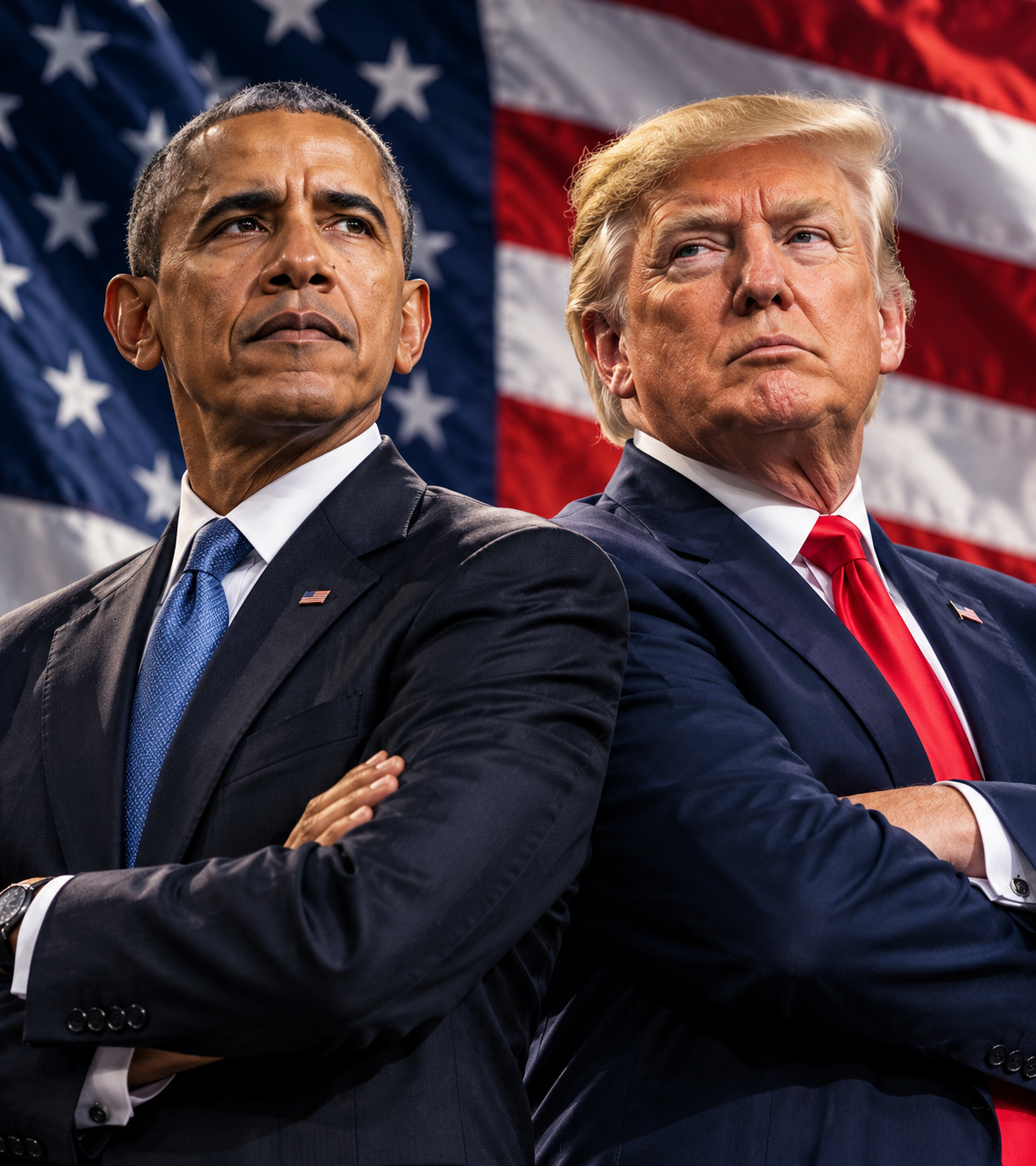
A complete historical verdict cannot be reduced to a single image or a four-choice poll.
But the question can still serve a valuable purpose.
It can encourage people to think about what they expect from political leadership.
It can remind us that presidents should be evaluated by their decisions and consequences, not only by slogans or party affiliation.
And it can create an opportunity for people with different views to discuss the future of their country.
YOUR TURN: MAKE YOUR CHOICE
Now that you have considered the major issues, which answer best represents your opinion?
A. Barack Obama — His overall leadership and achievements were stronger.
B. Donald Trump — His overall leadership and achievements were stronger.
C. Both were good — Each had important achievements despite their weaknesses.
D. Neither — Neither president met your standards.
There is no official correct answer because this is a question of political judgment.
But there is a better way to participate.
Don’t simply post a letter.
Explain why you chose it.
Which issue influenced your decision most?
The economy?
Health care?
Immigration?
National security?
The Supreme Court?
Presidential character?
Or protecting democratic institutions?
COMMENT A, B, C, OR D — AND TELL US YOUR BIGGEST REASON.
Respectful disagreement is welcome.
Different opinions make the discussion more interesting.
Facts make the discussion more valuable.
And thoughtful explanations make the conversation worth reading.
Final answer: A, B, C, and D are all possible opinions. None is an objectively correct factual answer.