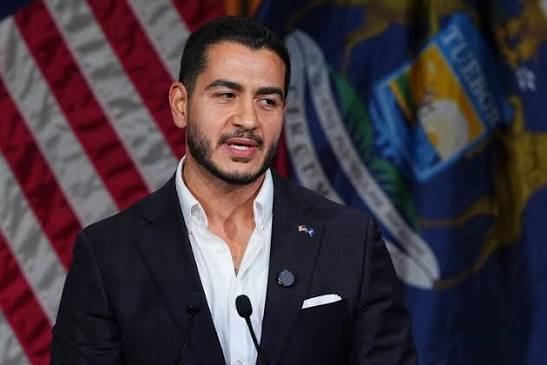
Abdul El-Sayed: Could He Become One of America’s Next Rising Political Leaders? His Political Future, His Supporters, His Critics, and the Questions Facing Michigan Voters
U.S. POLITICS | MICHIGAN | DEMOCRATIC PARTY | 2026 ELECTIONS

Abdul El-Sayed is a physician, public health advocate, and Democratic politician whose career raises an important question: Can a candidate focused on healthcare, economic inequality, and progressive reform build enough support to win a major election in Michigan?
Some Americans are attracted to politicians who promise major changes to the healthcare system and the economy.
Others are concerned about the costs of ambitious government programs and whether progressive policies can appeal to voters outside the Democratic Party’s traditional base.
For Abdul El-Sayed, those competing perspectives are central to his political future.
His background in medicine and public health distinguishes him from many traditional politicians.
But professional qualifications alone do not guarantee electoral success.
To win, a candidate must persuade voters that their ideas are practical, affordable, and capable of improving everyday life.
This article explores El-Sayed’s political background, his policy priorities, the arguments made by supporters and critics, and the challenges facing progressive Democrats in Michigan.
PART ONE — THE ELECTION VICTORY THAT MADE HISTORY
Topic 1: Abdul El-Sayed Has Just Changed American Political History
On November 3, 2026, voters in Michigan delivered a historic result.
Abdul El-Sayed defeated Republican Mike Rogers in the race for Michigan’s open U.S. Senate seat.
The victory made El-Sayed the first Muslim elected to the United States Senate.
It also marked an extraordinary political comeback for a candidate who had lost Michigan’s Democratic gubernatorial primary eight years earlier.
AP News+1
The election immediately raised questions extending beyond Michigan.
Could El-Sayed’s victory signal growing support for progressive Democrats?
Would his approach to healthcare and economic inequality influence the Democratic Party’s future?
And could his success encourage other candidates who believe American politics needs fundamental change?
His victory is historically significant.
But winning an election and delivering on campaign promises are two different challenges.
The next stage of his political career will involve turning proposals into legislative action.

Topic 2: Who Is Abdul El-Sayed?
Abdul El-Sayed was born on October 31, 1984, in Michigan.
He is the son of Egyptian immigrants.
His academic background includes study at the University of Michigan, the University of Oxford, and Columbia University.
He trained as a physician and epidemiologist before becoming a prominent public health administrator.
He later served as executive director of the Detroit Health Department and directed public health work in Wayne County.
Clarin.com
These experiences shaped his political identity.
Unlike politicians whose careers begin primarily in business or law, El-Sayed built much of his public reputation around healthcare.
His political message has frequently emphasized the relationship between health, poverty, housing, and economic opportunity.
That background helps explain why healthcare reform became one of his central campaign priorities.
Topic 3: Why His Senate Victory Matters Beyond Michigan
El-Sayed’s election carries both symbolic and political significance.
Symbolically, it represents a milestone in religious representation within the U.S. Senate.
Politically, it offers evidence that a progressive Democratic candidate can win a competitive statewide election.
Michigan supported Donald Trump in the 2024 presidential election.
Yet two years later, voters elected El-Sayed to the Senate.
That does not mean Michigan has permanently shifted toward either party.
It does show that voters can make different choices in different elections.
A candidate’s policy positions, the national political environment, and the qualities of the opponent can all influence the outcome.
Topic 4: Why Some Americans Support His Political Vision
El-Sayed has emphasized expanding access to healthcare, reducing medical costs, and limiting corporate influence in politics.
Supporters see these priorities as responses to problems affecting ordinary households.
His proposals include Medicare for All, measures addressing prescription drug costs, and changes to campaign finance rules.
His campaign also emphasized housing affordability and taxation.
Ann Arbor Record
For supporters, the appeal lies in his willingness to advocate significant structural reforms.
They may view him as someone prepared to challenge established political and economic interests.
But supporting an ambitious goal does not settle the question of how to achieve it.
The costs, feasibility, and consequences of proposed reforms remain important subjects for debate.
Topic 5: Why Some Americans Strongly Disagree With Him
Critics have questioned whether El-Sayed’s progressive proposals would expand federal government involvement too far.
Medicare for All, for example, raises questions about taxation, private insurance, healthcare financing, and the transition from the existing system.
His proposals for regulating corporations and changing campaign finance rules have also attracted political disagreement.
Foreign policy became another contentious issue during his Senate campaign.
His criticism of U.S. support for Israel generated disagreement among Democrats as well as Republicans.
During the election, Republican leaders also made serious allegations about his religious and political affiliations.
El-Sayed denied belonging to the Muslim Brotherhood, and the accusations should not be treated as established facts.
CBS News
A fair evaluation of his political record should distinguish criticism of policy positions from unsupported allegations about personal identity or loyalty.

PART TWO — THE POLICIES THAT COULD DEFINE HIS SENATE CAREER
Topic 6: Could Medicare for All Become His Biggest Political Battle?
Healthcare reform has been central to El-Sayed’s political identity.
His support for Medicare for All reflects the belief that healthcare should be available regardless of income or employment.
Supporters argue that a universal system could reduce financial barriers to medical care.
Critics question the fiscal costs, the potential effects on existing insurance arrangements, and the difficulty of restructuring a major sector of the economy.
The debate is not simply about whether Americans deserve healthcare.
It is about which system could provide high-quality care while remaining financially and administratively sustainable.
As a senator, El-Sayed would have the opportunity to advocate his position.
But passing major legislation would require support from other lawmakers.
Topic 7: What Would His Policies Mean for Prescription Drug Prices?
El-Sayed has advocated broader government authority to negotiate prescription drug prices.
His platform also supports public manufacturing of certain essential medications and changes to the role of pharmacy benefit managers.
These proposals reflect concerns about the cost of treatment.
For patients who require regular medication, price differences can have serious financial consequences.
Supporters believe stronger intervention could make medicines more affordable.
Critics may raise concerns about incentives for pharmaceutical innovation, government administration, and unintended effects on availability.
The effectiveness of any proposal would depend on its detailed design.
Topic 8: Could His Housing Proposals Help American Families?
El-Sayed’s housing agenda includes increasing construction, addressing corporate homeownership, and restricting certain practices that may contribute to higher rents.
Housing affordability is a complex problem.
New construction can increase supply.
But land-use restrictions, financing costs, labor shortages, and local economic conditions also affect prices.
A federal senator can propose legislation and funding measures.
However, many housing decisions remain under state and local authority.
That means successful reform would likely require cooperation across different levels of government.
Topic 9: Would His Tax Proposals Help or Hurt the Economy?
El-Sayed has proposed changes to taxation, including measures involving high-value capital gains and inheritances.
His platform also includes a proposed cost-of-living tax exemption.
Supporters may argue that these changes would reduce burdens on some households while asking wealthier taxpayers to contribute more.
Critics may question the potential effects on investment, business activity, tax revenue, and economic growth.
The consequences would depend on the precise rates, exemptions, enforcement rules, and broader economic environment.
A serious evaluation would require fiscal estimates rather than campaign slogans alone.
Topic 10: Could His Approach to Artificial Intelligence Become a National Debate?
In October 2026, El-Sayed introduced an AI policy proposal calling for restrictions on the development of the most powerful artificial-intelligence systems until stronger safeguards could be established.
He also proposed greater federal oversight of advanced AI laboratories and additional protections for whistleblowers.
The Washington Post
Supporters of strict AI regulation argue that powerful technologies may create risks involving employment, security, privacy, and public safety.
Critics of development freezes may argue that such restrictions could slow innovation and reduce American technological competitiveness.
The debate raises an important question.
How can the United States encourage useful innovation while managing serious risks?
That issue could become increasingly important during El-Sayed’s Senate career.
PART THREE — THE POLITICAL CHALLENGES AHEAD
Topic 11: Can El-Sayed Work With More Moderate Democrats?
His campaign demonstrated that progressive candidates can attract substantial electoral support.
But the Democratic Party includes lawmakers with different policy priorities.
Some support major expansions of federal programs.
Others prefer incremental reforms.
A senator who wants to pass legislation must often negotiate with colleagues who disagree.
El-Sayed’s ability to build those relationships could determine how much of his agenda advances.
Topic 12: Could He Work With Republicans?
Political disagreement does not necessarily prevent cooperation.
Lawmakers from different parties sometimes share concerns about issues such as prescription drug costs, government transparency, or technology regulation.
However, agreement on a problem does not guarantee agreement on a solution.
El-Sayed would need to identify opportunities for bipartisan legislation while maintaining his own policy commitments.
Topic 13: What Will His Relationship With President Trump Look Like?
El-Sayed campaigned as a critic of Trump administration policies.
Their political differences could lead to major disagreements over healthcare, immigration, economic policy, and foreign affairs.
But a senator’s responsibility includes representing constituents regardless of their political affiliation.
The practical question will be whether El-Sayed can advocate for Michigan while navigating a divided national political environment.
Topic 14: Could He Become a National Progressive Leader?
His election may increase his national visibility.
Progressive organizations could view his victory as evidence that ambitious policy platforms can succeed in competitive states.
However, one election does not establish that the same strategy would work everywhere.
Michigan’s political environment is distinctive.
El-Sayed’s future national influence will depend on his legislative work, communication, relationships, and public reception.
Topic 15: Could His Victory Influence the 2028 Presidential Election?
El-Sayed’s victory may become part of a broader Democratic debate about electoral strategy.
Some Democrats may argue that his success demonstrates the appeal of progressive economic policies.
Others may caution that Senate elections and presidential elections involve different candidates, coalitions, and circumstances.
Both observations are relevant.
His victory provides an important political example.
It does not establish a universal formula for winning.
PART FOUR — THE QUESTIONS MICHIGAN VOTERS WILL BE ASKING
Topic 16: Can He Deliver on His Healthcare Promises?
Campaign promises are easier to make than to enact.
Major healthcare reform would require legislation, funding, administrative planning, and political support.
Voters may eventually judge El-Sayed by whether he advances meaningful changes, even if his entire agenda cannot be enacted.
Topic 17: Will His Economic Policies Improve Affordability?
Affordability was a major theme of his campaign.
But the cost of living is influenced by many factors outside a single senator’s control.
Voters may examine whether his legislative proposals address practical problems and whether those proposals become law.
Topic 18: Can He Represent Voters Who Opposed Him?
A senator represents an entire state, not only the people who voted for them.
That includes Republicans, independents, and Democrats who preferred another candidate.
El-Sayed’s approach to constituent services and communication may influence how those voters assess his performance.
Topic 19: Will He Maintain His Progressive Positions?
Campaigns often involve ambitious promises.
Legislative negotiations frequently require compromise.
El-Sayed may face decisions about whether to support partial reforms when broader proposals lack sufficient votes.
Supporters and critics could interpret those decisions differently.
Topic 20: What Would Make His First Senate Term Successful?
Success could be evaluated in several ways.
Some voters may prioritize major legislation.
Others may focus on constituent services, oversight, government accountability, or federal investment in Michigan.
A fair assessment should consider what a senator can realistically accomplish and how effectively they use the powers of the office.
PART FIVE — THE BIGGER AMERICAN DEBATE
Topic 21: Does America Need More Politicians With Medical Backgrounds?
Healthcare professionals can bring practical knowledge to public policy.
But medical expertise does not automatically translate into expertise in every area of government.
A successful senator must also understand budgeting, foreign affairs, constitutional law, and legislative negotiation.
El-Sayed’s professional background is an asset in certain debates, but it is not a substitute for broader political judgment.
Topic 22: Could His Election Encourage More First-Time Candidates?
El-Sayed’s political journey includes an unsuccessful gubernatorial campaign followed by a successful Senate campaign.
That progression may interest people considering public service.
It demonstrates that an early electoral defeat does not necessarily end a political career.
However, future candidates would still need to build their own organizations, policy platforms, and voter coalitions.
Topic 23: Will His Religious Identity Continue to Receive Attention?
As the first Muslim elected to the Senate, El-Sayed occupies a historic position.
His election may prompt broader discussion about religious representation in American government.
The Constitution prohibits religious tests for federal office.
Voters are free to evaluate candidates’ policy positions and records.
But unsupported allegations based on religious identity should not be confused with legitimate political scrutiny.
Topic 24: Can Progressive Policies Win Beyond Traditionally Democratic Areas?
El-Sayed’s victory in Michigan is relevant to this debate.
It shows that a progressive candidate can win a statewide contest in a politically competitive state.
But different states have different electorates.
Campaign strategy, national conditions, candidate quality, and local concerns all matter.
A single election result should inform political analysis without being treated as conclusive proof.
Topic 25: Is Abdul El-Sayed the Future of the Democratic Party?
That remains an open question.
His election has given him a larger national platform.
His healthcare background and progressive agenda distinguish him from many other politicians.
But the Democratic Party’s future will be shaped by numerous leaders and millions of voters.
El-Sayed may become an influential voice within that process.
How influential he becomes will depend on what he accomplishes after taking office.
THE FINAL QUESTION: WHAT SHOULD AMERICANS EXPECT FROM ABDUL EL-SAYED?
His election represents an important political milestone.
It also marks the beginning of a new period of accountability.
Voters have chosen him to represent Michigan in the United States Senate.
Now the focus will increasingly shift from campaign promises to legislative performance.
Can he advance healthcare reform?
Can he help address affordability?
Can he work with lawmakers who disagree with him?
Can he represent a politically diverse state?
And can he turn national attention into meaningful results?
Those questions will help determine his political legacy.
Abdul El-Sayed has already made history by winning his Senate race. What remains uncertain is how much he will be able to change American policy.
That is the story voters will be watching next.
Reader Discussion: What Do You Think About Abdul El-Sayed?
What is your opinion of Abdul El-Sayed’s election to the U.S. Senate?
ABDUL EL-SAYED: THE POLITICAL FUTURE OF MICHIGAN — COULD HIS VICTORY CHANGE THE DEMOCRATIC PARTY AND AMERICAN POLITICS?
ULTRA-LONG WEBSITE ARTICLE CONTINUATION | PART 6–10 | TOPICS 26–50
The story continues with a deeper examination of Abdul El-Sayed’s political ambitions, his progressive agenda, the concerns of his critics, and the challenges he would face in Washington.
PART SIX — THE POLITICAL JOURNEY THAT BROUGHT ABDUL EL-SAYED INTO THE NATIONAL SPOTLIGHT
Topic 26: From Public Health Doctor to National Political Figure — How Did Abdul El-Sayed Get Here?
Every political career begins somewhere.
For some American leaders, the journey starts in a courtroom.
For others, it begins in business, the military, or local government.
For Abdul El-Sayed, much of his public career began with medicine and public health.
That background is important because it helps explain why healthcare became such a central part of his political identity.
Before entering statewide politics, El-Sayed worked in public health administration in Detroit.
His work involved questions that extend beyond hospitals and doctors’ offices.
Public health officials must consider how housing, transportation, income, environmental conditions, and access to medical care influence communities.
Those experiences can shape a politician’s understanding of government.
A physician may encounter the consequences of illness directly.
A public health administrator must also think about the systems that influence whether people become ill in the first place.
For El-Sayed, the connection between health and economic opportunity has become a recurring political theme.
His supporters may see that background as evidence that he understands problems affecting ordinary families.
His critics may argue that expertise in public health does not necessarily establish expertise in economic management, foreign policy, or national security.
Both considerations are relevant.
A senator must evaluate legislation across a wide range of subjects.
Professional experience can provide useful insight.
But it cannot eliminate the need for careful judgment in unfamiliar policy areas.
That is one reason El-Sayed’s transition from public health to national politics deserves attention.
He is moving from a field focused on population health into an institution where healthcare competes with dozens of other national priorities.
The question is whether he can translate his professional experience into effective legislative leadership.
Topic 27: The 2018 Election Defeat That Could Have Ended His Political Ambitions
In 2018, Abdul El-Sayed ran for governor of Michigan.
He competed in the Democratic primary against Gretchen Whitmer and Shri Thanedar.
Whitmer won the nomination and later became governor.
El-Sayed’s campaign did not produce the victory he wanted.
But it introduced him to a wider political audience.
His campaign emphasized progressive policies and drew attention from voters interested in a different direction for the Democratic Party.
An electoral defeat can be difficult for any candidate.
Campaigns require enormous investments of time, money, and personal energy.
Candidates spend months traveling, speaking with voters, raising funds, and defending their positions.
When the results arrive, the public verdict can be painful.
But losing an election does not necessarily mean that the candidate’s ideas disappear.
Political movements can continue beyond individual campaigns.
Supporters may remain engaged.
Organizations may continue advocating for similar policies.
And candidates may return with new strategies.
El-Sayed’s later political activity demonstrates that his 2018 defeat did not end his interest in public office.
For readers, the larger lesson is that political careers rarely follow perfectly predictable paths.
Some politicians win their first major election.
Others require several attempts.
And some never win despite years of campaigning.
The important question is what candidates learn from those experiences.
Topic 28: Why Progressive Democrats Have Paid Attention to Him
Progressive Democrats often emphasize expanded healthcare access, economic inequality, labor protections, and stronger oversight of corporate power.
El-Sayed has advocated positions associated with that political tradition.
His support for Medicare for All is one example.
His criticism of corporate influence in politics is another.
Supporters may believe that these positions address structural problems that incremental reforms have failed to solve.
Critics may question whether ambitious proposals can be implemented affordably or whether they would create unintended consequences.
These disagreements are central to modern Democratic politics.
Some Democrats favor broad changes to existing institutions.
Others prefer targeted reforms that may attract wider bipartisan support.
Neither approach automatically guarantees success.
A sweeping proposal may generate enthusiasm but struggle to pass Congress.
A narrower proposal may be easier to enact but fail to address the full problem.
For El-Sayed, the challenge would be determining when to advocate a comprehensive transformation and when to support a partial improvement.
That balance could shape his relationships with other Democrats.
It could also influence how voters judge his effectiveness.
Topic 29: Can a Politician Challenge Powerful Institutions and Still Govern Effectively?
Campaigning against powerful interests can attract attention.
Candidates may criticize insurance companies, pharmaceutical corporations, political donors, or government institutions.
Such criticism can resonate with voters who believe the political system does not respond adequately to ordinary people.
But governing requires more than identifying problems.
It requires writing legislation.
It requires understanding budgets.
It requires negotiating with lawmakers.
And it often requires cooperation with institutions that a candidate previously criticized.
That creates a difficult political tension.
A politician who compromises may be accused of abandoning principles.
A politician who refuses compromise may struggle to achieve legislative results.
Neither outcome is inevitable.
Effective leadership can involve maintaining clear goals while negotiating over practical details.
For El-Sayed, that distinction could become particularly important in healthcare policy.
Major reform would require coordination among federal agencies, healthcare providers, lawmakers, and state governments.
Strong political rhetoric might help establish priorities.
But administrative and legislative competence would determine whether those priorities produce workable policies.
Topic 30: What Makes Abdul El-Sayed Different From Traditional Politicians?
El-Sayed’s public profile combines several experiences.
He has worked in medicine.
He has administered public health programs.
He has participated in statewide electoral campaigns.
And he has advocated progressive economic and healthcare policies.
That combination distinguishes him from politicians whose careers have followed more conventional routes through legislative office.
But being different is not inherently an advantage.
Voters may appreciate candidates with professional experience outside politics.
They may also prefer politicians who have spent years learning legislative procedures.
The strongest assessment would consider both.
El-Sayed’s healthcare background could provide valuable insight into medical policy.
His political experience could help him communicate with voters.
But he would still need to demonstrate an ability to work within the Senate’s complicated legislative structure.
The question is not whether he resembles a traditional politician.
It is whether his experience equips him to serve effectively.
PART SEVEN — THE MICHIGAN ELECTION THAT SURPRISED THE COUNTRY
Topic 31: How Did Abdul El-Sayed Defeat Mike Rogers?
The 2026 Michigan Senate election became one of the country’s most closely watched political contests.
Republican Mike Rogers had served in Congress and possessed extensive experience in national security.
El-Sayed entered the general election with a very different political profile.
He emphasized economic affordability, healthcare reform, and reducing the influence of wealthy political donors.
Rogers argued for tax reductions, stronger border enforcement, and policies intended to support American manufacturing.
The candidates also disagreed sharply over foreign policy.
The campaign unfolded during a difficult national political environment for Republicans.
Concerns about living costs, international conflict, and the Trump administration influenced the broader midterm debate.
When voters cast their ballots, El-Sayed emerged victorious.
With approximately 96% of votes counted in early reporting, he had received about 52.5% compared with Rogers’ 45.6%.
Bloomberg+1
The result challenged predictions that a strongly progressive candidate would necessarily struggle in Michigan.
But it also raised another question.
Was the victory primarily an endorsement of El-Sayed’s policies, a rejection of the Republican candidate, or a combination of several factors?
The answer will likely remain a subject of political analysis.
Topic 32: The Controversial Endorsement That Shocked Michigan Democrats
One of the most unusual developments occurred shortly before Election Day.
Representative Haley Stevens, who had lost the Democratic Senate primary to El-Sayed, endorsed Republican Mike Rogers.
The decision generated significant controversy within the Democratic Party.
Stevens cited disagreements involving Israel and El-Sayed’s associations with controversial political figures.
Her decision also prompted criticism from Democrats who believed party members should support their nominee in a competitive Senate election.
According to reporting by Axios and The Washington Post, the endorsement produced substantial backlash and became a major late-campaign development.
Axios+1
The episode illustrated how deeply divided politicians can become over foreign policy and ideological disagreements.
It also demonstrated that winning a primary does not automatically resolve internal party tensions.
For El-Sayed, the challenge was to maintain a broad coalition despite those disagreements.
His eventual victory showed that the controversy did not prevent him from winning.
But it does not establish that every voter approved of his positions.
Topic 33: Why Religious Attacks Became a Major Campaign Controversy
El-Sayed’s Muslim identity became a prominent issue during the campaign.
Some Republican attacks questioned his loyalty and suggested connections to extremist organizations.
Those allegations were not substantiated.
Reuters reported that the campaign featured extensive anti-Muslim rhetoric and that no evidence established the alleged terrorist connections.
Reuters
This distinction matters.
Candidates can legitimately be questioned about their policies, public statements, professional records, and political associations.
But religious identity alone does not establish disloyalty or extremism.
The United States Constitution prohibits religious tests for federal office.
El-Sayed’s election therefore carries significance beyond the outcome of one Senate race.
It demonstrates that a Muslim candidate can win a major statewide election despite substantial controversy surrounding religious identity.
At the same time, his future performance should be evaluated according to the same standards applied to other senators.
Topic 34: Did Michigan Voters Reject Political Fear?
Some supporters interpreted El-Sayed’s victory as a rejection of attacks targeting his religion.
That interpretation is understandable given the campaign’s rhetoric.
But election results rarely have a single explanation.
Voters may have supported El-Sayed because of his healthcare proposals.
Others may have preferred his economic policies.
Some may have opposed the Republican candidate.
Others may have objected to the campaign’s religious attacks.
These motivations can overlap.
A voter may disagree with El-Sayed’s foreign policy while rejecting religious discrimination.
Another may support his economic agenda without sharing all his political positions.
A fair interpretation recognizes that voters are capable of making complex decisions.
The election result provides evidence of broad electoral support.
It does not reveal every individual’s motivation.
Topic 35: Could Michigan Become a Model for Future Democratic Campaigns?
El-Sayed’s campaign attracted attention because it combined progressive economic policies with a successful statewide election effort.
That could influence debates within the Democratic Party.
Some progressives may argue that candidates should campaign more aggressively on universal healthcare, affordability, and corporate influence.
Moderates may emphasize that the broader Democratic victories in 2026 included candidates with different political approaches.
Both arguments have evidence worth examining.
Associated Press reporting on November 6 described a party in which progressive and moderate candidates both claimed lessons from the midterm results.
AP News
Michigan may offer useful insights.
But its result should not be treated as a universal formula.
Different states have different voters, political histories, and economic conditions.
A strategy that succeeds in Michigan may require substantial changes elsewhere.
PART EIGHT — THE QUESTIONS WASHINGTON WILL ASK NEXT
Topic 36: Can El-Sayed Deliver Medicare for All?
Medicare for All is among El-Sayed’s most recognizable policy commitments.
But the Senate operates through legislation, negotiation, committee work, and voting procedures.
A single senator cannot establish a nationwide healthcare system alone.
Even with a Democratic majority, major reform would face significant challenges.
Lawmakers would need to agree on financing, benefits, administration, and the treatment of existing private insurance.
Healthcare providers and state governments would also be affected.
Supporters argue that comprehensive reform could simplify coverage and improve access.
Critics question the cost and potential disruption.
The challenge for El-Sayed will be translating a broad political objective into legislation capable of attracting sufficient support.
Topic 37: What Happens When Campaign Promises Meet Congressional Reality?
Campaign speeches often focus on clear objectives.
Legislation requires detailed decisions.
A candidate may promise lower prescription drug costs.
Lawmakers must then decide which medications are covered, how prices are negotiated, and how manufacturers and insurers are affected.
A candidate may promise more affordable housing.
Congress must consider funding, federal authority, construction incentives, and interactions with local regulations.
These details can determine whether a policy works.
El-Sayed’s effectiveness will depend partly on his willingness to engage with them.
Topic 38: Could He Become a Leading Voice on Corporate Influence?
El-Sayed has criticized the role of corporate money in American politics.
Campaign finance reform is an issue that can attract support from people with different ideological perspectives.
But agreement that political influence should be transparent does not automatically produce agreement on specific reforms.
Proposals must also comply with constitutional protections governing political expression and association.
A serious legislative effort would require navigating those legal constraints.
Topic 39: Will He Be Able to Build Relationships Across Party Lines?
Political campaigns often emphasize differences.
Legislative work sometimes requires cooperation.
El-Sayed may encounter Republicans who strongly disagree with his healthcare agenda but share concerns about particular economic or administrative issues.
He may also encounter Democrats who support his goals but prefer different methods.
The ability to identify workable areas of agreement could influence his legislative record.
Compromise does not necessarily require abandoning principles.
But it does require understanding which objectives can be advanced through negotiation.
Topic 40: Could His National Profile Become a Distraction?
High-profile politicians receive attention.
That attention can help them promote policy proposals.
It can also create pressure to respond constantly to national controversies.
El-Sayed will need to balance his national visibility with the responsibilities of representing Michigan.
Constituents may be more interested in local economic conditions, federal services, and infrastructure than in political arguments circulating online.
A senator’s effectiveness should be evaluated through more than media appearances.
PART NINE — THE NEXT GENERATION OF DEMOCRATIC POLITICS
Topic 41: Could El-Sayed Influence the Democratic Party’s Economic Message?
Affordability was central to his campaign.
He connected healthcare costs, economic inequality, and political influence in his public messaging.
Other Democrats may examine whether similar arguments could help them communicate with voters.
However, the effectiveness of an economic message depends on more than its wording.
Voters also consider the credibility of the proposed solutions.
A campaign that identifies real problems must explain how it intends to address them.
Topic 42: Does His Victory Prove Progressives Can Win Swing States?
His victory demonstrates that a progressive Democrat can win a competitive statewide race.
That is an important observation.
But it does not prove that every progressive candidate will win every swing state.
Candidate quality, political conditions, campaign organization, and opponents all matter.
The result should encourage further analysis rather than simplistic conclusions.
Topic 43: What Could Moderate Democrats Learn From His Campaign?
Moderate Democrats may study how El-Sayed communicated economic concerns and organized supporters.
They may also examine where his campaign faced difficulties.
A party can learn from successful candidates without adopting every one of their policy positions.
The challenge is identifying which lessons are transferable.
Topic 44: Could El-Sayed’s Election Influence Young Political Activists?
A relatively young senator-elect with a background outside traditional electoral politics may attract attention from people considering public service.
His career demonstrates that candidates can enter politics through professions such as medicine and public administration.
But aspiring leaders should also understand the demands of campaigning, fundraising, governance, and public scrutiny.
Political success requires sustained work beyond an election victory.
Topic 45: Will the 2028 Presidential Race Be Affected?
El-Sayed’s victory may influence discussions about the Democratic Party’s future.
Potential presidential candidates could study his campaign’s economic messaging and voter outreach.
Progressive organizations may cite his victory when advocating particular policy priorities.
Moderate Democrats may point to other successful candidates from the same election.
The 2028 presidential nomination will involve a much larger electorate and a different political environment.
El-Sayed’s election is relevant to that debate, but it does not determine its outcome.
PART TEN — THE FINAL VERDICT: WHAT DOES ABDUL EL-SAYED’S VICTORY REALLY MEAN?
Topic 46: Is He a Symbol of Political Change?
For some Americans, yes.
His election represents a historic milestone in religious representation.
It also demonstrates that a candidate with a progressive policy agenda can win a major statewide election.
But symbolic significance and governing effectiveness are separate questions.
The lasting importance of his career will depend partly on what he accomplishes in office.
Topic 47: Could His Policies Improve Everyday Life?
They could, depending on how they are designed and implemented.
Healthcare reform, housing affordability, and prescription drug costs are substantial policy challenges.
Proposals should be evaluated through evidence, fiscal analysis, and practical outcomes.
Political ambition alone does not guarantee success.
Topic 48: Why Do Some Americans Remain Skeptical?
Some voters disagree with El-Sayed’s approach to government spending and taxation.
Others question his foreign policy positions.
Some prefer a more moderate political philosophy.
Those disagreements are legitimate subjects for public debate.
A healthy democracy allows criticism of elected officials while rejecting discrimination and unsupported personal allegations.
Topic 49: What Should Voters Watch During His First Year?
El-Sayed is expected to begin his Senate term in January 2027.
His first year could reveal how he approaches legislative negotiations, committee work, constituent services, and major national debates.
Voters may examine the bills he sponsors, the positions he takes, and his participation in oversight.
Those actions will provide more concrete evidence of his priorities than campaign promises alone.
Topic 50: Has Abdul El-Sayed Changed American Politics Forever?
His election is historic.
But whether it produces lasting political change remains uncertain.
He has demonstrated that a Muslim candidate with a progressive platform can win a competitive Senate election.
That result may influence future campaigns and discussions about representation.
Yet his political legacy will depend on what comes next.
Winning an election gives a politician an opportunity to serve. What they accomplish with that opportunity determines how history remembers them.
ABDUL EL-SAYED: THE NEXT CHAPTER — WILL HIS HISTORIC MICHIGAN VICTORY TRANSFORM WASHINGTON, OR WILL POLITICAL REALITY STAND IN HIS WAY?
ULTRA-LONG WEBSITE ARTICLE CONTINUATION | PARTS 11–15 | TOPICS 51–75
Continuing directly from Topic 50 of your original article, without repeating the previous sections.
PART ELEVEN — THE REAL BATTLE BEGINS AFTER THE ELECTION
Topic 51: The Moment the Campaign Ends, a Much Harder Responsibility Begins
Winning an election can change a politician’s life overnight.
The campaign signs may still be standing along Michigan roads.
Supporters may still be celebrating.
Political commentators may still be discussing the result.
But for Abdul El-Sayed, the most important questions are no longer simply about how he won.
They are about what he will do with the opportunity.
During a campaign, a candidate can explain what is wrong with the country.
They can criticize policies they oppose.
They can promise to introduce legislation.
They can describe the future they hope to build.
But once elected, the expectations change.
Voters begin asking about results.
They want to know whether their representative is attending hearings, studying legislation, responding to constituents, and addressing problems affecting their communities.
A family struggling to pay medical bills may not care how many television interviews a senator gives.
They may care whether that senator supports policies that make treatment more affordable.
A factory worker worried about losing a job may not be interested in political arguments circulating on social media.
They may want to know whether their elected officials understand the challenges facing American manufacturing.
A small-business owner may want relief from rising operating costs.
A retiree may be concerned about prescription drug expenses.
A student may worry about tuition and future employment.
These are different problems.
They require different solutions.
And they cannot all be solved through one campaign promise.
For El-Sayed, this creates a defining challenge.
His political message has emphasized the relationship between economic security and public health.
Now he must demonstrate how those ideas can be translated into practical legislation.
His supporters may be willing to give him time.
His critics may examine his earliest decisions closely.
Undecided voters may reserve judgment until they see what he accomplishes.
The beginning of a Senate career can therefore be both an opportunity and a test.
A politician who communicates effectively during a campaign must learn to operate effectively inside a legislative institution.
Those are related skills, but they are not identical.
And the difference could determine whether El-Sayed becomes a lasting national political figure.
Topic 52: Why His First 100 Days Could Shape Public Expectations
The first 100 days of a political career often attract disproportionate attention.
Journalists examine early priorities.
Supporters look for evidence that campaign promises are being honored.
Opponents search for decisions they can criticize.
For a newly elected senator, however, the first 100 days are not equivalent to the first 100 days of a president.
A senator does not control the executive branch.
A senator cannot independently sign legislation into law.
And a newly elected senator must operate within committee assignments, party leadership structures, and established legislative procedures.
That means expectations must remain realistic.
El-Sayed could introduce legislation addressing healthcare affordability.
He could join other lawmakers in proposing reforms.
He could participate in oversight hearings.
He could establish constituent service operations throughout Michigan.
He could advocate for federal investments affecting his state.
But introducing a bill is not the same as passing one.
And passing a bill through the Senate is not the same as obtaining presidential approval.
The American legislative process deliberately requires cooperation among institutions.
This can frustrate voters who expect immediate change.
Yet those constraints apply to politicians across the ideological spectrum.
The meaningful question is whether El-Sayed uses his early months to build relationships, develop credible proposals, and establish priorities.
A senator who spends every day attracting national attention may become famous.
But fame alone does not demonstrate legislative effectiveness.
A senator who works quietly on complicated legislation may receive less attention while producing meaningful results.
The strongest political careers sometimes require both.
Topic 53: What Happens When Progressive Promises Face Washington’s Rules?
The United States Senate is an institution built around procedures.
Legislation may pass through committees.
Amendments can change proposals.
Budget rules may restrict what can be included in particular bills.
Senators may need to negotiate with members of their own party.
In many circumstances, Senate debate rules can create additional obstacles to advancing legislation.
For a politician who supports substantial changes to healthcare and taxation, those rules matter.
Consider Medicare for All.
The proposal is often discussed as a broad political objective.
But turning that objective into legislation would require decisions about financing, benefits, administration, and the future of existing insurance arrangements.
Lawmakers would also have to consider the effects on hospitals, physicians, employers, and state governments.
Some Democrats might support the general goal while disagreeing over implementation.
Republicans may oppose the underlying approach.
Even among supporters, important differences could emerge.
One senator might favor a rapid transition.
Another might prefer a gradual expansion of public coverage.
Another might prioritize targeted reforms to the existing system.
El-Sayed would have to decide how to respond to these disagreements.
Would he support partial reforms while continuing to advocate a comprehensive system?
Would he reject proposals he considered insufficient?
Would he attempt to negotiate a broader agreement?
Each approach carries political consequences.
Compromise can produce incremental progress.
It can also disappoint voters who expected fundamental change.
Refusing compromise can preserve a clear ideological position.
It can also leave important problems unresolved.
There is no universal answer that works for every legislative dispute.
The challenge is determining which choices best serve the public.
Topic 54: Could His Healthcare Experience Give Him an Advantage in Congress?
El-Sayed’s background in medicine and public health may be particularly relevant when Congress debates healthcare.
He understands that health outcomes are affected by more than medical treatment.
A person who cannot afford transportation may miss appointments.
A family living in unsafe housing may experience preventable health problems.
A worker without paid leave may delay necessary medical care.
A community facing environmental hazards may experience long-term public health consequences.
These connections are important.
They help explain why some public health professionals advocate policies involving housing, labor, transportation, and environmental protection.
However, medical expertise does not automatically resolve political disagreements.
Healthcare policy involves ethical questions.
It also involves financial and administrative decisions.
How should limited public resources be allocated?
Which services should receive priority?
What responsibilities should employers and individuals have?
How should the government balance affordability with innovation?
These questions require more than scientific knowledge.
They require public debate and political judgment.
El-Sayed’s professional background may help him identify problems.
His legislative effectiveness will depend on whether he can develop workable solutions.
Topic 55: Could His Biggest Challenge Come From Within His Own Party?
It is easy to imagine that El-Sayed’s most significant political opposition would come from Republicans.
After all, the parties disagree on many of his central policy priorities.
But some of his most complicated negotiations could involve fellow Democrats.
The Democratic Party includes politicians with different economic philosophies.
Some favor major expansions of public programs.
Others emphasize fiscal restraint and targeted assistance.
Some support aggressive regulation of corporations.
Others worry that excessive regulation could discourage investment.
Foreign policy disagreements can be equally significant.
For El-Sayed, maintaining relationships across these divisions could become essential.
A senator does not need to agree with every colleague.
But building legislative coalitions often requires understanding why others disagree.
A moderate Democrat may share concerns about healthcare costs while rejecting a complete replacement of private insurance.
A progressive Democrat may support broad reform but disagree over the transition timetable.
A senator who can identify common ground may be able to advance legislation even when the larger disagreement remains unresolved.
That is the difference between building a political identity and building a legislative coalition.
Both can matter.
But they require different kinds of leadership.
PART TWELVE — THE ECONOMIC QUESTIONS THAT MICHIGAN FAMILIES CANNOT IGNORE
Topic 56: Can Abdul El-Sayed Help Families Who Feel They Are Falling Behind?
Economic insecurity can affect people even when they are employed.
A worker may receive a regular paycheck and still struggle to cover essential expenses.
Housing costs can consume a large portion of household income.
Healthcare bills can disrupt family budgets.
Transportation expenses can make commuting more difficult.
Childcare costs can influence whether parents are able to work.
For some households, financial pressure accumulates gradually.
A small increase in one expense may be manageable.
Several increases occurring together can create serious difficulties.
El-Sayed’s political agenda has emphasized affordability.
That gives him an opportunity to focus on problems that affect many households.
But it also creates expectations.
Voters may want to know whether his proposals would increase disposable income, reduce necessary expenses, or improve access to stable employment.
Those outcomes are difficult to achieve through federal legislation alone.
Economic conditions are influenced by interest rates, business investment, international trade, consumer demand, and many other factors.
A senator can influence national policy.
But no senator can control the entire economy.
The challenge is developing proposals that are realistic about those limitations.
Topic 57: Michigan’s Automobile Industry Could Become a Major Political Test
Michigan has a long history connected to automobile manufacturing.
The industry has shaped communities, employment patterns, and regional economic development.
But automobile manufacturing is undergoing significant technological and economic changes.
Electric vehicles, automation, international competition, and supply-chain restructuring all create challenges.
Some workers may welcome new investment.
Others may worry about job security.
Companies may seek flexibility to respond to changing markets.
Labor organizations may emphasize wages, benefits, workplace safety, and job protection.
These interests sometimes overlap.
At other times, they conflict.
El-Sayed will need to consider how federal policy affects both workers and businesses.
Should the government provide incentives for domestic manufacturing?
How should public funds be tied to employment standards?
What role should trade policy play?
How should communities respond when factories reduce employment?
And how can workers acquire skills needed for new technologies?
These questions are particularly relevant to Michigan.
A senator who wants to represent the state effectively cannot focus exclusively on national ideological debates.
Industrial policy and regional employment are likely to remain important.
Topic 58: Could Artificial Intelligence Threaten Michigan Jobs?
Artificial intelligence has the potential to change many kinds of work.
Some technologies may increase productivity.
Others may automate particular tasks.
The consequences will vary across occupations and industries.
In manufacturing, advanced software may improve production planning, quality control, and maintenance.
In healthcare, AI systems may assist with administrative tasks and clinical analysis.
In offices, automation may alter how employees process information.
These developments could create opportunities.
They could also produce disruption.
El-Sayed’s interest in AI regulation makes this issue particularly relevant to his future legislative work.
Supporters of stronger regulation may argue that policymakers should address safety, accountability, and worker protections before problems become widespread.
Critics may worry that overly restrictive rules could discourage innovation and weaken American competitiveness.
Both perspectives deserve careful consideration.
A useful policy debate should distinguish between different AI applications and different levels of risk.
Not every automated system presents the same challenges.
The question is how to encourage beneficial technology while protecting workers and the public from serious harms.
Topic 59: Could Small Businesses Benefit From His Economic Agenda?
Small businesses operate in many different economic environments.
A restaurant owner may be concerned about food prices, rent, and employee costs.
A construction contractor may focus on equipment financing and labor availability.
A neighborhood retailer may worry about competition and consumer spending.
A technology startup may prioritize access to investment.
These businesses do not necessarily share the same political preferences.
Some may support expanded healthcare programs if those programs reduce uncertainty surrounding employee benefits.
Others may worry about the taxes required to finance such programs.
Some may favor stronger regulation of dominant corporations.
Others may be concerned about compliance costs.
El-Sayed’s challenge would be to explain how his economic agenda affects different kinds of businesses.
Broad promises about helping small businesses are common in American politics.
The details determine whether those promises are credible.
Topic 60: The Economic Question That Could Define His Political Reputation
Imagine a Michigan voter asking one simple question several years from now.
“Has my life become more affordable?”
That question could influence how El-Sayed’s performance is judged.
But it would be difficult to answer solely by examining his Senate record.
National economic conditions depend on numerous institutions and decisions.
A senator may support a policy that helps certain households while broader economic conditions worsen.
Alternatively, the economy may improve for reasons unrelated to a particular senator’s actions.
A fair evaluation should consider both policy outcomes and the limits of individual political responsibility.
Still, voters have every reason to demand practical explanations.
What legislation did he support?
What problems was it designed to solve?
What evidence suggests it worked?
Who benefited?
Who faced additional costs?
And what could have been done differently?
These questions are more useful than judging a politician exclusively by campaign slogans.
PART THIRTEEN — FOREIGN POLICY, NATIONAL SECURITY, AND THE MOST DIFFICULT QUESTIONS
Topic 61: Why Foreign Policy Could Become One of His Most Controversial Responsibilities
The United States Senate has significant responsibilities involving foreign policy.
Senators consider international agreements, national security legislation, military funding, and appointments to important government positions.
For El-Sayed, foreign policy may become one of the most closely scrutinized areas of his work.
His campaign included criticism of American policy toward Israel.
That position generated disagreement.
Some voters may view his criticism as an expression of concern about civilian suffering and the consequences of U.S. foreign policy.
Others may worry about the implications for American alliances and regional security.
A serious debate should examine the policies themselves.
What conditions should govern military assistance?
How should the United States protect civilian lives?
What responsibilities does it have toward allies?
How should policymakers respond to threats from armed groups?
And what diplomatic approaches are most likely to reduce conflict?
These are difficult questions.
They cannot be resolved through personal attacks or simplistic political labels.
Topic 62: Could He Face Pressure From Both Pro-Israel and Pro-Palestinian Voters?
American voters hold a wide range of views about the Israeli-Palestinian conflict.
Some emphasize Israel’s security and the importance of the U.S.-Israel relationship.
Others emphasize Palestinian rights, humanitarian conditions, and accountability under international law.
Many Americans express concern about both Israeli and Palestinian civilian lives.
Political disagreement can arise over military assistance, ceasefire proposals, diplomatic recognition, and long-term security arrangements.
El-Sayed’s positions may attract support from some groups and criticism from others.
His challenge will be explaining the principles behind his decisions.
A senator can advocate a particular foreign policy while remaining accountable for its potential consequences.
That requires careful reasoning and a willingness to address difficult questions.
Topic 63: Can a Progressive Senator Be Taken Seriously on National Security?
National security is sometimes presented as an issue dominated by politicians with military or intelligence backgrounds.
But senators from many professional backgrounds participate in national security decisions.
They rely on briefings, hearings, expert testimony, and committee work.
El-Sayed’s medical background does not automatically qualify or disqualify him from participating in these debates.
He would need to demonstrate knowledge, judgment, and seriousness.
Important questions could involve cybersecurity, military readiness, international alliances, intelligence oversight, and emerging technologies.
The ability to evaluate competing evidence will matter.
So will the willingness to acknowledge uncertainty.
National security decisions can have consequences far beyond domestic political debates.
Topic 64: What Would He Do During a Major International Crisis?
A senator’s role during an international emergency differs from that of the president.
The president directs the executive branch and serves as commander in chief.
Congress has important responsibilities involving funding, oversight, and the authorization of military action.
A senator may be called upon to evaluate urgent legislation.
They may question administration officials.
They may participate in classified briefings.
They may have to decide whether to support sanctions, assistance packages, or other measures.
El-Sayed’s approach to those responsibilities could become an important part of his public record.
Voters may reasonably expect him to explain the principles guiding his decisions.
But hypothetical claims about exactly how he would respond to an unknown future crisis would be speculation.
Topic 65: Could His Foreign Policy Positions Affect His Standing in the Democratic Party?
Foreign policy disagreements can create divisions within political parties.
Some Democrats emphasize maintaining longstanding alliances.
Others advocate substantial changes in American military assistance and diplomatic strategy.
These differences can influence endorsements, fundraising, and legislative cooperation.
El-Sayed may find allies on particular issues while disagreeing with those same lawmakers on others.
That is common in Congress.
Political coalitions are rarely identical across every policy area.
The important question is whether disagreement prevents cooperation on unrelated issues.
A senator who disagrees with colleagues about foreign policy may still work with them on healthcare, infrastructure, or economic development.
How El-Sayed manages those relationships could influence his effectiveness.
PART FOURTEEN — THE POLITICAL FUTURE NOBODY CAN PREDICT
Topic 66: Could Abdul El-Sayed Become a Household Name Across America?
National recognition can develop quickly in American politics.
A senator may attract attention through major legislation.
A widely watched hearing may introduce a politician to new audiences.
A significant speech may influence public debate.
A national crisis may bring previously unfamiliar lawmakers into the spotlight.
El-Sayed already has a political profile extending beyond Michigan.
But recognition is not the same as popularity.
Some Americans may admire his positions.
Others may strongly disagree.
Many may know little about him.
His future visibility will depend on his decisions, public communication, and the national issues that emerge.
Topic 67: Could He Eventually Run for President?
The possibility of a future presidential campaign may become a subject of speculation.
El-Sayed meets the constitutional age requirement for the presidency and, having been born in Michigan, meets the natural-born-citizen requirement.
But eligibility does not establish an intention to run.
Nor does a Senate victory automatically make someone a strong presidential contender.
A national campaign requires extensive organization, fundraising, policy development, and voter support across many states.
A candidate must also compete for a party’s nomination before reaching the general election.
There is no basis to treat a future El-Sayed presidential campaign as certain.
For now, his immediate political responsibility is the Senate seat he has been elected to fill.
Topic 68: Could He Become an Influential Voice in the 2028 Democratic Primary?
The Democratic presidential nomination process could involve candidates with very different political approaches.
Some may emphasize experience in executive government.
Others may focus on economic reform.
Still others may present themselves as candidates capable of appealing to moderate or independent voters.
El-Sayed’s election may become part of those discussions.
Candidates may examine his campaign’s economic messaging.
Progressive organizations may cite his victory when advocating particular policies.
But a successful Senate campaign in Michigan cannot establish which candidate would be strongest nationally.
The 2028 presidential electorate will be different.
So will the political environment.
Topic 69: Could Republicans Use His Policies as a National Campaign Issue?
Republicans may criticize El-Sayed’s proposals as examples of what they believe is excessive government intervention.
They may focus on healthcare financing, taxation, regulation, or foreign policy.
Democrats may respond by emphasizing affordability, access to care, and economic opportunity.
This type of disagreement is part of electoral politics.
The quality of the debate depends on whether claims are accurate.
A proposal should be evaluated according to what it actually contains.
Predicted costs should be supported by credible analysis.
And criticism should distinguish between a politician’s stated positions and claims made by opponents.
Topic 70: What Could End His Political Momentum?
Political momentum can weaken for many reasons.
A politician may struggle to deliver promised legislation.
They may become involved in controversies.
Their party may change direction.
Voters may become dissatisfied with national economic conditions.
Or new political figures may attract greater attention.
None of these outcomes can be predicted with confidence.
For El-Sayed, maintaining public trust will likely require consistent communication and a record of responsible decision-making.
Political popularity can change.
A durable reputation is usually built over time.
PART FIFTEEN — THE QUESTIONS THAT WILL DEFINE HIS LEGACY
Topic 71: Will He Be Remembered for Making History or Making Policy?
El-Sayed’s election has historic significance.
But a political career can be evaluated in more than one way.
Representation matters.
Legislation matters.
Constituent services matter.
Oversight matters.
And the long-term consequences of policy decisions matter.
A senator may become famous for a historic first.
But voters may eventually judge that senator primarily by the work accomplished in office.
The two forms of significance are not mutually exclusive.
El-Sayed could be remembered for both.
Whether that happens remains uncertain.
Topic 72: Could His Victory Change How Americans Think About Political Representation?
The United States includes people from many religious, ethnic, cultural, and professional backgrounds.
Its political institutions have not always reflected that diversity equally.
El-Sayed’s election adds a new chapter to the history of religious representation in Congress.
For some Americans, that milestone may demonstrate the possibility of participating fully in national political life regardless of religious identity.
For others, the most important question will remain whether he represents their policy preferences.
Both representation and accountability are relevant.
A politician’s background can carry historical meaning.
But elected officials must still be evaluated by their decisions.
Topic 73: What Should Supporters Expect From Him?
Supporters may reasonably expect El-Sayed to advocate the priorities emphasized during his campaign.
They may want him to introduce legislation addressing healthcare affordability.
They may expect him to challenge policies he believes favor wealthy political interests.
They may want him to speak publicly about economic inequality.
But supporters should also recognize the limits of individual legislative power.
Not every bill will pass.
Not every negotiation will succeed.
And not every political objective can be accomplished during one term.
The most useful form of accountability examines effort, judgment, and results.
Topic 74: What Should Critics Expect From Him?
Critics have an equally important role in democratic accountability.
They may challenge his policy assumptions.
They may question the costs of proposed legislation.
They may disagree with his foreign policy positions.
They may argue that alternative approaches would produce better outcomes.
Those disagreements can improve public debate when they are grounded in evidence.
Criticism becomes less informative when it relies on unsupported allegations or personal identity.
The strongest political arguments address actions, proposals, and consequences.
Topic 75: The Final Question — Can Abdul El-Sayed Turn Political Opportunity Into Lasting Change?
His journey from public health to national politics is unusual.
His election has generated attention.
His policy agenda has attracted both support and criticism.
And his future responsibilities will involve some of the most difficult issues facing the United States.
Healthcare costs.
Economic inequality.
Housing affordability.
Technological change.
Foreign policy.
Government accountability.
Political polarization.
Each issue involves competing interests and difficult tradeoffs.
No senator can solve all of them alone.
But every senator has opportunities to contribute.
El-Sayed’s challenge will be deciding how to use those opportunities.
He can focus on building legislative coalitions.
He can use hearings to investigate problems.
He can propose reforms.
He can advocate for Michigan’s communities.
And he can explain his decisions to the people he represents.
Whether those efforts produce lasting change will depend on many factors.
Some will be within his control.
Others will not.
That uncertainty is part of democratic government.
Abdul El-Sayed’s election may be the beginning of an influential political career, but his legacy will be determined by what happens after the celebration ends.
The voters have made their choice.
The next chapter belongs to the work of governing.
ABDUL EL-SAYED: THE NEXT POLITICAL BATTLE — CAN HE DELIVER REAL CHANGE FOR MICHIGAN, OR WILL WASHINGTON CHANGE HIM FIRST?
ULTRA-LONG WEBSITE ARTICLE CONTINUATION | PARTS 16–20 | TOPICS 76–100
Continuing directly from Topic 75 of your previous article, with deeper political analysis, new questions, competing perspectives, and the challenges that could shape Abdul El-Sayed’s future.
PART SIXTEEN — THE PEOPLE WHO WILL JUDGE HIS POLITICAL FUTURE
Topic 76: The Michigan Families Who Will Be Watching Every Decision
An election victory can be celebrated in a single night.
But the responsibilities that follow can last for years.
For Abdul El-Sayed, the next stage of his political career will involve people whose lives are affected by decisions made in Washington.
Some live in large cities.
Others live in small towns.
Some work in factories, hospitals, schools, restaurants, or offices.
Others are retired, searching for employment, attending college, or caring for family members.
Their political opinions are not identical.
Their economic circumstances are different.
And their expectations of government may conflict.
Yet they share one important connection.
They are part of the state El-Sayed has been elected to represent.
For some families, healthcare affordability may be the most important issue.
A parent may worry about the cost of treating a child’s chronic illness.
An older resident may be concerned about paying for prescription medication.
A worker may fear losing health insurance after changing jobs.
Other families may have entirely different priorities.
They may want lower taxes.
They may want fewer government regulations.
They may worry about crime, immigration, or national security.
They may believe federal spending has become excessive.
El-Sayed will have to represent people who disagree with him.
That is one of the defining responsibilities of elected office.
A campaign can concentrate on persuading enough voters to win.
Governing requires considering the interests of the entire constituency.
A successful senator does not need unanimous approval.
Such approval is practically impossible in a politically divided society.
But voters can reasonably expect their concerns to be heard.
They can expect accurate explanations of legislative decisions.
They can expect constituent services to be available regardless of political affiliation.
And they can expect their representative to take the responsibilities of office seriously.
The central question is whether El-Sayed can maintain the enthusiasm of his supporters while demonstrating that he understands the concerns of those who opposed him.
That challenge will not disappear after his first year.
It will continue throughout his Senate career.
Topic 77: Could Rural Michigan Become His Most Difficult Political Test?
Michigan is not politically uniform.
Its large metropolitan areas have different economic conditions from many rural communities.
A policy that appeals to voters in Detroit may be received differently in a smaller agricultural or manufacturing community.
Rural residents may be concerned about hospital closures, access to physicians, transportation, and economic development.
Some communities face difficulties recruiting healthcare professionals.
Others are concerned about the future of local businesses.
Broadband availability, infrastructure maintenance, and educational opportunities may also be important.
El-Sayed’s public health background could help him engage with rural healthcare concerns.
But rural voters may disagree with his positions on taxation, regulation, energy, or social issues.
A meaningful effort to represent these communities would require more than occasional campaign appearances.
It would require understanding local priorities.
Consider a hypothetical rural family whose nearest hospital is a considerable distance away.
Their healthcare concern may not be limited to insurance coverage.
They may need reliable emergency transportation.
They may need access to specialists.
They may need a local medical facility capable of providing essential services.
A national healthcare proposal that focuses only on insurance financing may not fully address those problems.
That distinction matters.
Access to insurance and access to medical care are related, but they are not identical.
For El-Sayed, rural healthcare could become an opportunity to demonstrate that his policy agenda extends beyond broad national slogans.
The challenge would be developing solutions that address the realities of different communities.
Topic 78: Can He Win the Trust of Voters Who Supported Republicans?
Winning an election does not mean winning the confidence of every voter.
Some Michigan residents may have supported Mike Rogers because they preferred Republican economic policies.
Others may have been concerned about national security.
Some may have disagreed with El-Sayed’s proposals for expanding federal programs.
Others may have voted according to longstanding party loyalty.
Those voters remain part of Michigan.
They will continue paying federal taxes.
They will continue using public infrastructure.
They will continue being affected by healthcare policy, economic conditions, and national legislation.
El-Sayed cannot reasonably expect all of them to adopt his political philosophy.
But he can attempt to demonstrate that his office is responsive to their concerns.
One way to do that is through constituent services.
Senate offices often help residents navigate federal agencies, understand government procedures, and address administrative difficulties.
These services are not supposed to depend on party affiliation.
A resident seeking assistance with a federal benefit should not have to agree with a senator’s healthcare proposals.
A veteran requesting help with a government agency should not have to share the senator’s foreign policy positions.
Such practical responsibilities may receive less national attention than political speeches.
But they can influence how constituents evaluate their representation.
Topic 79: What Happens When Supporters Become Disappointed?
Political enthusiasm can create high expectations.
During a campaign, supporters may imagine rapid progress on major issues.
They may believe that electing a candidate will produce meaningful change.
But the legislative process can move slowly.
A proposal may be introduced and remain in committee.
Negotiations may fail.
A bill may pass one chamber of Congress but not the other.
A president may oppose legislation supported by a senator.
These obstacles can create frustration.
Supporters may begin asking why promises have not been fulfilled.
Some may argue that their senator should compromise.
Others may insist that compromise would betray the campaign’s principles.
El-Sayed could face that tension on healthcare reform, taxation, or foreign policy.
His response would matter.
A politician who explains the reasons for legislative setbacks may preserve public understanding even when outcomes are disappointing.
A politician who repeatedly promises results without acknowledging institutional limits may eventually lose credibility.
The distinction is important.
Accountability does not require pretending that every political problem has an easy solution.
It requires explaining what has been attempted, what obstacles remain, and what can realistically happen next.
Topic 80: The Voters Who May Decide Whether His Career Continues
Political careers depend on public support.
That support can change.
A candidate may win an election because voters are dissatisfied with the opposing party.
Years later, the same voters may judge the incumbent according to a different set of concerns.
Economic conditions may change.
New political issues may emerge.
The candidate’s public reputation may improve or decline.
For El-Sayed, the voters who determine his future may include people who did not strongly support him in his first Senate campaign.
Some may be independents.
Others may be moderate Democrats.
Some may be Republicans willing to evaluate individual candidates.
The important point is that voters are not permanently fixed into political categories.
They can change their minds.
They can become more politically active.
They can become less engaged.
And they can decide that a politician who once represented their preferences no longer does so.
El-Sayed’s challenge will be demonstrating over time that his work deserves continued public confidence.
PART SEVENTEEN — THE HEALTHCARE BATTLE THAT COULD DEFINE HIS LEGACY
Topic 81: Why Healthcare Reform Is More Complicated Than a Campaign Promise
Healthcare is one of the most complicated areas of American public policy.
It involves patients, physicians, hospitals, insurers, employers, pharmaceutical companies, government agencies, and taxpayers.
Each group has different responsibilities and interests.
A reform intended to benefit one group may create costs or administrative challenges for another.
For example, reducing patient expenses can improve access to treatment.
But policymakers must determine how providers will be paid.
Expanding insurance coverage can help people obtain medical services.
But communities must also have enough doctors, nurses, and medical facilities to meet demand.
Lowering prescription drug prices can reduce financial pressure on patients.
But lawmakers must consider how pricing rules affect pharmaceutical research, manufacturing, and supply.
These tradeoffs do not mean reform is impossible.
They mean successful reform requires detailed planning.
El-Sayed’s medical background may help him understand certain aspects of these problems.
But effective legislation would require consultation with many different stakeholders.
Supporters of Medicare for All argue that a universal public insurance system could simplify coverage and reduce financial barriers.
Critics question the cost of transitioning to such a system and the consequences for existing insurance arrangements.
A serious debate should examine both.
The most useful question is not simply whether a proposal sounds attractive.
It is whether the proposal can deliver its intended benefits at an acceptable cost.
Topic 82: Could He Help Americans Who Are Afraid of Medical Bills?
Medical expenses can create financial uncertainty.
A person may delay treatment because they are worried about the cost.
A family may struggle with deductibles or other out-of-pocket expenses.
Someone with a serious illness may face complicated insurance decisions while dealing with health concerns.
These problems can be emotionally and financially difficult.
El-Sayed’s policy agenda places considerable emphasis on healthcare affordability.
But reducing medical costs involves several possible approaches.
Lawmakers can examine insurance coverage.
They can consider prescription drug pricing.
They can investigate hospital billing practices.
They can evaluate administrative costs.
They can address competition in healthcare markets.
And they can consider programs intended to help people with limited financial resources.
Different proposals may produce different outcomes.
A reform that lowers premiums could still leave patients facing substantial deductibles.
A reform that reduces prescription prices may not address hospital expenses.
A reform that expands insurance coverage may not solve provider shortages.
The effectiveness of a healthcare agenda depends on whether it addresses these distinctions.
Topic 83: What Would Medicare for All Mean for People Who Already Have Insurance?
This is one of the most important questions in the healthcare debate.
Many Americans receive insurance through their employers.
Others purchase coverage independently.
Some rely on Medicare, Medicaid, or other public programs.
A proposal to create a comprehensive national insurance system would need to explain how these arrangements would change.
Supporters may argue that a universal system could reduce dependence on employment-based insurance.
They may believe that people would benefit from consistent coverage when changing jobs.
Critics may worry about losing existing insurance arrangements or experiencing disruptions during the transition.
Those concerns cannot be dismissed through broad assurances.
A detailed proposal would need to address benefits, provider access, financing, and administrative implementation.
It would also need to explain how current programs would interact with any new system.
For El-Sayed, this issue could become one of the most difficult parts of advocating comprehensive reform.
Topic 84: Could Prescription Drug Reform Become an Area of Compromise?
Comprehensive healthcare reform can generate intense disagreement.
But some narrower issues may offer opportunities for negotiation.
Prescription drug costs are one example.
Politicians from different parties have expressed concerns about medication affordability, although they disagree over solutions.
Potential policy approaches include pricing negotiations, greater transparency, competition, and changes to reimbursement arrangements.
Each approach has potential benefits and drawbacks.
El-Sayed could advocate stronger measures while exploring whether narrower reforms can attract broader support.
That would create a strategic choice.
Should he prioritize comprehensive legislation that reflects his entire policy vision?
Or should he pursue incremental changes that may be easier to enact?
A senator may attempt both.
The challenge is deciding where to invest limited legislative time and political influence.
Topic 85: Could Healthcare Become His Greatest Achievement or Greatest Frustration?
Healthcare reform has the potential to shape El-Sayed’s political legacy.
If he helps advance meaningful legislation, supporters may view that work as evidence that his public health experience translated into effective governance.
If his proposals repeatedly fail, critics may argue that his agenda was politically unrealistic.
But those judgments should consider the broader legislative environment.
A senator may make a serious effort without obtaining enough votes.
A smaller reform may deliver tangible benefits even if it falls short of the original objective.
And a major legislative victory may produce consequences that require later adjustments.
Political success should therefore be evaluated through evidence.
What changed?
Who benefited?
What costs emerged?
Were the reforms sustainable?
And how did they compare with available alternatives?
Those questions will matter more than the number of speeches delivered.
PART EIGHTEEN — THE MONEY, POWER, AND CORPORATE INFLUENCE DEBATE
Topic 86: Can a Senator Challenge Corporate Influence Without Hurting Economic Growth?
El-Sayed has criticized the influence of wealthy donors and powerful corporations in politics.
His concerns fit into a longstanding American debate.
How much influence should private wealth have over government decisions?
Supporters of stronger campaign finance restrictions argue that concentrated political spending can reduce public confidence in democratic institutions.
Critics of certain restrictions emphasize constitutional protections for political speech and association.
Economic regulation raises another set of questions.
Corporations employ workers.
They produce goods and services.
They invest in research and infrastructure.
They also seek profits and may advocate policies that benefit their interests.
Government must decide when intervention is justified.
Excessive concentration in a market can reduce competition.
But poorly designed regulation can also impose costs on businesses and consumers.
The challenge is finding rules that protect the public while allowing productive economic activity.
Topic 87: Could Campaign Finance Reform Become a Major Priority?
American campaign finance law is complex.
Political donations, independent expenditures, disclosure requirements, and constitutional protections all shape the system.
El-Sayed’s criticism of corporate political influence could lead him to support changes in these areas.
But proposed reforms must operate within existing constitutional law.
Some changes may require legislation.
Others may face judicial challenges.
Still others may require constitutional amendments, which are especially difficult to adopt.
The practical question is which reforms are legally viable and likely to improve transparency or accountability.
Topic 88: What Would His Tax Agenda Mean for Wealthy Americans?
Tax policy is one of the clearest areas of disagreement between progressives and conservatives.
Progressives often argue that higher-income households should contribute a larger share of public revenue.
Conservatives often emphasize the importance of investment incentives, economic growth, and limiting government spending.
El-Sayed’s tax proposals would be evaluated within that debate.
Supporters may argue that additional revenue could help finance public services or reduce financial burdens on lower-income households.
Critics may question the effects on investment, entrepreneurship, and long-term growth.
The consequences depend on the specific structure of the tax.
Rates matter.
Exemptions matter.
Enforcement matters.
And the way government uses the revenue matters.
A serious analysis should examine the complete proposal rather than relying only on political labels.
Topic 89: Could Corporate Regulation Affect Michigan Manufacturing?
Michigan’s manufacturing economy depends on investment, supply chains, skilled workers, and access to markets.
Regulatory policy can influence business decisions.
Some regulations protect workers, consumers, and the environment.
Others may create compliance costs.
The effects vary according to the rule and industry.
El-Sayed would need to evaluate whether proposed regulations produce benefits that justify their costs.
A policy that works well for a large multinational corporation may affect a small supplier differently.
Likewise, eliminating a regulation may reduce expenses while creating other risks.
The goal of responsible policymaking should be to understand these tradeoffs.
Topic 90: Can He Balance Economic Fairness With Economic Competitiveness?
Economic fairness and economic competitiveness are sometimes presented as opposing goals.
But the relationship is more complicated.
A well-trained workforce can improve productivity.
Reliable infrastructure can support business development.
Access to healthcare may help workers remain economically active.
At the same time, excessive costs or poorly designed policies can discourage investment.
El-Sayed’s challenge will be explaining how his proposals address both sides.
A policy agenda that emphasizes fairness without considering competitiveness may face criticism.
An agenda that emphasizes competitiveness without addressing household insecurity may also fail to satisfy voters.
The difficult task is developing policies that recognize both concerns.
PART NINETEEN — THE NATIONAL POLITICAL SPOTLIGHT
Topic 91: Could El-Sayed Become One of the Democratic Party’s Most Recognizable Senators?
National political visibility can develop through several channels.
A senator may become known for major legislation.
They may attract attention during congressional hearings.
They may participate in debates about national emergencies.
Or they may become a prominent voice within their political party.
El-Sayed’s background and election have already generated interest.
But sustained national influence requires more than a compelling biography.
He would need to demonstrate expertise, consistency, and an ability to communicate effectively.
His public reputation could also be shaped by controversy.
A highly visible politician may attract both passionate support and intense opposition.
The question is whether national attention helps advance meaningful work.
Topic 92: Could His Relationship With Progressive Leaders Shape His Future?
Progressive politicians and organizations may find common ground with El-Sayed on healthcare, taxation, and corporate influence.
Those relationships could provide opportunities for collaboration.
But progressive lawmakers do not agree on every issue.
They may differ over legislative strategy, foreign policy, or political compromise.
El-Sayed would need to determine which alliances help advance his priorities.
The ability to work with like-minded colleagues could be valuable.
The ability to cooperate with those who disagree may be equally important.
Topic 93: Could His Victory Influence Future Democratic Candidates?
Political parties study election results.
They examine messages, campaign organization, fundraising, voter participation, and candidate characteristics.
El-Sayed’s victory may attract attention from Democrats considering future campaigns.
Some may focus on his economic message.
Others may examine his approach to healthcare.
Still others may study how he responded to criticism.
But the lessons should be applied carefully.
One election does not prove that a particular strategy will succeed in every state.
Local circumstances matter.
Candidate credibility matters.
And national political conditions matter.
Topic 94: Could He Become a Major Republican Target?
A senator who receives national attention may also become a prominent target for the opposing party.
Republicans may criticize El-Sayed’s positions on healthcare financing, taxation, regulation, and foreign policy.
They may argue that his agenda is too expansive or too expensive.
Democrats may respond by emphasizing the intended benefits of his proposals.
The resulting debate could influence how Americans perceive him.
But criticism should remain focused on verifiable policies and actions.
Religious identity is not evidence of political misconduct.
Unsupported allegations should not be treated as established facts.
Topic 95: What Would Make Him a Serious National Political Leader?
A national political leader needs more than recognition.
They need a coherent policy agenda.
They need judgment under pressure.
They need the ability to communicate with different audiences.
They need relationships across institutions.
And they need a record that voters can evaluate.
El-Sayed may have opportunities to develop these qualities during his Senate career.
Whether he becomes a major national leader will depend on how he uses them.
PART TWENTY — THE DECISIONS THAT COULD DEFINE HIS PLACE IN AMERICAN HISTORY
Topic 96: Will He Prioritize Michigan or National Political Ambitions?
A senator can participate in national debates while remaining focused on state responsibilities.
The two goals are not necessarily incompatible.
But tensions can arise.
National media attention may reward dramatic statements.
Constituents may prefer practical assistance and legislative results.
El-Sayed will need to decide how to allocate his time and political influence.
A strong Senate career can involve both national leadership and local service.
The challenge is ensuring that one does not replace the other.
Topic 97: What Happens if His Most Important Bills Fail?
Legislative failure is common.
Many proposals never become law.
Some fail because of ideological opposition.
Others fail because of budgetary concerns or disagreements over implementation.
A senator can respond in several ways.
They can revise a proposal.
They can seek additional support.
They can pursue a narrower reform.
Or they can continue advocating the original policy while waiting for political conditions to change.
El-Sayed’s decisions in those circumstances may reveal his governing philosophy.
Topic 98: Could Compromise Strengthen or Weaken His Reputation?
Compromise can be politically risky.
Supporters may believe that a politician has abandoned important principles.
Critics may argue that a compromise does not go far enough.
But compromise can also produce legislation that would otherwise be impossible.
The important distinction is between negotiating over methods and abandoning fundamental objectives.
A politician can maintain a long-term goal while supporting an intermediate reform.
Whether that strategy is appropriate depends on the circumstances.
Topic 99: What Should Americans Watch Over the Next Several Years?
El-Sayed’s political performance can be assessed through concrete evidence.
Voters can examine the legislation he sponsors.
They can review his voting record.
They can consider his participation in committee hearings.
They can evaluate how his office responds to constituent concerns.
They can examine his explanations of difficult decisions.
And they can compare his campaign commitments with his actions.
These measures are more informative than judging a politician solely by public popularity.
Topic 100: The Final Question — Will Abdul El-Sayed Change Washington, or Will Washington Change Him?
This is the central question of the next stage of his political career.
El-Sayed entered national politics with a distinctive professional background and an ambitious policy agenda.
He has emphasized healthcare reform, economic affordability, and concerns about corporate influence.
His election has attracted attention because of both its historical significance and its political implications.
But Washington is an institution shaped by competing interests.
Legislation requires negotiation.
Government programs require financing.
National security decisions involve uncertainty.
Economic policy produces tradeoffs.
And elected officials must represent people with different beliefs.
For El-Sayed, success will require more than maintaining a recognizable political identity.
He will need to make difficult decisions.
He will need to evaluate evidence.
He will need to explain compromises.
He will need to accept responsibility for outcomes.
And he will need to distinguish between what he hopes to accomplish and what is realistically possible.
Some supporters may want him to remain uncompromising.
Others may prefer a practical approach that produces smaller but achievable reforms.
Critics may challenge both strategies.
That tension is not unique to El-Sayed.
It is a central feature of representative government.
The lasting question is not whether Abdul El-Sayed can attract attention, but whether he can use political power responsibly and effectively.
His election created an opportunity.
His decisions will determine what he makes of it.
And the people of Michigan will have the opportunity to judge those decisions.
READER DISCUSSION — WHAT DO YOU THINK?
What do you expect from Abdul El-Sayed’s Senate career?
THE FINAL QUESTION FOR AMERICAN READERS
Abdul El-Sayed has won an important election.
Now he faces the challenge of representing a politically diverse state and participating in a divided national debate.
Some Americans see his victory as an encouraging sign for progressive politics.
Others remain skeptical of his proposals.
Many may simply want to see whether he can deliver meaningful results.
Those perspectives will continue to shape the discussion.
And the most important evidence will come from his performance in office.
Will Abdul El-Sayed become one of the most influential voices in the Democratic Party, or will the challenges of Washington limit his ability to achieve his goals?
Only time will tell.