
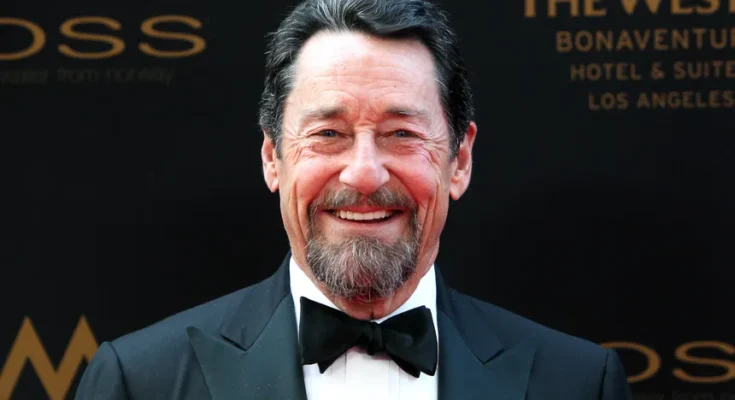
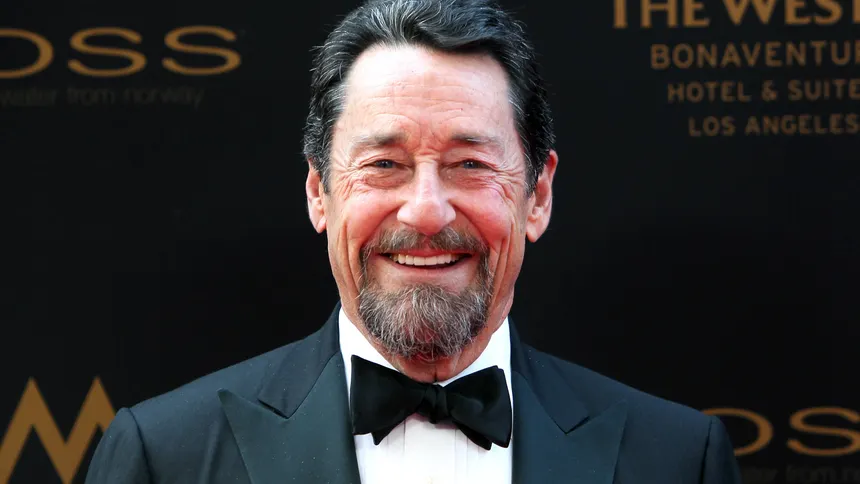


Peter Cullen’s Cause of Death Revealed: The Heartbreaking Final Chapter of the Legendary Voice Behind Optimus Prime
For generations of fans, his voice represented courage, kindness, sacrifice, and hope. Now, the reported details surrounding Peter Cullen’s death have brought renewed sadness to the millions who grew up hearing him bring one of the world’s most beloved animated heroes to life.
There are certain voices that become so deeply connected to our childhood memories that hearing them can instantly transport us back in time. They remind us of Saturday mornings in front of the television, favorite toys scattered across the living room floor, and the unforgettable characters who taught us what it meant to be brave.
For millions of people around the world, Peter Cullen was one of those voices.
He was the man behind Optimus Prime, the courageous leader of the Autobots in the Transformers franchise. His deep, commanding, yet remarkably compassionate voice helped transform a fictional robot into a symbol of leadership, loyalty, and selflessness.
But behind that legendary voice was a real man whose life extended far beyond the recording studio.
According to reports published in September 2026, Cullen died on August 26, 2026, at the age of 85. Subsequent reporting about his death certificate revealed that cardiac arrest, following respiratory arrest, was listed among the medical circumstances surrounding his passing. A malignant tumor in the lower lobe of the lung was also reportedly identified as an underlying cause.
The news offered a painful reminder that even the people whose work seems timeless are not beyond the reach of illness, aging, and loss.
For those who admired Cullen, however, his story is about far more than the circumstances of his death. It is about an extraordinary career, an unforgettable character, and a simple philosophy that helped make his work meaningful to generations of viewers.
A Voice That Made Millions Believe in Heroes
When Peter Cullen first brought Optimus Prime to life in the original Transformers animated series in 1984, few could have predicted how profoundly the character would resonate with audiences.
At first glance, Optimus Prime was an enormous transforming robot, the heroic leader of the Autobots in their struggle against the Decepticons.
But the character soon became something much greater.
Unlike many fictional warriors, Optimus Prime was not defined simply by his strength or his ability to defeat enemies. He was thoughtful, patient, compassionate, and willing to sacrifice himself to protect others.
And much of that personality came through Cullen’s voice.
Every sentence carried a sense of responsibility. Every command sounded deliberate. Even during the most intense battles, Optimus Prime seemed guided by principles rather than anger.
Children who watched the original cartoon did not necessarily understand the complexities of leadership, but they understood that Optimus Prime was someone they could trust.
His voice made audiences feel safe.
His words made them believe that doing the right thing mattered.
And his willingness to protect others helped establish him as one of the most enduring heroes in animation history.
For many fans, Cullen did not merely portray Optimus Prime.
He became inseparable from the character.
The Reported Cause of Death: What the Medical Details Reveal
Following Cullen’s reported passing, attention turned to the medical circumstances described in news coverage of his death certificate.
Reports identified cardiac arrest as the immediate cause of death, following respiratory arrest. They also described a malignant tumor in the lower lobe of the lungs as an underlying cause.
Additional conditions reportedly listed included chronic obstructive pulmonary disease, commonly known as COPD, hypoxia, hypertension, hyperlipidemia, and cerebellar metastasis.
These medical terms can sound complicated, but understanding them helps explain why the reported circumstances were serious.
Cardiac arrest occurs when the heart suddenly stops pumping blood effectively. Without immediate restoration of circulation, vital organs are deprived of oxygen.
Respiratory arrest occurs when breathing stops or becomes insufficient to sustain life.
Hypoxia refers to inadequate oxygen reaching the body’s tissues, while COPD is a chronic lung disease that can interfere with airflow and make breathing increasingly difficult.
A malignant lung tumor is a cancerous growth. Cerebellar metastasis refers to cancer that has spread to the cerebellum, a region of the brain involved in coordination and balance.
Hypertension and hyperlipidemia are conditions involving elevated blood pressure and abnormal blood lipid levels, respectively.
Although these conditions were reportedly documented, the available public information does not establish the exact progression of Cullen’s illness or provide a complete account of the treatment he may have received.
It is important not to confuse the medical findings listed on a death certificate with a detailed account of someone’s final days.
For admirers who knew Cullen primarily through his work, the reported details were nevertheless a reminder of the private health challenges that can exist behind a familiar public voice.
The Man Behind Optimus Prime
Peter Cullen was born on July 28, 1941, in Montreal, Quebec, Canada.
Long before his voice became internationally recognizable, he was a young performer developing his skills in comedy, acting, and vocal characterization.
His early career reflected a remarkable ability to create distinct personalities using little more than his voice.
That talent eventually led him into animation, where he became one of the industry’s most recognizable voice performers.
Unlike actors whose careers depend heavily on their physical appearance, Cullen built much of his professional identity through sound.
He could make a character seem intimidating, humorous, mysterious, vulnerable, or comforting simply by adjusting his delivery.
This extraordinary range opened the door to numerous opportunities in television and animation.
But one particular role would change his life forever.
When he was selected to voice Optimus Prime, he faced the challenge of creating a believable leader who was powerful without sounding cruel.
The result became one of the most iconic vocal performances in entertainment history.
The Advice That Helped Shape Optimus Prime
One of the most meaningful stories associated with Cullen’s career concerns the inspiration behind the voice of Optimus Prime.
Before his audition, Cullen received advice from his brother Larry, a Marine whose understanding of leadership deeply influenced him.
The message was simple but powerful: a true hero did not need to be loud, aggressive, or threatening to command respect.
Real strength could exist alongside gentleness.
Cullen carried that philosophy into his performance.
Instead of creating a character who constantly shouted orders or attempted to intimidate everyone around him, he gave Optimus Prime a voice that sounded wise, patient, and deeply humane.
The character was unquestionably strong, but his strength was never the whole story.
He listened.
He protected.
He accepted responsibility.
And when necessary, he placed the well-being of others above his own.
That interpretation helped distinguish Optimus Prime from countless other action heroes.
It also gave Cullen’s performance an emotional depth that would remain relevant for decades.
The philosophy eventually became closely associated with Cullen himself through the words:
“Be strong enough to be gentle.”
For fans, those words represent far more than a memorable quotation.
They capture the spirit of the character Cullen helped create and the values he encouraged audiences to admire.
A Career That Reached Far Beyond Transformers
Although Optimus Prime became Cullen’s defining role, his contribution to entertainment was much broader.
He lent his voice to numerous animated characters across television, film, and other productions.
One of his most beloved performances was Eeyore, the gentle, gloomy donkey from Disney’s Winnie the Pooh stories.
The contrast between Optimus Prime and Eeyore demonstrated the extraordinary range of his talent.
Optimus Prime was commanding, courageous, and authoritative.
Eeyore was quiet, melancholy, and understated.
Yet both characters required sensitivity.
Both depended on subtle emotional expression.
And both became memorable partly because Cullen understood that a character’s personality could be conveyed through the smallest changes in tone.
For children who watched these productions, the connection between the two voices was not always obvious.
Many people grew up loving both characters without realizing that the same performer helped bring them to life.
That discovery often deepened their appreciation for his work.
It revealed an artist who could move effortlessly between heroic leadership and gentle vulnerability.
The Return of Optimus Prime to the Big Screen
When the live-action Transformers film franchise began in 2007, audiences were introduced to a new cinematic version of Optimus Prime.
The visual effects were more elaborate.
The battles were larger.
The robots appeared more realistic than ever before.
But one element remained essential: the voice.
Cullen returned to portray Optimus Prime, connecting the modern films with the animated series that had captivated audiences decades earlier.
For longtime fans, hearing his voice again was an emotional experience.
It was a bridge between childhood and adulthood.
Parents who had watched the original series could now introduce their own children to the character.
Younger audiences discovered Optimus Prime through a new generation of movies, while older viewers recognized the familiar voice that had defined the hero for them.
The technology surrounding the character had changed dramatically, but Cullen’s performance preserved something fundamental.
Optimus Prime still sounded like a leader who believed in protecting others.
He still carried a sense of honor.
And he still reminded audiences that courage and compassion could coexist.
That continuity helped establish the character as a lasting cultural icon.
Why His Voice Meant So Much to Fans
It is difficult to explain why certain fictional characters become so emotionally important to people.
Sometimes the connection begins during childhood, when stories and characters help shape our understanding of the world.
A heroic figure may become associated with safety.
A favorite television show may become connected to family memories.
A familiar voice may remind someone of a parent, a sibling, or a time in life that can never be recovered.
For many people, Optimus Prime represented those feelings.
He was more than a machine fighting villains.
He was a leader who tried to make difficult decisions with wisdom.
He stood up for those who could not defend themselves.
He believed that power should be used responsibly.
And when he spoke, Cullen gave those ideals a sense of sincerity.
That sincerity was the foundation of the character’s emotional appeal.
Even as animation styles changed and the franchise expanded, audiences continued to associate Optimus Prime with the qualities Cullen had established.
The character became a symbol of the kind of strength people hope to find in the real world.
Not strength used to dominate others, but strength used to protect them.
The Private Person Behind the Public Legend
Fame can create the illusion that audiences know everything about the people they admire.
Fans may recognize an actor’s voice instantly, remember their most famous performances, and follow their public appearances for years.
But a performer’s private life is always more complex than the characters they portray.
Behind the microphone, Cullen was a person with relationships, responsibilities, memories, and experiences that existed beyond his career.
His reported death at home, surrounded by loved ones, places that private human reality at the center of his final chapter.
It is easy to focus on the extraordinary achievements of someone who became famous.
Yet the people closest to them remember a different collection of moments.
They remember conversations that were never recorded, ordinary days that never became headlines, and personal acts of kindness that audiences may never hear about.
Those memories are no less important than the work that made a performer famous.
Indeed, they often form the deepest part of a person’s legacy.
For the public, Cullen will always be associated with the voice of Optimus Prime.
For those who loved him personally, his life meant far more than any single role.
A Legacy That Continues Across Generations
Few performers have the opportunity to influence audiences over such an extended period.
The original Transformers series began in the 1980s, but the franchise continued to reach new viewers through films, television productions, merchandise, games, and other forms of entertainment.
Throughout that evolution, Cullen’s interpretation of Optimus Prime remained a defining reference point.
His work helped establish expectations for how the character should sound and behave.
Even when new performers portrayed different versions of Optimus Prime, the qualities associated with Cullen’s original interpretation remained central to the character’s identity.
That is an extraordinary artistic achievement.
It means his contribution was not limited to a particular television series or movie.
He helped shape the emotional identity of a character who became recognizable around the world.
For children discovering Transformers for the first time, Optimus Prime may simply be an exciting hero.
For adults who grew up with the original series, he may represent something more personal.
He may remind them of afternoons spent watching cartoons with siblings.
He may bring back memories of toys received as birthday gifts.
He may recall a childhood when the world seemed simpler and heroes could always be trusted to stand for what was right.
Those memories give Cullen’s work a significance that extends beyond entertainment.
Remembering the Meaning of True Strength
Perhaps the most enduring lesson associated with Peter Cullen is the idea that kindness and strength are not opposites.
In a world that often celebrates aggression, dominance, and the ability to overpower others, Optimus Prime offered a different model of heroism.
He demonstrated that a leader could be powerful without being cruel.
He could be courageous without being reckless.
He could command respect without humiliating those around him.
And he could recognize the value of every life, even in the middle of conflict.
These qualities were not merely written into the character.
They were communicated through Cullen’s performance.
The warmth beneath his commanding voice made Optimus Prime believable as a protector.
The restraint in his delivery gave the character dignity.
And the emotional sincerity of his words helped audiences understand why other characters would willingly follow him.
That combination became the foundation of one of animation’s most memorable heroes.
The Final Chapter of an Unforgettable Life
The reported medical details surrounding Peter Cullen’s death describe the end of a remarkable human life.
But they cannot fully describe what that life meant.
They cannot measure the comfort his performances brought to children who needed a hero.
They cannot capture the excitement of audiences hearing Optimus Prime speak for the first time.
They cannot explain the memories shared by parents and children who watched Transformers together.
And they cannot quantify the influence of a performer whose voice became synonymous with courage, wisdom, and compassion.
Those achievements exist beyond any medical record.
They live in the stories audiences continue to watch, the characters they continue to love, and the lessons they carry into their own lives.
Cullen’s legacy is especially meaningful because the character he helped define was not remembered simply for winning battles.
Optimus Prime was remembered for what he believed.
He believed in protecting the vulnerable.
He believed in standing against injustice.
And he believed that strength carried a responsibility to serve others.
For generations of fans, that message remains as powerful as ever.
A Voice That Will Never Truly Fade
There is something uniquely emotional about losing a performer whose voice has accompanied people through different stages of life.
A face may change with age.
A television series may end.
A movie franchise may evolve.
But a familiar voice can remain remarkably vivid in memory.
For millions of fans, Peter Cullen’s voice will always bring to mind the towering figure of Optimus Prime standing against impossible odds.
It will recall a leader who refused to abandon his principles.
It will remind them of childhood adventures, unforgettable battles, and moments when a fictional hero seemed to offer real reassurance.
And perhaps most importantly, it will remind them that gentleness is not weakness.
The world may remember Cullen as the legendary voice of Optimus Prime, but his greatest contribution may be the humanity he brought to a character made of metal.
He gave a robot a heart.
He gave a warrior compassion.
And he gave generations of viewers a hero whose greatest strength was not his power, but his character.
Peter Cullen’s voice may have fallen silent, but the values he brought to life will continue to speak to generations yet to come.
Because some legends are remembered for the battles they won.
Others are remembered for the people they inspired.
And the most extraordinary legends are remembered for teaching us that true strength begins with kindness.